
About Tomislav Karamarko
Born 1959. Tomislav Karamarko is a Croatian politician.
Tomislav Karamarko (; born 25 May 1959) is a Croatian politician who served as First Deputy Prime Minister of Croatia from January to June 2016. He served in the Cabinet of Jadranka Kosor as Minister of the Interior from 2008 to 2011.
Early life Karamarko was born in Zadar, People's Republic of Croatia, Yugoslavia, in a Croatian family. His father was one of the survivors of the Bleiburg repatriations. He attended elementary school at Kruševo near Obrovac, then moved with his family to Zagreb where he finished high school.
During his education in high school, Karamarko played guitar and performed in Students' Home, where other popular bands also held concerts, among which Azra, Film, Idoli and others. As a youngster, Karamarko played basketball, and he almost started to join some basketball clubs; however, he chose education instead of sports.
In 1979 he enrolled at the University of Zagreb's Faculty of Law, but later dropped out and eventually switched to studying history at the Faculty of Humanities and Social Sciences in 1982, before graduating in 1985.
According to Josip Manolić, to whom he was a chief of cabinet when Manolić become the Prime Minister, Karamarko worked for the State Security Administration (UDBA), the secret police of Yugoslavia. Manolić said that Karamarko worked for UDBA because he was blackmailed for involvement in petty criminal activities. Karamarko sued Manolić for libel regarding Manolić's interview to Nacional, but Manolić was acquitted in 2018 after testimonies by, among others, Krunislav Olujić, who confirmed that President Franjo Tuđman indicated that Vladimir Šeks and Karamarko worked for the secret police before democratization.
During his university days Karamarko was known as a shy student who only mingled with students hailing from Dalmatia or Herzegovina. As a twenty-year-old, Karamarko joined the Croatian Catholic Assembly Mi (We). In 1982, Karamarko visited Vatican City with a group of his friends where they waved the Croatian flag. As a result, he was reportedly deprived of a passport by Yugoslavia's authorities.
During the 2000 presidential election Karamarko was chief of Mesić's election campaign. as the head of Counterintelligence Agency (POA) from 2004 to 2006, and as head of the Security and Intelligence Agency (SOA) from 2006 to 2008.
President of Croatian Democratic Union In May 2012, Karamarko was elected president of the Croatian Democratic Union, the main center-right political party in Croatia. Before the 2015 parliamentary election, Karamarko radicalised his party's politics and eventually became one of the most unpopular politicians in the country. His Patriotic Coalition won 59 seats, 17 short of a majority, which forced him to enter a coalition with the Bridge of Independent Lists, a new political party. The Bridge won 19 seats and thus became "a kingmaker" for forming the next government, having to decide between a conservative or a social democratic one. After the negotiations between HDZ and The Bridge, on 22 January 2016, both parties agreed to elect non-partisan Tihomir Orešković as new Prime Minister of Croatia, while Karamarko became First Deputy Prime Minister.
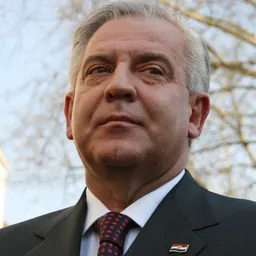
Motion of no confidence and government crisis On 18 May 2016, Social Democratic Party (SDP) begun a motion of no confidence against Karamarko, after Nacional published secret contracts on business cooperation of his wife Ana Šarić and Josip Petrović, special adviser and lobbyist of the MOL Group, a Hungarian oil corporation that gained control of Croatia's national oil company INA through a corruption scandal involving former Prime Minister Ivo Sanader. According to contracts, Šarić, a marketing expert, advised Petrović on the energy business and was paid for that at least €60,000. Contracts are controversial since Croatia and MOL are currently in the arbitration proceeding which was started by MOL for Croatia's alleged violation of certain obligations and procedures in connection with MOL's investment in Croatia. In addition, contracts were examined by the Committee on Conflict of Interest which determined that Karamarko was indeed in conflict of interest when he publicly shared his views and suggested that Croatia should pull out of the arbitration proceedings. The vote was supposed to take place by 18 June 2016, and it had the support from 80 MPs, including those of his coalition partners Most, with 76 needed. On 15 June 2016, Karamarko resigned as First Deputy Prime Minister.
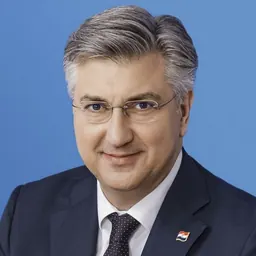
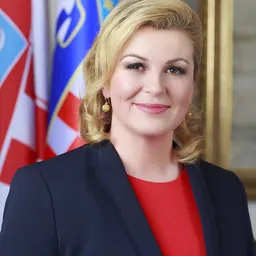
After Karamarko's resignation, HDZ decided to run a revenge motion of no confidence against Prime Minister Orešković The vote took place on 16 June and was successful with 125 MPs in favor, 15 against and 2 abstentions, which caused the government to collapse. HDZ then tried to form a new majority in the parliament with no success, despite party members claiming that they have the support of sufficient number MPs. Croatian President Kolinda Grabar-Kitarović therefore decided to schedule a new parliamentary election for September. As a consequence of failing to form a new majority in the parliament, Karamarko decided to resign from his position of president of Croatian Democratic Union on 21 June. One month later, Andrej Plenković was elected as Karamarko's successor, who would go on to become Prime Minister after the 2016 parliamentary election.
Post-resignation After resignation, Karamarko spent some time traveling around the world and in May 2017, he announced that he decided to establish a think-tank organisation - Institute for Security and Prosperity of Croatia. The move which was later mocked by some of his former party members.
Political stances In May 2015, Karamarko gave the interview to Globus, after which Croatian media dubbed his new program "The Anti-communist Manifesto". In the program, he advocated for "comprehensive change of general public climate, complete system of values, nullification of communist indoctrination and abolishment of wrong and degenerate interpretation of contemporary history". He criticized his main rivals the Social Democratic Party, claiming that: "they, as a successor of League of Communists of Croatia, never renounced nor condemned its own totalitarianism." and urged them to: "renounce Josip Broz Tito, totalitarianism and to condemn Tito's crimes."
Don’t just read it —
keep it.
Full-length biographies made to live with: read them, listen on the way to work, watch them tonight.
- E-book
- Audio
- Video
Instant download · yours to keep · every purchase keeps this site free
Important facts
People in Tomislav Karamarko's life
Named in this biography and alive at the same time

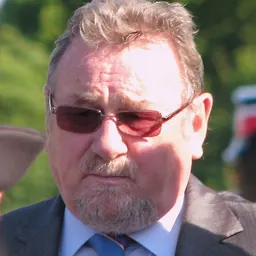
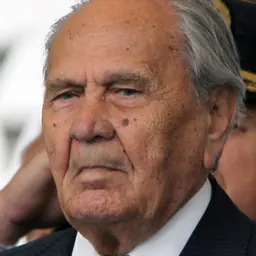
Related people
Same field, nearest in time


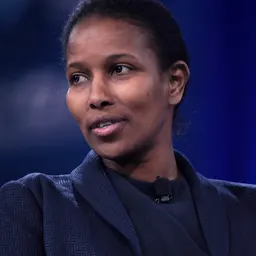
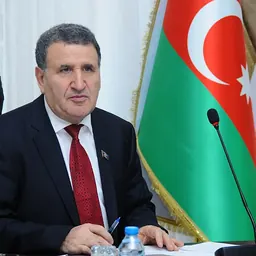


Contemporaries
People whose lives overlapped Tomislav Karamarko's

Frequently asked questions
Who is Tomislav Karamarko?
Croatian politician
When was Tomislav Karamarko born?
Tomislav Karamarko was born on 25 May 1959 in Zadar.
What is Tomislav Karamarko's occupation?
Tomislav Karamarko is a politician.
What nationality is Tomislav Karamarko?
Tomislav Karamarko is Croatian.
Sources & further reading
· Wikipedia: Tomislav Karamarko
Cite this page
APA: Biography.guide. (2026). Tomislav Karamarko. https://biography.guide/tomislav-karamarko/
MLA: "Tomislav Karamarko." Biography.guide, https://biography.guide/tomislav-karamarko/.
Chicago: "Tomislav Karamarko." Biography.guide. https://biography.guide/tomislav-karamarko/.
Data last updated: 2026-09-20 · Spot an error? Report a correction.
Page generated 2026-09-27 05:32 UTC