
About Tomás Rivera
Lived 1935 – 1984 (aged 48). Tomás Rivera was a Mexican and American novelist, poet and educator.
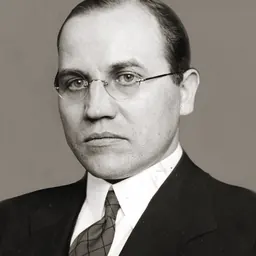
Tomás Rivera (December 22, 1935 – May 16, 1984) was a Mexican American author, poet, and educator. He was born in Texas to migrant farm workers, and worked in the fields as a young boy. However, he achieved social mobility through education—earning a degree at Southwest Texas State University (now known as Texas State University), and later a Doctor of Philosophy degree (PhD) at the University of Oklahoma—and came to believe strongly in the virtues of education for Mexican-Americans.
As an author, Rivera is best remembered for his 1971 Faulknerian stream-of-consciousness novella ...y no se lo tragó la tierra, translated into English variously as This Migrant Earth and as ...and the Earth Did Not Devour Him. This book won the first Premio Quinto Sol award.
Rivera taught in high schools throughout the Southwest US, and later at Sam Houston State University and the University of Texas at El Paso. From 1979 until his death in 1984, he was the chancellor of the University of California, Riverside, the first Mexican-American to hold such a position at the University of California.
Biography
Early years Rivera was born on December 22, 1935, in Crystal City, Texas, to Spanish-speaking, migrant farmworkers, Florencio and Josefa Rivera. At eleven years old, Rivera was in a car accident in Bay City, Michigan. After the accident, Rivera decided to write his first story about the wreck and called it "The Accident". In an interview with Juan D. Bruce-Novoa, Rivera explains: "I felt a sensation I still get when I write. I wanted to capture something I would never forget and it happened to be the sensation of having a wreck". Rivera continued writing throughout high school, creative pieces as well as essays. He dreamed of being a sportswriter as an adult, inspired by what he read most, sports articles and adventure stories. Rivera worked as a field labourer until 1956; at this point he was enrolled in Southwest Texas Junior College and the school would not permit him to miss class. The unjust and frustrating situation faced by many Chicanos motivated Rivera. He understood that the only way to get ahead in life was through education. Rivera graduated with a degree in English from the Southwest Texas State University in 1958 and taught English and Spanish at secondary schools from 1957 to 1965. He strongly believed that post-secondary education was the only way Chicanos could evolve from migrant work. He worked in public schools until he could further his education at the University of Oklahoma, where he graduated with a PhD in Romance Languages and Literature in 1969.
Education and career It was customary for Chicanos of the Midwest to live the majority of their lives workings in the fields, an occurrence Rivera included in ...y no se lo tragó la tierra. Despite the fact that his Chicano culture was rooted in migratory field work, Rivera not only graduated from secondary school but moved quickly through his post-secondary education. Rivera graduated from Crystal City High School in Texas in 1954. He then majored in English at Southwest Texas Jr. College in 1956. Rivera earned all of his post-secondary degrees while he was working as a high school teacher. He taught both Spanish and English at schools in League City, Crystal City and San Antonio, Texas. He also taught Spanish and French at Southwest Texas Junior College. By 1969, Rivera had received a Ph.D. in Romance languages and Literature, as well as a M.A. in Spanish literature, both from the University of Oklahoma.
Upon completing his Ph.D., Rivera taught as an associate professor at Sam Houston State University until 1971. He then became a professor of Spanish at University of Texas at San Antonio. In 1973, he was appointed an associate dean and in 1975 became a vice-president. He became the executive vice president of the University of Texas at El Paso in 1978. Rivera worked as corporate officer of the Times Mirror Company before leaving to become chancellor of the University of California, Riverside in 1979, a position he held until his death in 1984. While working in his various administrative roles, Rivera insisted that he continue teaching, despite it no longer being required: highlighting his dedication to higher education. Rivera chose to include migrant labor in his Curriculum Vita, a sign that he never forgot his beginnings, history or true identity. for which he received the first Premio Quinto Sol literary award in 1971. Quinto Sol was a publishing house founded in 1967 by UC Berkeley students and faculty to disseminate Chicano/a literature and culture. They created the Premio Quinto Sol literary prize to recognize and promote Chicano authors.
The novel has since been translated into English several times: by Herminio Ríos-C as "...And the Earth Did Not Part"; by Evangelina Vigil-Piñón as "...And the Earth Did Not Devour Him"; and most recently by Rolando Hinojosa as This Migrant Earth. The volume also includes appendices that explain the genesis of the novel and the relationship between Rivera and the editors of Quinto Sol.
...y no se lo tragó la tierra
...y no se lo tragó la tierra is a novel divided into fourteen vignettes. The book opens with a section called "El año perdido" (The Lost Year) told from the perspective of an anonymous Chicano child, the son of two migrant workers. The unnamed child narrates some of the sections with his thoughts, memories and impressions while other people connected to his life narrate the remaining sections. The narrations come in many varying forms, from dialogue and prayer to descriptive passages. He served on many distinguished advisory committees such as the Carnegie Foundation for the Advancement of Teaching, the American Association for Higher Education, the American Council on Education, the President's Commission on a National Agenda for the 80s and the National Commission on Secondary Schooling for Hispanics.
Legacy Rivera died on May 16, 1984 in his Fontana home of a heart attack. His sudden death was a "great shock" to the University of California. winners have included such notable authors as Rudolfo Anaya, Pat Mora, and Gary Soto.
In the year following his death, the General Library at UC Riverside was renamed the Tomás Rivera Library. His wife, Concepción Rivera donated all of her late husband's papers to be put on loan at this library. The archive now contains all of Rivera's work, more than 85,000 items. The contents of this archive are indicative of his hardworking, selfless and motivated nature. Not only did Rivera leave this world with buildings, plazas and learning centers in his name, he left an imprint on future generations of Chicanos. Above all, Rivera had a vision for the world: that generations of migrant workers following his own would have equitable access to post-secondary education and opportunities to succeed.
Works Editions of Tierra Rivera, Tomás (1971) ...y no se lo tragó la tierra/...And the Earth Did Not Part. Trans by Herminio Rios, Berkeley: Quinto Sol. Rivera, Tomás (1977) ...y no se lo tragó la tierra/...And the Earth Did Not Part. Trans by Herminio Rios, Berkeley: Justa Publications. Rivera, Tomás (1987) ...y no se lo tragó la tierra/...And the Earth Did Not Devour Him. Trans by Evangelina Vigil-Piñón, Houston: Arte Público Press. Rivera, Tomás (1996) ...y no se lo tragó la tierra". Houston: Arte Público Press. Rivera, Tomás (2012) ...y no se lo tragó la tierra". Edition and Introduction by Julio Ramos, Gustavo Buenrostro and Jean-Luc Nancy, Buenos Aires: Ediciones Corregidor.
Other prose .
Poetry . . .
Film ...And the Earth Did Not Devour Him. American Playhouse Theatrical Films presents a production of KPBS and Severo Pérez Films; produced by Paul Espinosa; written and directed by Severo Pérez. New York, NY: Kino International. Kino Video, 1997.
Works and editions https://faculty.ucmerced.edu/mmartin-rodriguez/index_files/vhRiveraTomas.htm
Don’t just read it —
keep it.
Full-length biographies made to live with: read them, listen on the way to work, watch them tonight.
- E-book
- Audio
- Video
Instant download · yours to keep · every purchase keeps this site free
Important facts
People in Tomás Rivera's life
Named in this biography and alive at the same time




Related people
Same field, nearest in time

Contemporaries
People whose lives overlapped Tomás Rivera's

Frequently asked questions
Who was Tomás Rivera?
American academic (1935–1984)
When was Tomás Rivera born?
Tomás Rivera was born on 22 December 1935 in Crystal City.
When did Tomás Rivera die?
Tomás Rivera died on 16 May 1984 in Fontana.
What was Tomás Rivera's occupation?
Tomás Rivera was a novelist, poet and educator.
What nationality was Tomás Rivera?
Tomás Rivera was Mexican and American.
Sources & further reading
Cite this page
APA: Biography.guide. (2026). Tomás Rivera. https://biography.guide/tomas-rivera/
MLA: "Tomás Rivera." Biography.guide, https://biography.guide/tomas-rivera/.
Chicago: "Tomás Rivera." Biography.guide. https://biography.guide/tomas-rivera/.
Data last updated: 2026-09-20 · Spot an error? Report a correction.
Page generated 2026-09-27 05:33 UTC