
About Tom Wicker
Lived 1926 – 2011 (aged 85). Tom Wicker was an American journalist, novelist and writer.
Thomas Grey Wicker (June 18, 1926 – November 25, 2011) was an American journalist. He was best known as a political reporter and columnist for The New York Times for nearly three decades.
Besides writing non-fiction books about U.S. presidential history and race relations, he wrote ten novels, including mysteries and political thrillers. He would later be interviewed for the 1992 documentary Beyond 'JFK': The Question of Conspiracy. In September 1964, Wicker was named Washington bureau chief for the Times upon the recommendation of his boss and mentor James Reston.
Wicker also spoke about the constraints of working for one of America's elite press outlets. In a 1985 Harper's Magazine forum titled "Can the Press Tell the Truth?", he agreed with journalist Sidney Zion that national press members were like a "League of Gentlemen" who did not wish to undermine the government's interpretation of events or to offend other gentlemen in the League. Wicker said: "Sure, someone could write a two-line memo tomorrow to be more skeptical and challenging of established institutions. But they won't do it, not because they don't have the power to do it, but because they don't want to suffer more than the minimal necessary disapproval of the League of Gentlemen."
Books
Wicker wrote numerous books throughout his life. He is the author of several about U.S. presidents, including: Kennedy Without Tears: The Man Beneath the Myth (1964) JFK & LBJ: The Influence of Personality Upon Politics (1966) One of Us: Richard Nixon and the American Dream (1991) Dwight D. Eisenhower (2002) George Herbert Walker Bush (2004) Other works by Wicker include: The Kingpin (1953), a novel about politics The Devil Must (1957), a novel The Judgment (1961), a novel Facing the Lions (1973), a novel about a presidential campaign involving a candidate modeled on Sen. Estes Kefauver A Time to Die: The Attica Prison Revolt (1975), this book recounted the events in September 1971 at the Attica Correctional Facility in Attica, New York; it won an Edgar Award from the Mystery Writers of America for Best Fact Crime book and inspired a 1980 made-for-TV movie. On Press: A Top Reporter's Life in, and Reflections on, American Journalism (1978) Unto This Hour (1984), a novel of the American Civil War, during the Second Battle of Bull Run (1862) Donovan's Wife (1992), a novel about the sleazy side of politics Prison Writing in 20th-Century America (1992) Tragic Failure: Racial Integration in America (1996) Easter Lilly: A Novel of the South Today (1998), a novel about a murder in the South On the Record: An Insider’s Guide to Journalism (2001) Shooting Star: The Brief Arc of Joe McCarthy (2006)
In addition, Wicker wrote three detective novels in the 1950s under the pseudonym "Paul Connolly": Get Out of Town (1951) Tears Are for Angels (1952), So Fair, So Evil (1955),
Politics Wicker's journalism for The New York Times earned him a place on the master list of Nixon's political opponents. Wicker later wrote an essay on Richard Nixon for the book Character Above All: Ten Presidents from FDR to George Bush (1996).
Wicker was mentioned in a 60 Minutes report from the 1970s which detailed how he, along with other journalists and members of Congress who publicly supported desegregation busing, had nevertheless sent their children to Washington, D.C. private schools.
NSA monitoring of Wicker's communications In a secret operation code-named "Project MINARET", the National Security Agency (NSA) monitored the communications of leading Americans, including Wicker and other prominent U.S. journalists, Senators Frank Church and Howard Baker, civil rights leaders like Martin Luther King Jr., and famous American athletes like Muhammad Ali who criticized the Vietnam War. A subsequent review by NSA of its Minaret program concluded that the program was "disreputable if not outright illegal".
Don’t just read it —
keep it.
Full-length biographies made to live with: read them, listen on the way to work, watch them tonight.
- E-book
- Audio
- Video
Instant download · yours to keep · every purchase keeps this site free
Important facts
People in Tom Wicker's life
Named in this biography and alive at the same time
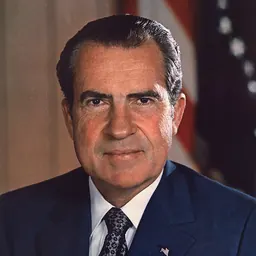
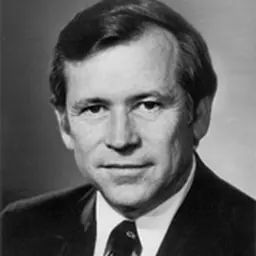
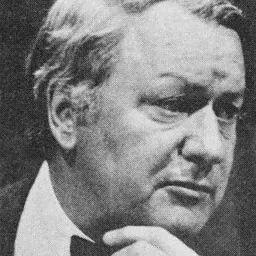
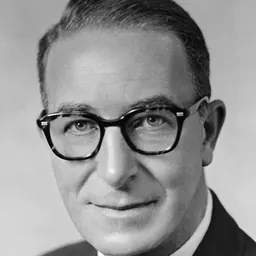



Related people
Same field, nearest in time





Contemporaries
People whose lives overlapped Tom Wicker's

Frequently asked questions
Who was Tom Wicker?
American journalist (1926-2011)
When was Tom Wicker born?
Tom Wicker was born on 18 June 1926 in Hamlet.
When did Tom Wicker die?
Tom Wicker died on 25 November 2011 in Rochester.
What was Tom Wicker's occupation?
Tom Wicker was a journalist, novelist and writer.
What nationality was Tom Wicker?
Tom Wicker was American.
Sources & further reading
Cite this page
APA: Biography.guide. (2026). Tom Wicker. https://biography.guide/tom-wicker/
MLA: "Tom Wicker." Biography.guide, https://biography.guide/tom-wicker/.
Chicago: "Tom Wicker." Biography.guide. https://biography.guide/tom-wicker/.
Data last updated: 2026-09-26 · Spot an error? Report a correction.
Page generated 2026-09-27 05:14 UTC