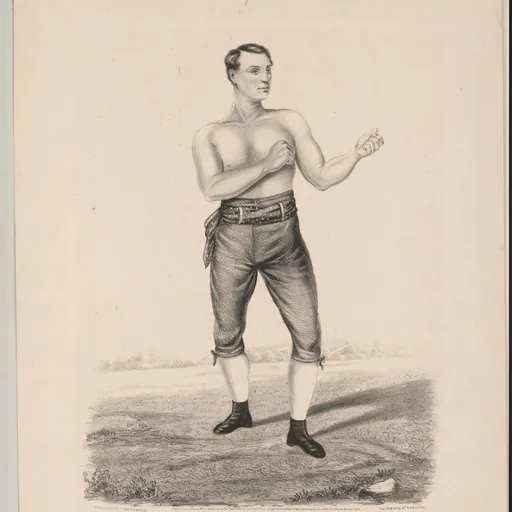
About Tom Sayers
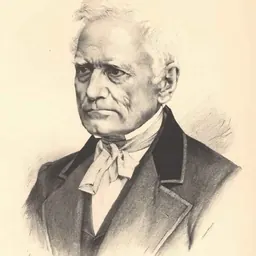
Lived 1826 – 1865 (aged 39). Tom Sayers was a British boxer.
Thomas Sayers (15 or 25 May 18268 November 1865) was an English bare-knuckle prize fighter. There were no formal weight divisions at the time, and although Sayers was only five feet eight inches tall and never weighed much more than 150lbs (10.7 stones), he frequently fought much bigger men. In a career which lasted from 1849 until 1860, he lost only one of sixteen bouts. He was recognized as heavyweight champion of England between 1857, when he defeated William Perry (the "Tipton Slasher"), and his retirement in 1860.
His first fame depended exclusively on his final contest, when he faced American champion John Camel Heenan in a battle widely considered to be boxing's first world championship. It ended in chaos when the spectators invaded the ring, and the referee finally declared a draw.
Regarded as a national hero, Sayers, for whom the considerable sum of £3,000 was raised by public subscription, then retired from the ring. After his death five years later at the age of 39, a huge crowd watched his cortège on its journey to London's Highgate Cemetery.
Early years Sayers was born in May 1826, in a slum in the Brighton alley of Pimlico (now Tichborne Street) not far from the Royal Pavilion. He was the youngest of the five children of William Sayers (33), a shoemaker, and his wife Maria, ten years her husband's senior. At the age of six, Sayers became a Jack-in-the-water, earning a few coppers performing small duties for holidaymakers and fishermen on Brighton beach. Claims that he attended school in 1836 may be unfounded, and he was barely literate.
At the age of thirteen, he walked to London, where he stayed with his sister Eliza and her husband, Robert King, a builder. Sayers became a bricklayer and for the next seven years shuttled between his home town and the capital. He is known to have worked on the London Road viaduct outside Brighton and may well have taken part in the construction of London's King's Cross Station.
In an anecdote of his early life, it was reported that whilst working on the construction of Wandsworth Prison he was struck by his supervisor, described as a "great big bully of a fellow", and on his returning the blow it was decided to carry on the fight at a nearby common. Here, after a tremendous battle, Sayers prevailed, knocking out his adversary.
In 1846 he finally settled in the capital, taking up residence in the notorious slum of Agar Town, just north of where St Pancras Station now stands. It was around 1847 that he set up home in a more salubrious part of Camden Town with Sarah Henderson. Only fifteen years old, Sarah was unable to marry without her father's permission and her daughter, Sarah (1850–1891), and son, Tom (1852–1936), by Sayers were consequently illegitimate.
Prize ring career Early career Although the prize ring had long been illegal, it continued as an underground activity, and Sayers, having earned a considerable reputation from a number of informal fights, decided to try to make a living with his fists. His first contest as a professional was on 19 March 1849 near Greenhithe when he defeated Abe Couch (or Crouch). His next contest was with Dan Collins on 22 October 1850 at Edenbridge, Kent. The fight took place on 18 October 1853 at Lakenheath, Suffolk. This was Sayers's toughest fight so far, and a combination of illness and inexperience contributed to his first and only defeat. The wily Langham gained the upper hand by temporarily blinding his opponent with frequent blows to the eyes. The end came in the 61st round with Sayers unable to see his opponent, who could therefore strike him at will. Sayers was still reluctant to quit, however, and one of his seconds, Alec Keene was forced to "throw up the sponge" to signify the end of the contest. Paulson was shorter than Sayers by an inch but was described as "a perfect Hercules in the torso, weighing 12st. 7lb. in hard condition."
In early 1855, fight supporters commissioned a new championship belt, the previous one "having gone astray". The subscription raised £100 and a Bond Street jeweller was asked to make the new belt. At this date there were thought to be 5 possible contenders for the Championship: William Perry, Harry Broome, Harry Orme, Tom Paddock and Aaron Jones. which gave the opportunity for Sayers to fight for the championship.
On 3 March 1857, the articles for a fight between Sayers and the Tipton Slasher were signed. The fight was to be for £100 per side plus the new Championship belt. According to one of the chroniclers of the Prize Ring, many thought it was "a wild, mad, revolutionary idea to match a 10st. 10lb. man of 5ft. 8in. against a 14 stoner of over 6ft., and the latter, mind you, no duffer, but the Champion of England, who had won his title by hard fighting". Perry was so confident of winning that he sold his pub in Spon Lane, West Bromwich, and staked the proceeds on himself at 6 to 4 on odds. During the fight, Sayers demonstrated his ring craft as he moved swiftly, dodging the Slasher's heaviest punches. According to one eye-witness report, Perry's tactics were at fault as, despite being slower on his feet, he tried to force the pace of the fight, instead of fighting defensively and using his powers as a counter-hitter. Sayers won easily after 3 rounds of fighting, which took just minutes.
On 5 April 1859, Sayers fought a rematch with a much improved Bill Benjamin. Sayers came out on top, defeating his opponent in 11 rounds.
On 20 September 1859 a fight took place with the Birmingham-based Bob Brettle, In the 7th round, Brettle dislocated his shoulder and so was unable to continue, giving victory and the £600 stake money to Sayers. while in America, the New York Clipper observed that "'Whate'er we do, where'er we be,' fight, fight, fight is the topic that engrosses all attention".
Efforts of a number of concerned citizens to have the illegal event prevented came to nothing, and the battle took place at Farnborough in Hampshire on the morning of Tuesday, 17 April 1860. From contemporary reports it appears that the fight took place in a field just east of Farnborough North railway station. Transport from London to the venue was provided by South Western Railways. According to one eyewitness: "Several members of Parliament were present, and among the "nobility and gentry," besides the noble owner of the property, we were shown the Duke of Sutherland, the Marquis of Stafford, and Colonel Peel. There were about two thousand persons, and in the crowd were very many of the London celebrities in the literary, artistic, and sporting world."
It was on the face of it an unequal contest: Sayers was conceding forty pounds in weight, five inches in height and eight years in age. Heenan won the toss for corners and placed himself at an advantage with his back to the sun. At about half-past seven in the morning, the contest started. However, in the next round, which one reporter called "a fine specimen of stratagem and skill", Sayers struck several blows around and on Heenan's right eye, which had the effect of closing it for the remainder of the fight. leaves little doubt that Heenan was on the verge of victory when the action was stopped. Others say the match was a draw. However, according to Alan Wright's book "Tom Sayers: the last great bareknuckle champion", Heenan's attempted strangling of Sayers did not stop the fight, nor did the subsequent invasion of the ring by Sayers' supporters. This account says that order was nearly restored and the ring re-pitched yards away. The fight continued for four or five rounds with neither man able to box proficiently. When the Police were spotted at the edge of the field, the entire throng, including the fighters, made a bolt for it and the fight ended there.
The fight stirred up considerable public interest. According to one source: "newspapers were filled with frenzied denunciations, Parliament angrily discussed the question, Palmerston quoted, with every sign of satisfaction, a French journalist who saw in the contest a type of the national character for indomitable perseverance in determined effort".
Differences between the two men were finally patched up, and both were awarded a specially made championship belt at the Alhambra Theatre, London on 30 May 1860. The tour of England, Ireland and Scotland which they then undertook together was, however, only a partial success. On 4 June the fighters performed an exhibition bout at the Free Trade Hall in Manchester.
After retirement from prizefighting Involvement with the circus business
After the Heenan fight of 1860, Tom Sayers never fought again. A public subscription was raised for him after the fight, and he received the sum of £3,000, enough to fund a comfortable retirement. This money was safely invested following the advice of John Gideon. In the Autumn of 1860, Sayers was engaged by the American circus company, Howes and Cushing, at a reported wage of £55 per week plus expenses. In October 1861, it was announced that Sayers had purchased the circuses of Howes and Cushing as well as "Jem Meyers's Great American Circus". Advertised as Tom Sayers' Champion Circus, pitched in the towns of Wisbech, March, Chatteris and Ely in April 1862 and described as "a mere wreck of what it was a few years earlier". It toured Britain but was sold off by auction in November 1862.
Sayers' marriage had broken down in the mid-1850s, after which time he and his two children had been living with a married woman called Charlotte. However, in early 1863, this relationship came to an acrimonious end, as the couple appeared in Clerkenwell Police Court, where Sayers accused Charlotte of breaking his windows and Charlotte accused him of breaking her furniture and throwing her out. The auction of his circus in 1862 did not end Sayers' involvement with the circus business, as in November 1863, it was reported that "Tom Sayers and his Company" would be putting on a combined performance with Howes's American Circus.
At ringside with Heenan The bout with Heenan was Sayers' last prizefight. However, he made one last appearance in the prizefighting ring, when on 10 December 1863, he was one of Heenan's seconds, when the American returned to England to fight the then champion, Tom King. Heenan had been trained for the fight by his countryman, Jack MacDonald with the assistance of Hennan's brother, James. According to his own account, MacDonald only found out that Sayers would appear as his assistant on the morning of the fight, having been told that James Heenan would be fulfilling that role. The proceedings concluded in April with the chief participants having to lodge £100 surety with the court in case of further court action. In Liverpool on 25 and 26 January 1864, Myers' American Circus was hired by John Heenan, who invited Sayers to recreate the "Great Battle of Farnborough". In June 1864, it was reported that Sayers was promoting a benefit evening for the boxer Jem Mace, hiring the Standard Theatre, Shoreditch for the occasion.
Illness and death In December 1864, Sayers appeared in the betting ring together with Heenan at the Croydon Steeplechase meeting. Sayers was described as being "haggard, thin and wretched". In February 1865, Sporting Life reported that he was very seriously ill and confined to his house in Camden Town. A medical examination revealed him to be showing the symptoms of consumption aggravated by diabetes. It was also reported that Heenan had visited him and "spent some time in cheering up his great opponent of Farnborough".
In April 1865, Sayers was well enough to make a visit to Brighton, appearing "robust and strong" but by August, whilst staying with his sister, it became clear that the disease in his lungs meant he would not survive many weeks.
His last permanent address (1860–64) was at 51 Camden Street in Camden Town.
He died at No. 257 Camden High Street on 8 November 1865, in the presence of his father and two children to Camden Town. According to the Spectator magazine, the crowd that accompanied the coffin, stretched for more than two miles in length and the bier was drawn by four sable-plumed horses, Sayer's dog sitting alone in a pony cart.
Misfortune pursued him beyond the grave. His estranged (but not divorced) wife, who now had three sons by the man for whom she had left him, went to court to disinherit her two children by Sayers. The parents' subsequent marriage had not changed their legal status, and a judge ruled that, while they were certainly illegitimate, it could not be proved that Sayers was not the father of his wife's other three children. These must therefore be regarded as legitimate, and entitled to inherit his estate.
Tom Sayers is buried in Highgate Cemetery, his marble tomb, the work of the sculptor Morton Edwards, guarded by the stone image of his mastiff, Lion, who was chief mourner at his funeral. The house in Camden where he died now has an English Heritage blue plaque.
Career record
Result Opponent Date Location Duration Win Abe Couch 1849-03-19 Greenhithe, Kent 13 minutes (6 rounds)
Dan Collins 1850-10-22 Edenbridge, Kent 1 hour 52 minutes (39 rounds) Win Dan Collins 1851-04-29 Long Reach, Kent 1 hour 24 minutes (44 rounds) Win Jack Grant 1852-06-29 Mildenhall, Suffolk 2 hours 30 minutes (64 rounds) Win Jack Martin 1853-01-26 Long Reach, Kent 55 minutes (23 rounds) Loss Nat Langham 1853-10-18 Lakenheath, Suffolk 2 hours 2 minutes (60 rounds) Win George Sims 1854-02-28 Long Reach, Kent 5 minutes (4 rounds) Win Harry Paulson 1856-01-29 Appledore, Kent 3 hours, 8 minutes (109 rounds)
Aaron Jones 1857-01-06 Canvey Island, Essex 3 hours (62 rounds) Win Aaron Jones 1857-02-10 Canvey Island, Essex 2 hours (85 rounds) Win Bill Perry 1857-06-16 Isle of Grain, Kent 1 hour 15 minutes (10 rounds) Win Bill Benjamin 1858-01-05 Isle of Grain, Kent 7 minutes (3 rounds) Win Tom Paddock 1858-06-15 Canvey Island, Essex 1 hour 20 minutes (21 rounds) Win Bill Benjamin 1859-04-05 Isle of Grain, Kent 22 minutes (11 rounds) Win Bob Brettle 1859-09-20 Ashford, Kent 15 minutes (7 rounds)
John C. Heenan 1860-04-17 Farnborough, Hampshire 2 hours 10 minutes (42 rounds)
In fiction A fictionalised Tom Sayers appeared in a series of weekly adventures penned for the story paper The Marvel by Amalgamated Press writer Arthur S. Hardy (real name Arthur Joseph Steffens, b. 28 September 1873) in the first decade of the twentieth century. Hardy's version of Sayers was an Edwardian actor-manager, touring Britain's theatres and music halls with staged recreations of his boxing triumphs in a career move very loosely based on the real Sayers's circus venture. This romanticised figure was revived and further developed as a central character in The Kingdom of Bones, a 2007 novel by Stephen Gallagher.
Tom Sayers is mentioned in Dorothy L. Sayers's mystery novel The Nine Tailors (1937). [The two Sayers were unrelated.]
Sayers appears in George du Maurier's first novel, Peter Ibbetson (Part Two).
A detailed account of the Sayers-Heenan fight appears in Hugh Walpole's The Fortress.
A recreation of the Sayers-Heenan fight is the event around which the action of Episode 13.6, The Noble Art, of Midsomer Murders revolves.
Don’t just read it —
keep it.
Full-length biographies made to live with: read them, listen on the way to work, watch them tonight.
- E-book
- Audio
- Video
Instant download · yours to keep · every purchase keeps this site free
Important facts
People in Tom Sayers's life
Named in this biography and alive at the same time

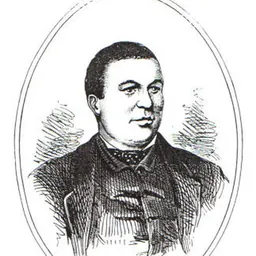





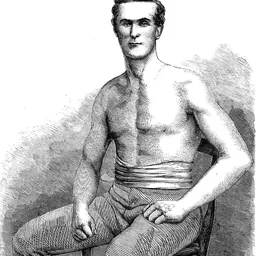
Related people
Same field, nearest in time
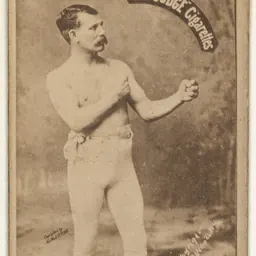
Contemporaries
People whose lives overlapped Tom Sayers's




Frequently asked questions
Who was Tom Sayers?
English boxer (1826–1865)
When was Tom Sayers born?
Tom Sayers was born on 25 May 1826 in Brighton.
When did Tom Sayers die?
Tom Sayers died on 8 November 1865 in Camden Town.
What was Tom Sayers's occupation?
Tom Sayers was a boxer.
What nationality was Tom Sayers?
Tom Sayers was British.
Sources & further reading
Cite this page
APA: Biography.guide. (2026). Tom Sayers. https://biography.guide/tom-sayers-boxer/
MLA: "Tom Sayers." Biography.guide, https://biography.guide/tom-sayers-boxer/.
Chicago: "Tom Sayers." Biography.guide. https://biography.guide/tom-sayers-boxer/.
Data last updated: 2026-09-23 · Spot an error? Report a correction.
Portrait: Wikimedia Commons · author & licence
Page generated 2026-09-27 05:06 UTC