
About Tom N. Cornsweet
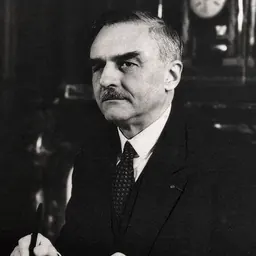
Lived 1929 – 2017 (aged 88). Tom N. Cornsweet was an American writer, psychologist and inventor, known for Cornsweet illusion.
Tom Norman Cornsweet (April 29, 1929 – November 11, 2017) was an American experimental psychologist known for his pioneering work in visual perception, especially the effect that bears his name, and in the development of ophthalmic instrumentation.
Academic background and scientific research
Cornsweet is known for documenting the effect that bears his name in the 1960s. Prior to his work on this particular optical illusion, Cornsweet graduated from Cornell University and enrolled in a graduate program at Brown University, operating in the vision research laboratory of Lorrin A. Riggs. During his graduate studies he was co-author of an early paper describing stabilized images. As an outgrowth of the courses he taught, Cornsweet published a frequently-cited textbook.
Inventor and entrepreneur
In the late 1960s and early 1970s, Cornsweet was a key member of the Bioinformation Systems Group at the Stanford Research Institute (SRI). While also teaching in the psychology department at Stanford University, he designed or co-designed several innovative instruments for measuring properties of the eye, including eyetrackers, auto-refractors, and optical fundus scanners.
He left SRI to become Chief Scientist at Acuity Systems of Reston Virginia, where he developed the first commercial auto-refractor in 1973. It gave the objective reading of the refractive index of the eye in one second, saving practitioners up to 15 minutes a patient. That saved an average Ophthalmologist more than an hour a day resulting in a huge increase in productivity and income.
Acuity Systems introduced the worlds first Auto-refractor. They sold approximately 3000 of them worldwide between 1975 and 1979 before selling ownership to Simmons Instruments Inc. Many copies followed. They were made by Coherent Radiation of California, Nidek of Japan and others. All versions of the Auto-refractor sold are estimated to total $15bn as the instrument is now universally commonplace in the Optometrist and Ophthalmologist workplaces. The Auto-refractor saved sight in many cases.
Multiple thousands of such instances occurred worldwide. A device to measure the refractive index of spectacle lenses, the Auto-lensmeter was also a commercial success in parallel with the Auto-refractor.
In the 1980’s Tom Cornsweet developed a number of devices including one which measured the density of cataracts, ESA, the Eye System Analyser, which in a 30 second eye test determined presence of diseases of the nervous or muscular system such as multiple sclerosis 15 years before its noticeable onset, clinical signs of Hodgkin's lymphoma, and many other diseases.
An industrial version, named the FIT2000, was first used with coal miners in Queensland Australia and later in Chile resulting in huge safety gains in the workplace. The FIT2000 detected that up to 5% of the workforce were impaired by sleep deprivation, illegal drug use, excessive use of prescription medications, or alcohol abuse. A daily 36-second eye test was administered for ten days to establish a baseline. Comparison to the baseline values allowed detection of illegal drug use, alcohol abuse, lack of sleep, and indicated when a medical referral was indicated for a differential diagnosis of narcolepsy, brain diseases, and brain damage. The FIT2000 has also been used by militaries worldwide to determine the level fatigue of pilots and soldiers who have experienced severe sleep deprivation as a result of several days of continuous military activities.
Cornsweet continued to invent devices for measuring various properties of the eye and also to teach, first at the Baylor College of Medicine and later at the University of California, Irvine. He served as Vice President of research and development for Sensory Technologies from 1994 to 1997. In 1999 Cornsweet retired from UC–Irvine and co-founded Visual Pathways, where his team developed an automated retinal imaging system intended for the diagnoses of glaucoma, cataracts, diabetic retinopathy and macular degeneration.
Until his death in 2017, Cornsweet was Professor of Cognitive Science, Electrical and Computer Engineering, and Ophthalmology, Emeritus, University of California, Irvine.
Patents and awards 40 patents, primarily in the area of optical and ophthalmic instrumentation UC Berkeley Distinguished Teaching award 1961 Charles F. Prentice Medal Award from the American Academy of Optometry, 1984
Publications Cornsweet wrote three books and published more than 100 journal articles. Books
Why is Everything!: Doing Science
Seeing. How light tells us about the world. University of California press. 2017 Journal articles
T.N. Cornsweet. PhD Thesis Publication No. 13, 163. University Microfilms, Library of Congress #MICA 55-1914.
T.N. Cornsweet. "Measuring movements of the retinal image with respect to the retina". In: Biomedical Sciences Instrumentation, Volume 2, Plenum Press. (1964)
T.N. Cornsweet. Stabilized image techniques. National Academy of Sciences Symposium, "Recent developments in vision research." (1966)
T.N. Cornsweet. The Purkinje-image method of recording eye position. In: Eye movements and psychological processes, Monty and Senders, eds., Lawrence Earlbaum Associates, Inc. (1976) T.N. Cornsweet. The Bezold-Brucke effect and its complement, hue constancy. In: Visual Psychophysics: The physiological foundations. Academic Press. (1978) T.N. Cornsweet, S. Hersh, R. Beesmer, and D. Cornsweet. Quantification of the shape and color of the optic nerve head. In: Advances in diagnostic visual optics. Breinin and Siegal, eds, Springer-Verlag. (1983)
J.I. Yellott, B.A. Wandell, and T. N. Cornsweet. The beginnings of visual perception. In: Handbook of Physiology, Vol. III, The nervous system. Darian Smith, ed. The American Physiological Society. (1984)
T.N. Cornsweet. Understanding the swinging flashlight test. In: Non-invasive assessment of the visual system, Volume 1, Optical Society of America Technical Digest series. (1993)
List of publications adapted from Cornsweet's curriculum vitae, published by the University of California, Berkeley.
Don’t just read it —
keep it.
Full-length biographies made to live with: read them, listen on the way to work, watch them tonight.
- E-book
- Audio
- Video
Instant download · yours to keep · every purchase keeps this site free
Important facts
People in Tom N. Cornsweet's life
Named in this biography and alive at the same time

Related people
Same field, nearest in time




Contemporaries
People whose lives overlapped Tom N. Cornsweet's
Frequently asked questions
Who was Tom N. Cornsweet?
American psychologist (1929-2017)
When was Tom N. Cornsweet born?
Tom N. Cornsweet was born on 29 April 1929 in Cleveland.
When did Tom N. Cornsweet die?
Tom N. Cornsweet died on 11 November 2017 in Prescott.
What was Tom N. Cornsweet's occupation?
Tom N. Cornsweet was a writer, psychologist and inventor.
What was Tom N. Cornsweet known for?
Tom N. Cornsweet was known for Cornsweet illusion.
What nationality was Tom N. Cornsweet?
Tom N. Cornsweet was American.
Sources & further reading
Cite this page
APA: Biography.guide. (2026). Tom N. Cornsweet. https://biography.guide/tom-n-cornsweet/
MLA: "Tom N. Cornsweet." Biography.guide, https://biography.guide/tom-n-cornsweet/.
Chicago: "Tom N. Cornsweet." Biography.guide. https://biography.guide/tom-n-cornsweet/.
Data last updated: 2026-09-20 · Spot an error? Report a correction.
Page generated 2026-09-27 05:14 UTC