
About Tokiyasu Fujita
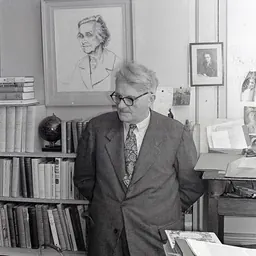
Born 1940. Tokiyasu Fujita is a Japanese judge, legal scholar, university teacher and jurist.
Tokiyasu Fujita (Japanese 藤⽥宙靖; born April 6, 1940, in Tokyo) is a Japanese jurist, former judge of the Supreme Court of Japan (September 30, 2002-April 5, 2010), Professor Emeritus of Tohoku University, member of the Japan Academy, and member of the Imperial Household Council. His specialty is administrative law (PhD from the University of Tokyo in 1981). He was actively involved in the public debate surrounding the legal transformation of Japanese National Universities into corporations in 2004.
Professional background
Education
1959: Graduation from High School of Tokyo University of Education (present: Junior and Senior High School at Otsuka, University of Tsukuba) 1963: Graduation from the Faculty of Law, University of Tokyo
Career
1963: Research Associate, Faculty of Law, University of Tokyo 1966: Assistant Professor, Faculty of Law, Tohoku University 1977: Professorship, Faculty of Law, Tohoku University 1994: Dean, Faculty of Law, Tohoku University (until 1996) 2001: Professorship, Graduate School of Law, Tohoku University 2002: Professor Emeritus, Tohoku University 2002: Appointment as Judge of the Supreme Court of Japan April 5th, 2010: Retirement as Judge of the Supreme Court of Japan
Appointments
1996: Member of the Administrative Reform Council [on Japan's ministerial bureaucracy] (until 1998) 2000: Member of the Committee for Settling National-Local Disputes 2001: Member of the National Land Development Council 2001: Member of the Investigation Committee for the Disclosure of Information 2001: Expert member of the Central Council for Education
Rulings and legal opinions
Legal opinion on the Constitutionality of the Lower House Election of September 11, 2005 (44th Election): Does the division system of single-member districts violate Article 14, Paragraph 1 et seq. of the Japanese Constitution? (Opinion: constitutional) Legal opinion: Is there a constitutional violation (Article 14, paragraph 1 et seq.) if regulative distinctions are made between party candidates and independent candidates in primary constituencies in the Lower House Election? (Opinion: constitutional) Legal opinion: does legitimation (of a child born out of wedlock) as necessary condition (Article 3, Paragraph 1 of the Japanese Nationality Act) violate Article 14, Paragraph 1 of the Japanese Constitution? (Opinion: unconstitutional because of a gap in the law; minority opinion). Legal opinion: does obligating a music teacher at Hino Municipal Elementary School by the principal to accompany the collective singing of the national anthem (Kimigayo) on the piano at the school entrance ceremony violate Article 19 of the Japanese Constitution? (View: unconstitutional) Dismissal of the appeal (2008) of the trial of the Nishiyama Incident (news reporters had disclosed confidential information obtained in the course of their reporting surrounding the return of Okinawa to Japan in 1971 to members of Parliament and were therefore found guilty by the Supreme Court of violating the Public Service Law). In the "Kôka Student Dormitory" case, in which the ownership of the dormitory acquired by the Republic of China (Taiwan) before the country's diplomatic separation from Japan was in dispute, the presiding judge of the Third Small Senate suddenly resumed the proceedings 20 years after the appeal. The court ruled that the proceedings had been suspended due to the severance of diplomatic relations 35 years earlier, and that the decisions of the four lower courts were therefore moot. The court ordered that the case be reopened from the first trial and remanded the case to the Kyoto District Court. This ruling was criticized by Taiwan's legal team, led by Shigeru Oda, a former Judge of 27 years at the International Court of Justice, due to a "lack of knowledge of international law and understanding of historical facts". Ruling in two appeals on the payment of a life insurance policy upon the simultaneous passing of a childless married couple, in which the wife was the beneficiary. The Court of Appeals ruled that only the wife's relatives could receive the premium and rejected appeals by the insurance company and agricultural cooperative, who claimed that "the husband's relatives [were] also entitled to the premium." The court ruled that original film works published in 1953 under the name of a collective were not covered by the extended term of copyright protection under the revised Copyright Act, and that this copyright therefore had expired on December 31, 2003. This overturned the view of the Agency for Cultural Affairs that film copyright would last until December 31st, 2023, and legally settled the so-called "1953 issue." As the chief judge of the Third Main Court in the case of the series of kidnappings and murders of teenagers in Tokyo and Saitama from 1988 to 1989, on, he rejected the defense appeal against defendant Tsutomu Miyazaki on January 17, 2006, upholding the latter's death sentence.
Personal life
Family His father Ichirō Fujita (Japanese 藤⽥⼀郎), was vice chairman of Fujita Gumi (construction company) as well as a member of the Japanese Lower House for the Japan Socialist Party.
Philosophy of life Know thyself and trust thyself! [Exercising Governmental Power and Asserting Private Rights: Otto Baer's Concept of the "Rule of Law" and German Administrative Law Scholarship] (Yûhikaku, 1978) Nishi Doitsu no Tochihô to Nihon no Tochihô [Land Law in West Germany and Japan] (Sôbunsha, 1988) Gyôsei Hôgaku no Shikô Keishiki (Zôhoban) [Thought patterns in administrative law (extended edition)] (Dotakusha 2002) Gyôseihô no Kiso Riron (Jô, Gekan) [Basic Theories of Administrative Law (Volume 1&2)] (Yûhikaku, 2005) Gyôsei Soshikihô [Administrative Organization Law] [Yûhikaku, 2005] Gendai Hôritsugaku Kôza Gyôseihô 1 Sôron (Dai 4 Han Kaitei) [Course Contemporary Law : General Introduction to Administrative Law 1 (4th Revised Edition).] (Seirin Shoin, 2005) Saikôsai Kaisôroku Gakusha Hanji no Nana Nen Han [Memories of the Supreme Court: Seven and a Half Years of a Scientific Judge] (Yûhikaku, 2012) Gyôseihô Nyûmon (Dai 6 Han) [Introduction to Administrative Law (6th Edition)] (Yûhikaku, 2013) Shinban Gyôseihô Sôron [New Edition: General Introduction to Administrative Law] (Seirin Shoin, 2020)
As editor
Kenpô to Gyôseihô: Kojima Kazushi Hakushi Tôhoku Daigaku Taishoku Kinen [Constitution and Administrative Law: Festschrift for Dr. Kazushi Kojima on his retirement from Tohoku University] (Ryosho Fukyûkai, 1987) Kenpô Ronshû Higuchi Yôichi Sensei Koki Kinenkan [Essay Collection on the Constitution: Celebratory Writing Collection for Yôichi Higuchi on his 70th Birthday.] (Sôbunsha, 2004)
Don’t just read it —
keep it.
Full-length biographies made to live with: read them, listen on the way to work, watch them tonight.
- E-book
- Audio
- Video
Instant download · yours to keep · every purchase keeps this site free
Important facts
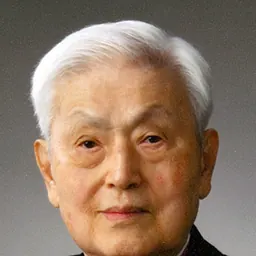
People in Tokiyasu Fujita's life
Named in this biography and alive at the same time


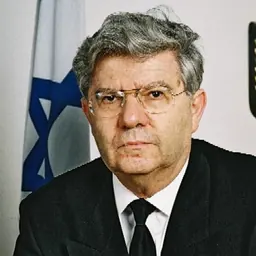
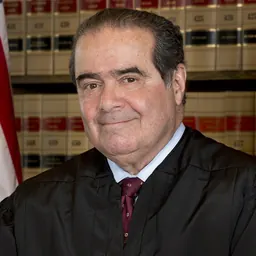
Related people
Same field, nearest in time


Contemporaries
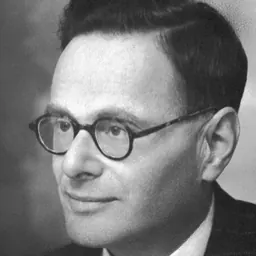
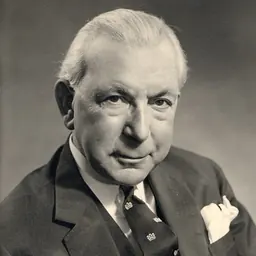
People whose lives overlapped Tokiyasu Fujita's



Frequently asked questions
Who is Tokiyasu Fujita?
Japanese legal scholar
When was Tokiyasu Fujita born?
Tokiyasu Fujita was born on 6 April 1940 in Ota.
What is Tokiyasu Fujita's occupation?
Tokiyasu Fujita is a judge, legal scholar, university teacher and jurist.
What nationality is Tokiyasu Fujita?
Tokiyasu Fujita is Japanese.
Sources & further reading
Cite this page
APA: Biography.guide. (2026). Tokiyasu Fujita. https://biography.guide/tokiyasu-fujita/
MLA: "Tokiyasu Fujita." Biography.guide, https://biography.guide/tokiyasu-fujita/.
Chicago: "Tokiyasu Fujita." Biography.guide. https://biography.guide/tokiyasu-fujita/.
Data last updated: 2026-09-20 · Spot an error? Report a correction.
Page generated 2026-09-27 05:03 UTC