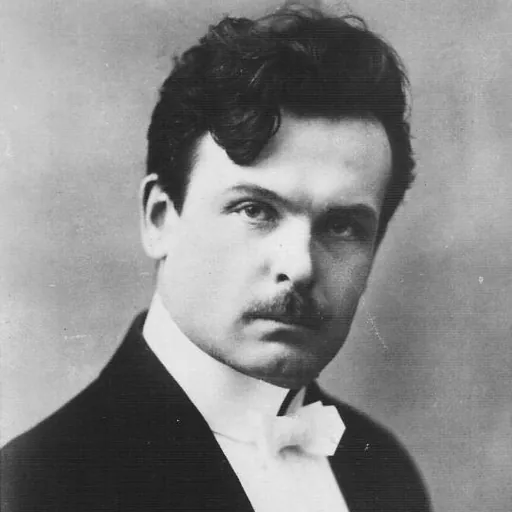
About Toivo Kuula
Lived 1883 – 1918 (aged 34). Toivo Kuula was a Finnish conductor and composer.
Toivo Timoteus Kuula (7 July 1883 – 18 May 1918) was a Finnish composer and conductor of the late-Romantic and early-modern periods, who emerged in the wake of Jean Sibelius, under whom he studied privately from 1906 to 1908. The core of Kuula's oeuvre are his many works for voice and orchestra, in particular the Stabat mater (1914–18; completed by Madetoja), The Sea-Bathing Maidens, Son of a Slave (1910), and The Maiden and the Boyar's Son (1912). In addition he also composed two Ostrobothnian Suites for orchestra and left an unfinished symphony at the time of his murder in 1918 in a drunken quarrel.
Kuula has been considered an even more talented composer than his teacher Sibelius.
A Swedish critic once said that Kuula's music reaches parts of the human spirit where one is forced to deep examination of one's self.
Kuula was known to be a fierce Fennoman. He died in the provincial hospital in Viipuri in 1918 after being mortally wounded 18 days earlier on Walpurgis Night by a bullet fired by a Jäger. The bullet was fired as a result of a quarrel that happened at the Hotel Seurahuone in conjunction with the first victory celebration of the White victory in the Civil War of Finland. Ironically, "Kuula" means "bullet" in Finnish. Kuula is buried in Hietaniemi cemetery, Helsinki.
Toivo Kuula married Alma Silventoinen in 1914; the couple had one daughter, Sinikka, who later became a professional pianist.
Compositions A simplified works list (by Joel Valkila) on the basis of Tero Tommila's Catalogue of Works: Op. 1 Violin Sonata Op. 2 Five Songs for Voice and Piano (also arranged as chamber works) Op. 3a Five Pieces for Violin and Piano: I. Cradle Song, II. Nocturne, III. Folk Song (I), IV. Folk Song (II), V. Scherzino Op. 3b Three Piano Works: I. Elegy, II. Wedding March, III. Little Gavotte Op. 3c Incidental Music to "Isä ja Tytär" Op. 4 Seven Songs for Male Choir Op. 5 Festive March for Chorus and Orchestra (or Brass) Op. 6 Two Songs for Voice and Piano Op. 7 Piano Trio Op. 8 Two Songs for Voice and Piano Op. 9 Ostrobothnian Suite No.1 for Orchestra: I. Pastorale, II. Folk Song, III. Ostrobothnian Dance, IV. Devil's Dance, V. Song of the Dusk (II. & III. also as arranged for Violin and Piano) Op. 10 Prelude and Fugue for Orchestra Op.11 Seven Songs for Chorus Op.12 'Merenkylpijäneidot' ("Sea-Bathing Maids") for Voice and Orchestra/Piano Op.13 Festive March for Orchestra/Piano Op.14 'Orjan poika' ("Son of a Slave") – Symphonic Legend for Soprano, Baritone, Chorus and Orchestra (also 3-movement Suite for Orchestra) Op.15 Cantata 'Kuolemattomuuden toivo' ("Hope for Immortality") Op.16a Two Songs for Voice and Piano Op.16b Two Pieces for Organ: I. Prelude, II. Intermezzo Op.17a South Ostrobothnian Dance Suites I & II for Violin and Piano Op.17b Twelve South Ostrobothnian Folk Dances for Voice/Violin and Piano Op.17c Two Pieces for Violin and Piano: I. Scherzo, II. Melodia lugubre Op.18 'Impi ja pajarin poika' ("The Maiden and the Son of a Blacksmith") for Voice and Orchestra/Piano Op.19 Three Fairy-Tale Pictures for Piano Op.20 Ostrobothnian Suite No.2 for Orchestra: I. Tulopeli, II. Rain in the Forest, III. Menuet, IV. Dance of the Orphans, V. The Devils Making Magic Flames Op.21 Three Songs for Chorus Op.22/1-2 Two Pieces for Cello and Orchestra: I. Chanson sans paroles, II. Elegy (Suru) Op.22/1-2 Two Pieces for Violin/Cello and Piano: I. Chanson sans paroles, II. Elegy (Suru) Op.22/3 Song for Voice and Piano Op.23 Four Songs for Voice and Piano Op.24 Four Songs for Voice and Piano Op.25 Stabat Mater for Chorus and Orchestra (Note: Not left unfinished as has been stated) Op.26 Six Piano Pieces: I. Round Dance, II. Pastorale Atmosphere, III. Dance Improvisation, IV. Nocturne, V. Rauha (Adagio), VI. Funeral March Op.27a Eight Songs for Male Choir Op.27b Nine Songs for Male Choir Op.28/1-2 Two Pieces for Brass Orchestra: I. At the Mountain, II. A Tune Op.28/4 March of the Cudgelmen for Choir and Orchestra (or a capella) Op.29a Three Songs for Voice and Piano Op.29b Four Songs for Choir Op.29c Two Songs for Male Choir Op.30a Incidental Music to 'Kandaules' Op.30b Incidental Music to 'Medicit' Op.30c Incidental Music to 'Taikapeili' ("The Magic Mirror") Op.31a Two Songs for Voice and Orchestra/Piano Op.31b Four Songs for Choir Op.32 Incidental Music to 'Meripoikia' ("The Sea Boys") Op.33 March of the Carburetors for Piano [unfinished] Op.34a Seven Songs for Male Choir Op.34b Three Songs for Chorus Op.35 Three Songs Arrangements for Voice and Orchestra Op.36 Symphony [unfinished]: Introduction Op.37 Two Song Transcriptions for Piano
Six Posthumous Piano Pieces (Two unfinished) Six Posthumous Orchestral Pieces (Two unfinished) Twenty-Two Posthumous Chamber Pieces (Five unfinished) Fourteen Songs (Three unfinished) One Posthumous Cantata
Selected recordings Complete Works for Solo Piano. Adam Johnson. Grand Piano GP780 (2018) Finnish Songs. Kirsi Tiihonen, Satu Salminen. Marco Polo 8.225177 (2004) Orchestral Suites. Turku Philharmonic Orchestra, Leif Segerstam. Ondine ODE1270-2 (2015) Orjan poika. Suomen Laula Choir, Finnish Radio Symphony Orchestra. Jussi Jalas. Broadcast on BBC Radio 3, 23 August 2018 Piano Trio in A Major. Kreeta-Julia Heikkilä, Tuomas Lehto, Roope Gröndahl. YouTube. Songs and Orchestral Music. Susan Gritton, BBC Concert Orchestra, Martyn Brabbins. Dutton Epoch CDLX 7272 (2011) Violin Sonatas. Nina Karmon, Oliver Triendl. CPO 555 148-2 (2018)
Don’t just read it —
keep it.
Full-length biographies made to live with: read them, listen on the way to work, watch them tonight.
- E-book
- Audio
- Video
Instant download · yours to keep · every purchase keeps this site free
Important facts
People in Toivo Kuula's life
Named in this biography and alive at the same time
Related people
Same field, nearest in time

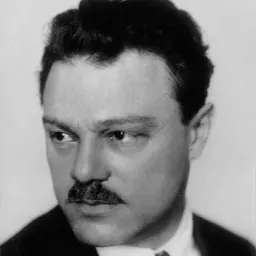


Contemporaries
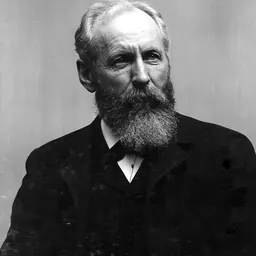
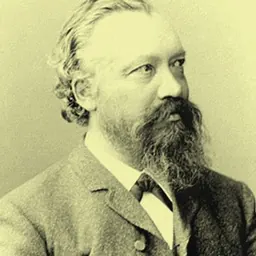
People whose lives overlapped Toivo Kuula's



Frequently asked questions
Who was Toivo Kuula?
Finnish composer (1883–1918)
When was Toivo Kuula born?
Toivo Kuula was born on 7 July 1883 in Alavus, Vaasa.
When did Toivo Kuula die?
Toivo Kuula died on 18 May 1918 in Vyborg, Viipuri provincial hospital.
What was Toivo Kuula's occupation?
Toivo Kuula was a conductor and composer.
What nationality was Toivo Kuula?
Toivo Kuula was Finnish.
Sources & further reading
Cite this page
APA: Biography.guide. (2026). Toivo Kuula. https://biography.guide/toivo-kuula/
MLA: "Toivo Kuula." Biography.guide, https://biography.guide/toivo-kuula/.
Chicago: "Toivo Kuula." Biography.guide. https://biography.guide/toivo-kuula/.
Data last updated: 2026-09-20 · Spot an error? Report a correction.
Portrait: Wikimedia Commons · author & licence
Page generated 2026-09-27 04:58 UTC