
About Timothy Smiley
Born 1930. Timothy Smiley is a British philosopher, known for Logic.
Timothy John Smiley (born 13 November 1930) is a British philosopher, appointed Emeritus Knightbridge Professor of Philosophy at Clare College, Cambridge. He works primarily in philosophy of mathematics and logic.
Life and career
Timothy Smiley was born in London, the son of M. T. Smiley and T. M. Smiley ( Browne). He was educated at Ardwyn Grammar School, Aberystwyth, followed by Ampleforth College, then went up to Clare College, Cambridge to read Mathematics in 1949. He obtained his BA degree in 1952 followed by a PhD in 1956 on natural systems of logic.
After completing his PhD, he remained at Cambridge on a Research Fellowship at Clare (1955–59), then as a tutor and lecturer in philosophy. He also qualified as a pilot in the Air Ministry and was called to the bar at Gray's Inn.
In 1980 he was appointed Knightbridge Professor of Philosophy, a post he held until his retirement in 1998. In 1982–83 he was President of the Aristotelian Society and in 1984 he was elected a Fellow of the British Academy.
He is the father of the author Sophie Smiley.
Work
Timothy Smiley has published in a wide range of philosophical areas, including Aristotle, definite descriptions, modal logic, multiple conclusion logic, negation and denial, plurals, set-theoretic foundations for mathematics and validity.
In recent years, he has collaborated on a number of articles on plural descriptions with Alex Oliver.
Most recently, Smiley's professional standing was marked by the publication of The Force of Argument: Essays in Honor of Timothy Smiley (T. J. Smiley, Jonathan Lear and Alex Oliver, Routledge, 2010)
Published works
He has edited and contributed to numerous papers and publications. A full bibliography of his work is included in his Festschrift, The Force of Argument: Essays in Honor of Timothy Smiley.
Books
Studies in the Philosophy of Logic and Knowledge, (co-edited with Thomas Baldwin.) Mathematics and Necessity: Essays in the History of Philosophy Philosophical Logic Philosophical Dialogues: Plato, Hume, Wittgenstein. Dawes Hicks Lectures on Philosophy Smiley and D. J. Shoesmith, Multiple-Conclusion Logic (1978) (see multiple-conclusion logic) Smiley and Alex Oliver, Plural Logic (2013)
Selected papers
Sense Without Denotation. Analysis 1960; 20 (6): 125–135. doi: 10.1093/analys/20.6.125 What is syllogism?. Journal of Philosophical Logic 1973 (2): 136–154. The Theory of Descriptions. (1981) In T. J. Smiley & Thomas Baldwin (eds.), Studies in the Philosophy of Logic and Knowledge. Published for the British Academy by Oxford University Press. pp. 131–61. Aristotle's completeness proof. Ancient Philosophy. 1994 (14): 25–38.
Don’t just read it —
keep it.
Full-length biographies made to live with: read them, listen on the way to work, watch them tonight.
- E-book
- Audio
- Video
Instant download · yours to keep · every purchase keeps this site free
Important facts
People in Timothy Smiley's life
Named in this biography and alive at the same time






Related people
Same field, nearest in time

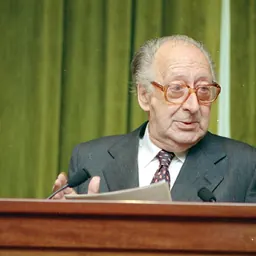
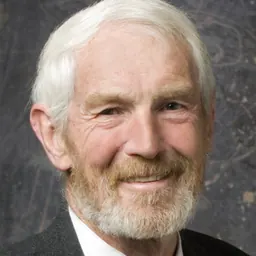
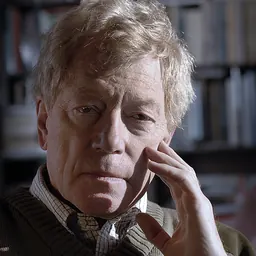


Contemporaries
People whose lives overlapped Timothy Smiley's

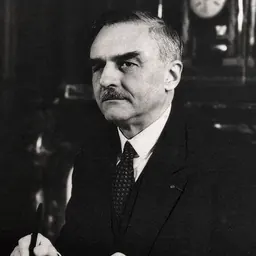
Frequently asked questions
Who is Timothy Smiley?
British philosopher
When was Timothy Smiley born?
Timothy Smiley was born on 13 November 1930 in London.
What is Timothy Smiley's occupation?
Timothy Smiley is a philosopher.
What is Timothy Smiley known for?
Timothy Smiley is known for Logic.
What nationality is Timothy Smiley?
Timothy Smiley is British.
Sources & further reading
Cite this page
APA: Biography.guide. (2026). Timothy Smiley. https://biography.guide/timothy-smiley/
MLA: "Timothy Smiley." Biography.guide, https://biography.guide/timothy-smiley/.
Chicago: "Timothy Smiley." Biography.guide. https://biography.guide/timothy-smiley/.
Data last updated: 2026-09-20 · Spot an error? Report a correction.
Page generated 2026-09-27 05:11 UTC