
Tim Vigors
Recipient of the Distinguished Flying Cross
About Tim Vigors
Lived 1921 – 2003 (aged 82). Tim Vigors was a British biographer, fighter pilot, horse breeder, art collector, animal breeder and military officer.
Wing Commander Timothy Ashmead Vigors, (22 March 1921 – 14 November 2003) was a Royal Air Force fighter pilot and flying ace during the Second World War, in which he fought in the Battle of Britain and in the Far East. In civilian life, Vigors began the development of the Coolmore Stud that transformed the breeding of thoroughbred racehorses.
Vigors's account of his wartime experiences was published posthumously in 2006 as Life's Too Short to Cry: The Inspirational Memoir of an Ace Battle of Britain Fighter Pilot.
Early life and education Vigors was born at Hatfield, Hertfordshire, on 22 March 1921. Although Vigors's father worked as a stockbroker, the family were landowners in County Carlow in Ireland and owned Tullamaine Castle stud in County Tipperary.
He grew up near Melton Mowbray in Leicestershire and hunted with the Mendip from an early age.
Military career Battle of Britain In January 1939 Vigors enrolled as a cadet at RAF Cranwell. He joined No. 222 Squadron RAF flying Spitfires at RAF Duxford in February 1940. He saw action over Dunkirk in May, shooting down his first Bf 109 on 30 May, at which he felt the same satisfaction, his obituary in The Daily Telegraph recorded him saying, as if he had "pulled down a high-flying pigeon flashing across the evening sky with the wind up his tail". On 1 June he shot down his first Heinkel He 111.
Through the summer of 1940, 222 Squadron flew from RAF Hornchurch in Essex. The squadron suffered heavy casualties and Vigors was himself twice forced to crash land. He once responded to a call for volunteers to intercept enemy bombers when still wearing his scarlet pyjamas under a green silk dressing gown, shooting down a Heinkel,
Sinking of HMS Prince of Wales and HMS Repulse
Vigors was posted to Singapore in December 1940, joining No. 243 Squadron RAF as a flight commander, flying Brewster F2A Buffalo fighters. After the Imperial Japanese Army invaded British Malaya, Force Z moved north from Singapore to attack a Japanese convoy bound for Singora. 453 Squadron and Prince of Wales had previously agreed on a system of radio procedures, to facilitate air cover for Force Z. However, a plan proposed by Vigors to keep six aircraft above the ships in daylight hours was rejected. Moreover, Phillips insisted on maintaining radio silence after leaving port and did not keep 453 Squadron informed of his ships' position. Vigors later commented, "I reckon this must have been the last battle in which the Navy reckoned they could get along without the RAF. A pretty damned costly way of learning."
Business career After retiring from the RAF, Vigors first set up a photographic agency in Ireland. He then joined the bloodstock auctioneers Goffs, leaving in 1951 to start his own bloodstock agency. Vigors was one of the first bloodstock agents to internationalise the racehorse breeding industry. In 1950 he was instrumental in the Irish horse Nasrullah, standing at stud in America at Claiborne Farm in Paris, Kentucky.
In 1973 Vigors paid more than £1 million for the stallion Rheingold, winner of the Prix de l'Arc de Triomphe.
In January 1975, the Vigors and O'Brien partnership announced the amalgamation of the Coolmore Stud with the money of Robert Sangster and Magnier's Castle Hyde and Grange studs, creating Coolmore, Castle Hyde and Associated Studs.
After Coolmore Vigors sold his share in the Coolmore operation and moved to Spain. He continued to work as a bloodstock agent and in 1983 returned to Newmarket, Suffolk, handling the syndication of the successful sire Indian Ridge and helping to secure High Chaparral's dam, Kasora, at auction for Sean Coughlan.
In 1990, Vigors became racing adviser to Cartier, helping to initiate the annual Cartier Racing Awards.
Personal life Tim Vigors was married four times. In 1942, in the North West Frontier Province of India, he married Jan, with whom he had three daughters. They divorced in 1968 and that year Vigors married Atalanta Fairey, with whom he had a son. Atalanta Fairey was the widow of the aircraft pioneer Charles Richard Fairey. In 1972 Vigors married Heidi Bohlen, that marriage resulting in two daughters, and in 1982 he married Diana Bryan in Las Vegas.
Don’t just read it —
keep it.
Full-length biographies made to live with: read them, listen on the way to work, watch them tonight.
- E-book
- Audio
- Video
Instant download · yours to keep · every purchase keeps this site free
Important facts
People in Tim Vigors's life
Named in this biography and alive at the same time


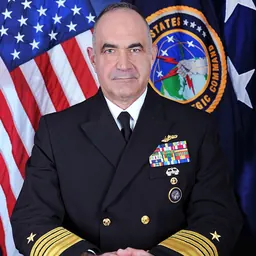



Related people
Same field, nearest in time
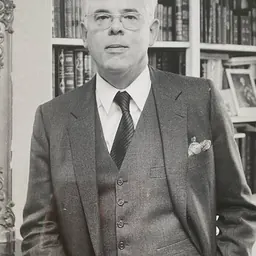
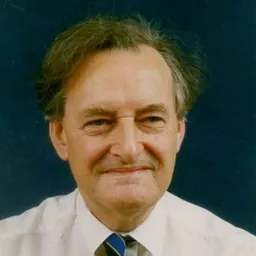
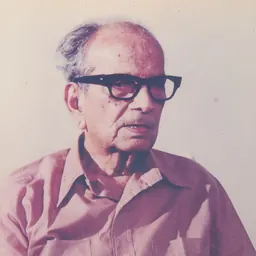

Contemporaries
People whose lives overlapped Tim Vigors's




Frequently asked questions
Who was Tim Vigors?
Recipient of the Distinguished Flying Cross (1921–2003)
When was Tim Vigors born?
Tim Vigors was born on 22 March 1921 in Hatfield.
When did Tim Vigors die?
Tim Vigors died on 14 November 2003 in Cambridge.
What was Tim Vigors's occupation?
Tim Vigors was a biographer, fighter pilot, horse breeder, art collector, animal breeder and military officer.
What nationality was Tim Vigors?
Tim Vigors was British.
Sources & further reading
Cite this page
APA: Biography.guide. (2026). Tim Vigors. https://biography.guide/tim-vigors/
MLA: "Tim Vigors." Biography.guide, https://biography.guide/tim-vigors/.
Chicago: "Tim Vigors." Biography.guide. https://biography.guide/tim-vigors/.
Data last updated: 2026-09-20 · Spot an error? Report a correction.
Page generated 2026-09-27 05:21 UTC