
About Tilly Edinger
Lived 1897 – 1967 (aged 69). Tilly Edinger was a German paleontologist, zoologist, university teacher and neurologist.
Johanna Gabrielle Ottilie "Tilly" Edinger (13 November 1897 – 27 May 1967) was a German-American paleontologist and the founder of paleoneurology.
Personal life
Early life Tilly Edinger was born to a wealthy Jewish family in 1897. Her father, Ludwig Edinger, founded Frankfurt's first neurological research institute, providing Edinger with multiple contacts in the scientific community that helped drive her career. She was the youngest of three siblings. Her brother Fritz was killed during the Holocaust and her sister Dr. Dora Lipschitz emigrated to the United States. As a teenager, Edinger began to lose her hearing. She required hearing aids, and as an adult she was completely deaf and could not hear without them.
Edinger was educated at Schiller-Schule, which was a secondary school for girls in Frankfurt. In 1916, Edinger studied at Heidelberg University and the Ludwig-Maximilians-Universität München to receive a major in zoology, but later changed to geology/paleontology. Edinger began work on a doctoral dissertation in 1920 with her mentor Fritz Drevermann at the Goethe University Frankfurt. In 1921, parts of her doctoral thesis were published in the journal Senckenbergiana. After completing her degree, Edinger worked at the Geological-Paleontological Institute of the University of Frankfurt as an unpaid "Volunteer-Assistentin" (1921-1927). Edinger continued to work as an unpaid curator at the Senckenberg Museum (1927-1938).
Later life Edinger began her professional career in 1921 as a paleontology research assistant at the University of Frankfurt, a position she held until 1927. That year, she moved to a curatorial position in vertebrate paleontology at the Naturmuseum Senckenberg where she continued to work until 1938, her position allowed her to spend time researching and studying vertebrates. While there, she wrote and then published in 1929 the founding work of paleoneurology, Die Fossilen Gehirne (Fossil Brains), which was based on her discovery that mammalian brains left imprints on fossil skulls, allowing paleoneurologists to discern their anatomy. Nontheless, in summer 1938, Edinger applied for an American visa with the hope of being able to leave Germany. On May 27, 1967, while crossing a street in Cambridge, she was unaware of an oncoming vehicle and was tragically struck and killed.
Education Her early education was provided by several governesses, many of whom taught in both French and English - a quality that proved to serve her well later in life. Her first formal schooling was at Frankfurt's all-girls' high school, known as the Schiller-Schule. Her father did not approve of her following in his footsteps in neurology as he did not believe women belonged in science. Nevertheless, he later used his position in the scientific community to assist in finding connections to help further her career. She initially studied zoology but switched to paleontology in which she was much happier. The classes she took in zoology, geology, psychology and paleontology allowed her to take her interest in neurology and relate it to geological evidence, later building the foundations of paleoneurology. Despite Edinger's education, her mother still saw her studies as nothing more than a hobby. She began her doctoral studies at the Goethe University Frankfurt. Her study of the brain of Nothosaurus, a Triassic marine reptile, earned her a Ph.D. in natural philosophy in 1921 and was the topic of her first publication. After completing her Ph.D., she carried out more research in paleontology part-time and was a curator of fossil vertebrates for Senckenberg Museum. 1916 1918 Heidelberg University Post-secondary comparisons were challenged by George Gaylord Simpson and because of this, she suggested a strong analysis of brain enlargement and patterns of cortical sulcation and how they arise independently. She also noted that neural and osteological innovations in horses did not happen at the same time or rate as other body systems, further arguing her point. Several schools also gave her honorary doctorates for her achievements, including Wellesley (1950), the University of Giessen (1957), and her alma mater, the University of Frankfurt (1964). Besides being the president of the Society of Vertebrate Paleontology, she was a member of several other scientific societies, including the Society for the Study of Evolution, the Paleontologische Gesellschaft, and the Senckenberg naturf Gesellschaft. Edinger died before she could complete her last work, The Comprehensive Summary of Paleoneurology. This was later completed by some of her colleagues and was published posthumously. 1957 University of Giessen Honorary Degree 1964 University of Frankfurt Honorary Degree Justus Liebig University Honorary Degree Johann Wolfgang Goethe University Honorary Degree
Publications Edinger founded modern paleoneurology while at Senckenberg Museum in Frankfurt am Main.
Don’t just read it —
keep it.
Full-length biographies made to live with: read them, listen on the way to work, watch them tonight.
- E-book
- Audio
- Video
Instant download · yours to keep · every purchase keeps this site free
Important facts
People in Tilly Edinger's life
Named in this biography and alive at the same time
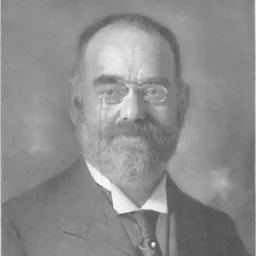


Related people
Same field, nearest in time
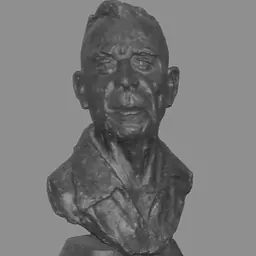



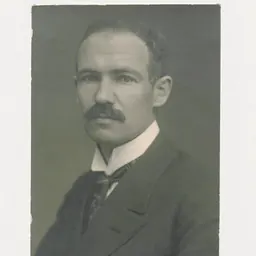
Contemporaries
People whose lives overlapped Tilly Edinger's


Frequently asked questions
Who was Tilly Edinger?
German paleontologist (1897-1967)
When was Tilly Edinger born?
Tilly Edinger was born on 13 November 1897 in Frankfurt.
When did Tilly Edinger die?
Tilly Edinger died on 27 May 1967 in Cambridge.
What was Tilly Edinger's occupation?
Tilly Edinger was a paleontologist, zoologist, university teacher and neurologist.
What nationality was Tilly Edinger?
Tilly Edinger was German.
Sources & further reading
Cite this page
APA: Biography.guide. (2026). Tilly Edinger. https://biography.guide/tilly-edinger/
MLA: "Tilly Edinger." Biography.guide, https://biography.guide/tilly-edinger/.
Chicago: "Tilly Edinger." Biography.guide. https://biography.guide/tilly-edinger/.
Data last updated: 2026-09-26 · Spot an error? Report a correction.
Page generated 2026-09-27 05:16 UTC