
About Tillie Voss
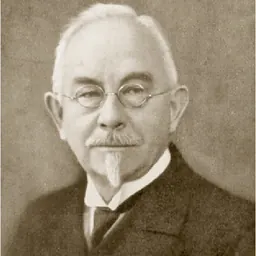
Lived 1897 – 1975 (aged 78). Tillie Voss was an American basketball player and american football player.
Walter Clarence "Tillie" Voss (March 28, 1897 – December 14, 1975) was an American professional football and basketball player. An end and tackle in football, and a center and forward in basketball, he played for record 10 National Football League (NFL) teams (tied with Shayne Graham) along with seven teams in the American Basketball League (ABL). A native of Detroit, Michigan, Voss was a top athlete in high school and college, where he competed in four sports for the University of Detroit: football, basketball, baseball, and track and field. He captained both the football and basketball teams and starred in both sports, earning first-team All-American honors in football and All-Western honors in basketball. Voss concluded his collegiate career as Detroit basketball's all-time leading scorer.
Considered, at the peak of his career, both one of the greatest ends in football and one of the best centers in basketball, Voss played many seasons professionally in both sports. In football, Voss played in the NFL for nine seasons, being a member of the Detroit Tigers (1921), Buffalo All-Americans (1921), Rock Island Independents (1922), Akron Pros (1922), Toledo Maroons (1923), Green Bay Packers (1924), Detroit Panthers (1925), New York Giants (1926), Chicago Bears (1927–1928), Dayton Triangles (1929) and Buffalo Bisons (1929). He also had stints with several other independent teams and a non-playing stint with the NFL's Cleveland Bulldogs. Voss was honored as an All-Pro four times and was a first-team selection in 1923 and 1924, becoming the first first-team All-Pro in the history of the Green Bay Packers. While in Green Bay, he also led the NFL in receiving touchdowns.
Voss also played for numerous basketball teams in his career. He was a star player for the Fort Wayne Caseys and Detroit Kelly Greens early in his career, before becoming one of the founders of the American Basketball League (ABL) in 1925. At the start of the ABL, Voss served as player-coach for the team Detroit Pulaski, although he did not remain there long. Across five ABL seasons, he played for Detroit Pulaski (1925–1926), the Rochester Centrals (1926), Brooklyn Arcadians (1926), Washington Palace Five (1926–1927), Detroit Cardinals (1927–1928), Fort Wayne Hoosiers (1928) and Chicago Bruins (1928–1930), earning All-ABL honors in 1927. Voss retired from playing after the 1930 season. He later was a welfare worker in Michigan before moving to Florida for the final years of his life. Voss died in 1975 and was posthumously inducted into the University of Detroit Sports Hall of Fame in 1978.
Early life Voss was born on March 28, 1897, in Detroit, Michigan. He grew up there and began playing basketball in grammar school. Voss attended the University of Detroit Jesuit High School and Academy, as well as Georgetown Preparatory School in North Bethesda, Maryland.
College career 1915–1917 At the University of Detroit, Voss competed in football, basketball, baseball, and track and field. At Detroit, Voss was a top member of the Detroit Tigers football team in 1915, playing tackle. He was also a top placekicker in college.
In the 1915 football season, Voss "gave signs of developing into one of the best tackles the U. of D has turned out," reported the Detroit Free Press. While playing end, Voss was noted for his pass catching ability. He led the team to a record of 8–1, with Detroit outscoring opponents by a margin of 389 to 34 and their only loss being to the Michigan Wolverines.
Voss was also a standout center and forward for the Detroit basketball team, earning recognition as being "about the best pivot man in the city or state" during the 1915–16 season. The next year, he served as the team's captain, making him the first person in the history of the University of Detroit to serve as team captain in two major sports; he led the 1916–17 basketball team with an average of 12.9 points per game. Outside of college basketball, Voss was also a member of an independent club, the Detroit Rayls, helping them win a championship series over the Detroit YMCA in 1916, and later playing for them again in 1918–19. In his second stint with the Rayls, he contributed to them winning the middle west championship. He was stationed at Camp Gettysburg before being sent back to Detroit to assist in recruiting efforts for the Army. In 1919, he returned to college and rejoined the Detroit football team, although he missed the start of the season due to injury. Voss helped the 1919 Detroit football team to a record of 8–1. Voss then returned to Detroit's basketball team for the 1919–20 season; according to the Buffalo Courier, some critics considered him to be the best center in the country. He was named All-Western and first-team All-American by Walter Eckersall, as well as third-team All-American by Walter Camp. Voss is the lone player in the history of Detroit's football program to be named All-American by Camp, while Eckersall called him "the greatest tackle seen in the middle west" since Curtis Redden. In naming him, along with Duke Slater, All-Western, the Detroit Free Press noted that he and Slater had no equals at their position: "Both have great physical strength and rugged endurance ... Offensively and defensively, Voss and Slater have done all and even more than anyone could reasonably expect of a tackle." After his last football season, Voss played his final season with the basketball team in 1920–21; he received a fifth varsity letter in the sport as an exemption due to the war. Voss was the team's leading scorer with 8.7 points per game in his last year. Following Detroit's 1920–21 season, Voss joined the Detroit YMO team. By the end of his basketball career, Voss was regarded as the greatest player in school history.
According to the son of Howard Philippart, one of Voss's Detroit football teammates, Voss once allegedly ran into a cinder block to get sleep before an important game. Philippart's son said, "so the story was told from my father ... [Voss] one day had a terrible toothache. Aspirin did not seem to help and he desperately needed sleep for the big Navy game the following day. 'I gotta do something,' he told my father and ran full tilt head first into the cinder block wall. As they carted him off to bed for a good night sleep, the players silently applauded his dedication and loyalty." The paper mentioned that he made a brief appearance in their season-ending loss to the Akron Pros, and "the few minutes the Triangle fans had to see him in action sold them on him".
Voss signed with the Detroit Tigers of the APFA for the 1921 season. Voss joined the Tigers to play at tackle and end. He opened the 1921 season as the Tigers' starting right end, blocking a field goal in the season-opening 0–0 tie to the Rock Island Independents. The following week, he led the Tigers to what would be their lone win as an APFA franchise – a 10–7 defeat over the Dayton Triangles in which Voss returned a fumble 66 yards for a touchdown and kicked an extra point. The Tigers then lost all five of their remaining APFA games, being shut out in four of them. In a 20–0 loss to the Akron Pros, Voss caught a 35-yard pass, the Tigers' only completed pass of the game, while he scored an extra point in a 20–9 loss to the Decatur Staleys. The Tigers finished the season with a record of 1–5–1, placing 16th in the APFA, as Voss started all of their games. He appeared in four or five games, four as a starter, for the All-Americans, as they finished the season with a record of 9–1–2 and controversially placed second in the league. He became one of the team's top receivers and was also known for his speed in punt coverage. For the Independents, Voss started all seven games and helped the team to a record of 4–2–1, fifth place in the now-NFL, with three of their wins being shutouts. Among his performances with Rock Island were six extra points in a 60–0 win against the Evansville Crimson Giants, a receiving touchdown and fumble return touchdown in a 43–0 victory against the Dayton Triangles, and a 72-yard interception return in a season-ending 3–0 loss to the Chicago Bears.
After Rock Island's season ended, Voss joined the Akron Pros in time for their next game, against the Bears. He started the Pros' final three games of the season, all losses. Voss ended the season with 10 games played, posting two touchdowns and six extra points, for a total of 18 points; he was Rock Island's fourth-leading scorer. Playing at tackle and end, he started all eight of the Maroons' games and was one of their top players, as the team compiled a record of 3–3–2, finishing 10th in the NFL. He scored a total of seven points, coming from a touchdown and an extra point, and was Toledo's second-leading scorer for the 1923 season. However, Deutsch later purchased the Canton Bulldogs and thus received Bird Carroll and Guy Chamberlin at the end position. Voss was the leading receiver for the Packers, a team that was known for their frequent use of passes.
Starting all 11 games for the 7–4 Packers, Voss caught a total of five touchdown passes, tying Bob Rapp for the NFL lead and breaking the single-season league record. Some sources have considered this the first ejection in the history of the NFL, although contemporary sources show otherwise.
1925–1930: Later career Voss signed with the Detroit Panthers in September 1925. Amidst his absence, the Panthers lost to the Chicago Bears, their first defeat of the season. In total, Voss appeared in 10 of the Panthers' 12 games, helping them to a record of 8–2–2 and a third-place finish in the league.
In 1926, Voss signed with the New York Giants. Voss was released at the start of November for a violation of team training rules, but shortly after rejoined the team and had the game-winning block of a kick in a 14–13 win against the Duluth Eskimos. It was one of several kicks he blocked during the season, in which he helped the Giants to a record of 8–4–1, sixth place in the league, while all of their losses were by a margin of one score.
Voss was purchased from the Giants by the Chicago Bears for the 1927 season. He became the first former Green Bay Packers player to join the Bears, their biggest rival. According to the Green Bay Press-Gazette, most NFL teams felt that his "football days were over", but he "more than earn[ed] his money" with the Bears. He appeared in 11 games, starting eight, for the 1927 Bears, helping them to a third-place finish in the league with a record of 9–3–2. Voss returned to the Bears for the 1928 season, the only time in his NFL career he returned to his team for the next season. He caught a touchdown pass in a 34–0 win against the Chicago Cardinals in what ended up being his final NFL score.
Voss (in striped sleeves) has no chance to hold the edge against Bears quarterback Joey Sternaman when faced with a body-block and the interference of fullback Red Grange, October 1929. Voss signed with the Buffalo Bisons in 1929 for his last NFL season. However, he played his first game of the season on September 28, as a backup for the Dayton Triangles in their 14–7 loss to the Frankford Yellow Jackets, before starting with the Bisons the next day in their game against the Chicago Cardinals, a 9–3 loss. He appeared in seven or eight games, seven as a starter, for the Bisons, before being released in November to allow him to return to basketball. Buffalo compiled a record of 1–7–1, placing 10th in the NFL, while Dayton lost all six of their games en route to a 12th-place finish in their final season.
Voss joined the Milwaukee Nighthawks in 1930, an independent football team that scheduled some games against NFL franchises. He was a leading player for the Nighthawks, a team that compiled a record of 4–5. After the end of the Nighthawks' season, Voss signed with the Memphis Tigers, one of the team's opponents, for the end of the year. He debuted in a win against the Wichita Panthers and was with the Tigers as they went 2–3 in their final five games. Voss retired following the 1930 season due to severe injuries.
Player profile Across his professional career, which spanned from 1921 to 1930 in addition to a season in 1918, Voss played for 10 NFL teams and three independent teams. (See ESPN for 10 NFL teams.) The three independents teams included the Detroit Heralds (1918), Milwaukee Nighthawks (1930) and Memphis Tigers (1930). Jerry Roberts described Voss's career as being "as illustrative as any of the vagabond player's fate in those volatile NFL times, when teams folded sometimes in mid-season". Voss's 10 NFL teams played for remains an all-time record, since tied by Shayne Graham. Voss was considered particularly talented as a receiver in the NFL's early days and was known for his speed and aggressiveness. He was also a top performer on defense and special teams. Voss's speed came despite him being one of the larger players in the league, and The Daily Times reported him to be "as fast as an ordinary college sprinter", while noting he had the ability to "play end, tackle, guard or fullback with an equal degree of skill". He was noted in The News-Messenger to be "one bunch of beef that moves rapidly and to a certain point and his path is strewn with human wreckage whenever he starts down the line with the [football]."
Professional basketball career 1921–1925: Early career
In November 1921, Voss signed to play center for the Fort Wayne Caseys, a Knights of Columbus team which was defending middle west basketball champions. He spent the 1921–22 season with both clubs, playing for Fort Wayne on days when Detroit did not have games; in February 1922, Voss played for the Kelly Greens against the Caseys and was leading the scorer in a Detroit victory. He set team scoring records for Detroit and, according to local newspapers, was regarded as the best center in all of basketball. Voss helped the team to the Michigan state title by defeating the 11-time defending champion Detroit Rayls, his former team.
The Muskegon Chronicle remarked that Voss was "undoubtedly the greatest drawing card in the middle west", stating that his presence alone could "pack the Y[MCA] gym to the doors", and Columbia University athletic director Tom Thorp said that he was even more talented at basketball than football. With Fort Wayne, Voss helped the Caseys defeat the national champion Original Celtics, and he also was a member of a team known as the Omars towards the end of the season. In total, for the Caseys, he scored 126 points, more than a fifth of all of the team's points, while he did not score in only one of 17 games.
Voss re-signed with Fort Wayne in November 1922 and also played with the Kelly Greens again during the 1922–23 season; the Kelly Greens were renamed the Detroit Jerry McCarthys. He also spent time with the American Oils team of Jackson, Michigan, and was a member of a Delco team for their game against the claimed world champion Original Celtics. Voss returned to Fort Wayne for the 1923–24 season as a guard on a contract stipulating he only play for them; nevertheless in December 1923 he was loaned for a game to the Detroit Red Arrows for their game against the Hewitts of Buffalo, New York, which they won 53–33. He helped Fort Wayne to a victory in a series over the Original Celtics for the claimed world championship and was second on the team in scoring with over 200 points. He was Milwaukee's top player in a victory over the Celtics.
Voss did not return to Fort Wayne for the 1924–25 season and instead played for Detroit Pulaski, a team sponsored by the American Legion; the McCarthys, his other former team, had folded after the prior season. He served as Detroit Pulaski's captain and led them to wins over many prominent teams, including the Celtics, New York Kingstons and Cleveland Rosenblums. Towards the end of the season, he also made appearances for the Port Clinton, Ohio, American Legion team and the Consumers Power team of Jackson, Michigan.
1925–1930: ABL founding and later career
Voss was one of the founders of the American Basketball League (ABL) and attended the meeting which established the league on April 25, 1925, in Cleveland, Ohio. He was a delegate representing Detroit Pulaski and was active in league meetings. In the 1925–26 season, Voss served as player-coach for Detroit and was described in some sources as one of the ABL's top centers at the start of the season. However, at the start of February 1926, the team manager suspended him, citing that Voss "failed to gain his true form and fail[ed] to train seriously and adhere to the rules laid down for the other players". He departed the team later that month and joined the Rochester Centrals. After less than a month with Rochester, he was purchased by the Brooklyn Arcadians for the last stretch of the season and was credited by The Brooklyn Daily Times with having significantly improved their performance. Voss helped them to the inaugural ABL championship but Brooklyn lost the series. In January, it was announced he was soon to be released due to disappointing play; however, immediately after, he had a top performance against the Fort Wayne Caseys, including making the game-winning shot, and it was decided he was to stay at Washington. The Plain Dealer commented that the initial decision to release Voss "seems to have injected new life into [him]", while The Washington Daily News reported his improvement helped turn the team into a title contender. After placing second in the league in its first half with a record of 16–5, Washington went 14–7 in the second half of the 1926–27 ABL season and placed third in the league. Voss appeared in 31 games for the Palace Five, scoring 144 points, an average of 4.6 points per game.
Following the season, Voss was involved in what was then the biggest trade in ABL history, with three players from Washington, including him, being sent to the Philadelphia Warriors in exchange for three players. However, at his request, he was sold from Philadelphia to the Detroit Cardinals before the 1927–28 season, missing some games early in the season due to a broken hand. At the start of January 1928, Detroit folded, and he then moved to the Fort Wayne Hoosiers. He only briefly played for the Hoosiers before joining the Chicago Bruins, serving as a key player in his team debut, a win against Rochester. In total, Voss appeared in 27 games for three teams during the 1927–28 season, scoring 44 points, an average of 1.6 per game. In 27 games, he scored only 40 points, averaging 1.5 points per game. He posted a career-low 36 points, 1.1 per game, in 32 appearances for the Bruins, and did not return to basketball in 1930–31. as well as one of the best overall players in the west
At and over , Voss was considered large in basketball and his size was considered to have given him an advantage. He was often used by his teams on tip-offs. As in football, Voss was known for his speed in basketball despite his size, with one paper calling him "the fastest big man in the game". He was considered an "ideal leader on the court" and according to the Detroit Free Press, he was one of the most valuable players for his team because of his "speed, weight, height, knowledge of the game, and willingness to bury himself for the team". The Belvidere Daily Republican praised his shooting abilities and said that, "He attempts few from a distance, but the ball in his hands in his favorite under the basket position – running or standing – is two points certain." After a loss to the Queen's Gaels in October 1931, he left Toronto and returned home. The Globe and Mail commented that while he was unsuccessful in teaching Toronto how to effectively use the passing game, "he did improve the work of the wingline in respect to interference, and it may be that his instruction will bear more fruit in the games to come". Voss worked for a Works Progress Administration (WPA) program. In 1940, he was seriously injured after being stabbed, when he intervened in a fight between two other employees, but recovered. He later worked for the welfare department in Wayne County, Michigan. He lived in Dearborn before moving to Stuart, Florida, for the last three years of his life. He died there on December 14, 1975, at the age of 79. Voss was posthumously inducted into the University of Detroit's Sports Hall of Fame in 1978.
Don’t just read it —
keep it.
Full-length biographies made to live with: read them, listen on the way to work, watch them tonight.
- E-book
- Audio
- Video
Instant download · yours to keep · every purchase keeps this site free
Important facts
People in Tillie Voss's life
Named in this biography and alive at the same time






Related people
Same field, nearest in time
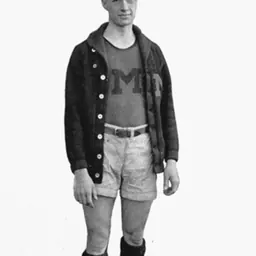
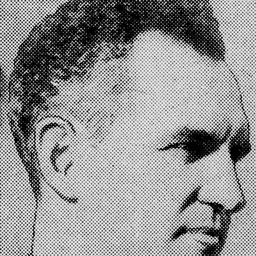
Contemporaries
People whose lives overlapped Tillie Voss's

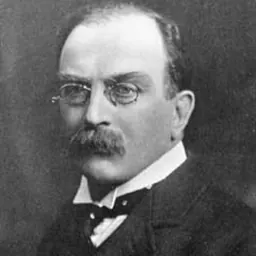

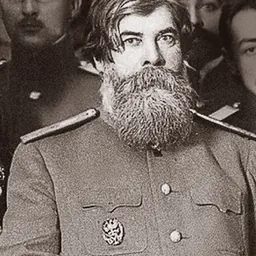
Frequently asked questions
Who was Tillie Voss?
American football player (1897-1975)
When was Tillie Voss born?
Tillie Voss was born on 28 March 1897 in Detroit.
When did Tillie Voss die?
Tillie Voss died on 14 December 1975 in Stuart.
What was Tillie Voss's occupation?
Tillie Voss was a basketball player and american football player.
What nationality was Tillie Voss?
Tillie Voss was American.
Sources & further reading
Cite this page
APA: Biography.guide. (2026). Tillie Voss. https://biography.guide/tillie-voss/
MLA: "Tillie Voss." Biography.guide, https://biography.guide/tillie-voss/.
Chicago: "Tillie Voss." Biography.guide. https://biography.guide/tillie-voss/.
Data last updated: 2026-09-20 · Spot an error? Report a correction.
Page generated 2026-09-27 05:26 UTC