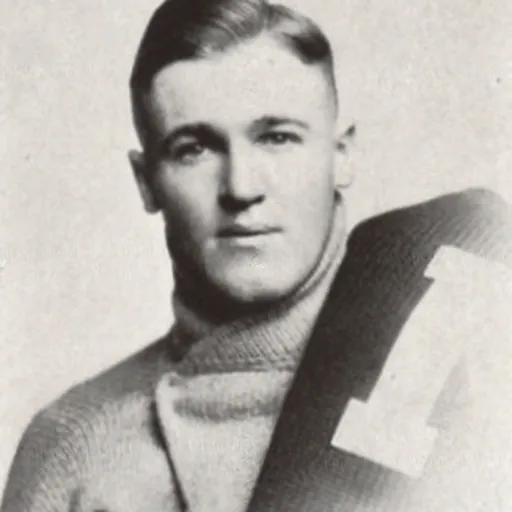
Guy Chamberlin
American football player and coach
About Guy Chamberlin
Lived 1894 – 1967 (aged 73). Guy Chamberlin was an American american football coach and american football player.
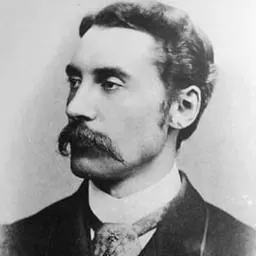
Berlin Guy "Champ" Chamberlin (January 16, 1894 – April 4, 1967), sometimes misspelled Guy Chamberlain, was an American professional football player and coach. He was inducted into the College Football Hall of Fame in 1962 and the Pro Football Hall of Fame in 1965. He was also named in 1969 to the NFL 1920s All-Decade Team.
A native of Blue Springs, Nebraska, Chamberlin played college football as a halfback at Nebraska Wesleyan University in 1911 and 1912. He transferred to the University of Nebraska in 1913 and played at the halfback and end positions for the undefeated 1914 and 1915 Nebraska Cornhuskers football teams that won consecutive Missouri Valley Conference championships. He was a consensus first-team All-American in 1915, and he was selected in 1936 as the greatest player in Nebraska football history.
He played professional football for nine years with the Canton Bulldogs (1919), Decatur / Chicago Staleys (1920–1921), Canton Bulldogs (1922–1923), Cleveland Bulldogs (1924), Frankford Yellow Jackets (1925–1926), and Chicago Cardinals (1927). He won professional football championships in six of his nine seasons in professional football: as a player in 1919 with the undefeated Bulldogs and in 1921 with the Staleys, and as a player/coach in 1922, 1923, and 1924 with the Bulldogs and in 1926 with the Yellow Jackets. He compiled a 58-16-7 record in six years as a head coach in the National Football League (NFL), the best win percentage of any coach in NFL history with a minimum 50 games coached. He is also the only coach to win NFL championships with three different clubs.
Early life Chamberlin was born in Blue Springs, Nebraska, in 1894. He was raised with five siblings on a family farm in Blue Springs. He graduated from Blue Springs High School in 1911.
College football Nebraska Wesleyan In the fall of 1911, Chamberlin enrolled at Nebraska Wesleyan University in Lincoln, Nebraska. Chamberlin was selected by the Omaha World-Herald as an all-state halfback while playing for the undefeated 1911 Nebraska Wesleyan football team that won the NIAA championship. Chamberlin also competed for Nebraska Wesleyan in baseball as a pitcher and outfielder and in track as a sprinter and weight man. He played halfback for Jumbo Stiehm's undefeated 1914 Nebraska Cornhuskers football team that won the Missouri Valley Conference championship and became known as the "Stiehm Rollers". At the end of the 1914 season, Chamberlin was named to Outing magazine's "Football Roll of Honor: The Men Whom the Best Coaches of the Country Have Named as the Stars of the Gridiron in 1914".
In 1915, Chamberlin moved to the end position for the undefeated 1915 Nebraska Cornhuskers football team that again won the Missouri Valley championship. He led the team with 15 touchdowns. At the end of the season, he was a consensus All-American on the 1915 College Football All-America Team with first-team honors from Frank G. Menke, Walter Eckersall, and Parke H. Davis. He graduated from Nebraska in 1916. In 1917, he returned to work on his father's farm in Blue Springs, Nebraska.
United States Army Chamberlin served in the United States Army from May 1918 to October 1919. He served in a field artillery unit with the rank of second lieutenant and was stationed at Camp Zachary Taylor in Louisville, Kentucky, Fort Sill in Oklahoma, and Camp Kearny in San Diego County, California. At the end of the 1920 season, Chamberlin was selected as a first-team end on the first All-Pro Team.
In 1921, Chamberlin played as a center fielder for the Staleys baseball team during the summer, and he remained with the organization as the Staleys football team moved to Chicago and won the APFA championship with a 9–1–1 record. On December 3, 1921, before a crowd of 13,000 in Chicago, the Staleys defeated the first-place Buffalo All-Americans in what was touted as the championship game. In the victory over Buffalo, Chamberlain intercepted a pass and returned it 90 yards for the game-winning touchdown.
George Halas, who coached Chamberlin with the Staleys, wrote in 1957: "Chamberlin was the best 2-way end I've ever seen. He was a tremendous tackler on defense and a triple-threat performer on offense." He strengthened the team in the off-season by signing guard Tarzan Taylor, with whom he had played on the Staleys, and tackle Link Lyman, an All-American who played at Chamberlin's alma mater, Nebraska. Chamberlin led the 1922 Bulldogs to an NFL championship with an undefeated 10–0–2 record. The team shut out nine of twelve opponents and allowed only 15 points in 12 games. Three players from the 1922 Bulldogs (Chamberlin, Lyman, and Pete Henry) were later inducted into the Pro Football Hall of Fame. Chamberlin led the team in scoring with seven touchdowns, two of them on interception returns.
Chamberlin returned to the Bulldogs as player/coach the following year. The 1923 team had another undefeated season (11–0–1), shut out eight of twelve opponents, outscored all opponents by a combined total of 246 to 19, and won its second consecutive NFL championship. After the season, Chamberlin was selected as a first-team All-Pro player by Collyer's Eye magazine.
In August 1924, Cleveland jeweler Samuel Deutsch bought the Canton Bulldogs and moved the team to Cleveland where they became the Cleveland Bulldogs during the 1924 NFL season. With Chamberlin still serving as player/coach, the Bulldogs compiled a 7–1–1 record, outscored opponents by a total of 229 to 60, and won their third consecutive NFL championship. After the 1924 season, Chamberlin was again selected as a first-team All-Pro by Collyer's Eye and a third-team All-Pro by the Green Bay Press-Gazette.
In three seasons with the Bulldogs, Chamberlin led the franchise to three NFL championships and a record of 28–1–4, having outscored opponents by a combined total of 659 to 94.
Frankford Yellow Jackets In 1925, Chamberlin joined the Frankford Yellow Jackets in Philadelphia as player and coach. He led the 1925 Frankford team to a 15–7 overall record, 13–7 against NFL opponents. The team had compiled a 9–1 record in its first 10 games, but Chamberlin suffered a broken shoulder in a game against Akron, and the Yellow Jackets lost six of the next eight games. On December 4, 1926, the Yellow Jackets defeated the previously unbeaten Chicago Bears, 7–6, to secure the championship. In a 1968 book titled "Pro Football's All-time Greats", the author wrote that Chamberlin blocked both an extra point and a field goal in the victory over the Bears,
Chamberlin left the team after the 1926 season for unclear reasons; sports historian Bob Carroll notes that "one [theory] is that Chamberlin and the players he wanted were too costly. Another theory is that he was fired as a result of a power battle within the Frankford organization." In two years at Frankford, Chamberlin led the Yellow Jackets to Philadelphia's first NFL championship and compiled a 27-8-2 record against NFL opponents. With the exception of Ben Jones, the 1927 Cardinals lacked star players, and Chamberlin at age 33 started only one game. The team compiled a 3–7–1 and finished ninth in the NFL.
Legacy and honors With a 58-16-7 record in six years as an NFL head coach,
Chamberlin received numerous honors for his accomplishments as a football player and coach. His honors include the following:
In 1936, Chamberlin was named the greatest player in Nebraska football history in a poll of former Nebraska football players. In 1951, he became the fifth person inducted into the Nebraska Sports Hall of Fame. In 1962, he was inducted into the College Football Hall of Fame. On learning of his selection, Chamberlin said he accepted the honor to share it with all members of the 1914 and 1915 Nebraska football teams and paid particular tribute to Dick Rutherford who was the blocking star during those years. Also in 1962, a new baseball diamond was dedicated at the Nebraska State Reformatory, where Chamberlin had been a guard for seven-and-a-half year was named Guy Chamberlin Field. The name was chosen by popular vote among the inmates. At the dedication ceremony, Governor Frank B. Morrison praised Chamberlin for his devotion to the inmates. In 1965, he was also inducted into the Pro Football Hall of Fame in 1965 as part of the third class of inductees. His Pro Football Hall of Fame bust and certificate are displayed in the gallery cabinet at the Beta Theta Pi fraternity house at the University of Nebraska-Lincoln. Past winners include Jordan Westerkamp (2016), Dean Steinkuhler (1984), Maury Damkroger (1974), Rich Glover (1973), and Jeff Kinney (1972). In 1969, as part of the NFL's 50th anniversary, the Pro Football Hall of Fame selected all-decade teams for each of the league's first five decades. Chamberlin was selected as an end on the NFL 1920s All-Decade Team. In 1971, he was one of eight persons (along with Bob Devaney, Ed Weir, George Sauer, Dana X. Bible, Biff Jones, Fielding H. Yost, and Eddie N. Robinson) in the first class to be inducted into the Nebraska Football Hall of Fame. In 2014, a monument to Chamberlin was dedicated on the grounds of Southern Elementary School in Blue Springs, Nebraska.
Family and later years Chamberlin was married twice. He married Lucile B. Lees in 1919. Chamberlin and his first wife were divorced.
After retiring from football, was a salesman in Cleveland for several years. He returned to Blue Springs in 1932, where he managed his father's farm. In 1948, he moved to Nebraska City, Nebraska, where he owned and operated a Ford-Ferguson agricultural equipment dealership. In 1954 or 1955, he sold the Ford-Ferguson business and moved to Lincoln, Nebraska, where he was employed as a guard at the Nebraska State Reformatory. He retired in 1962. Per Chamberlin's request, his body was cremated, and his ashes were spread in his hometown, Blue Springs, Nebraska.
Head coaching record
Don’t just read it —
keep it.
Full-length biographies made to live with: read them, listen on the way to work, watch them tonight.
- E-book
- Audio
- Video
Instant download · yours to keep · every purchase keeps this site free
Important facts
People in Guy Chamberlin's life
Named in this biography and alive at the same time


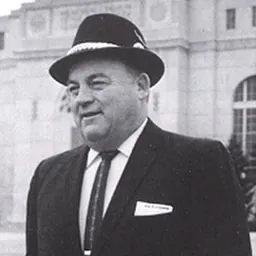

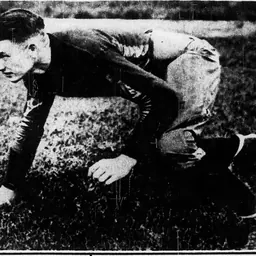
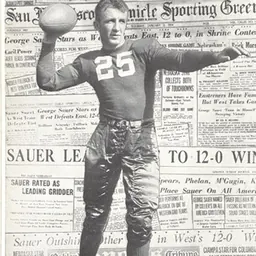
Related people
Same field, nearest in time

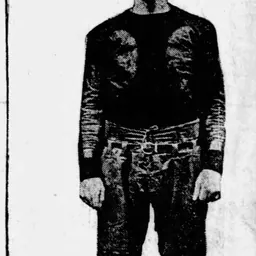
Contemporaries
People whose lives overlapped Guy Chamberlin's
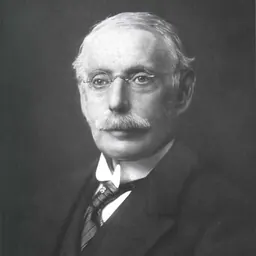
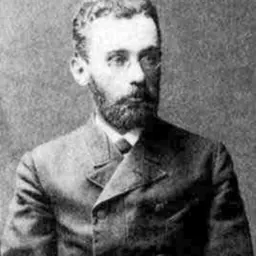
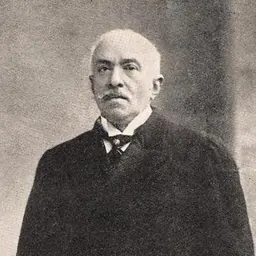

Frequently asked questions
Who was Guy Chamberlin?
American football player and coach (1894-1967)
When was Guy Chamberlin born?
Guy Chamberlin was born on 16 January 1894 in Nebraska.
When did Guy Chamberlin die?
Guy Chamberlin died on 4 April 1967 in Lincoln.
What was Guy Chamberlin's occupation?
Guy Chamberlin was an american football coach and american football player.
What nationality was Guy Chamberlin?
Guy Chamberlin was American.
Sources & further reading
Cite this page
APA: Biography.guide. (2026). Guy Chamberlin. https://biography.guide/guy-chamberlin/
MLA: "Guy Chamberlin." Biography.guide, https://biography.guide/guy-chamberlin/.
Chicago: "Guy Chamberlin." Biography.guide. https://biography.guide/guy-chamberlin/.
Data last updated: 2026-09-20 · Spot an error? Report a correction.
Page generated 2026-09-27 05:09 UTC