
About Tiberiu Olah
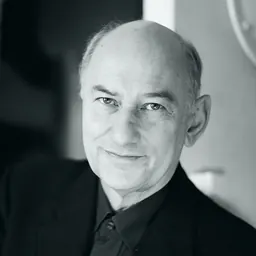
Lived 1928 – 2002 (aged 74). Tiberiu Olah was a Romanian composer, music educator, university teacher, musicologist and film score composer.
Tiberiu Olah (2 January 1928 – 2 October 2002) was a Romanian composer, teacher, and musicologist of Hungarian ethnicity.
Biography Olah was born in Arpășel village, Batăr commune, Bihor County, the son of Ioan Olah, a notary, and Maria Olah, née Molnar. After going to elementary school is his native commune, he attended from 1938 to 1940 the King Carol II High School in nearby Salonta, and then went to Oradea, completing his secondary education in 1946 at the Emanuil Gojdu High School. He then moved to Cluj, where he began his musical studies at the Cluj Conservatory. From 1949 to 1954, he studied at the Moscow Conservatory. In 1958 he took a position as a lecturer and later as a professor at the Bucharest Conservatory. with support from a DAAD grant.
Works Olah composed orchestral and chamber music works in which he was initially inspired by Béla Bartók, George Enescu, and Igor Stravinsky and later by the Second Viennese School, including a five-part cycle dedicated to the sculptor Constantin Brâncuși, as well as cantatas, an oratorio, choral works, and film music. He was known for popularizing the oratorio. Selected compositions include: Cantata for women's choir, two flutes, string and percussion instruments 1956, Csángó popular texts, translated by Nina Cassian Prind visele aripi 1959, cantata for mixed choir and orchestra Lumina lui Lenin 1959, cantata for male choir and string orchestra on lyrics by Nina Cassian O stâncă se înalță 1959, cantata for mixed choir and orchestra lyrics by Maria Banuș The Galaxy of Man 1960, oratorio for reciter, high voice, mixed choir and orchestra by Vladimir Mayakovsky lyrics Symphony 1956 Michael the Brave 1970, symphonic suite from the music of the Sergiu Nicolaescu film White Pelican Prize of ACIN for film music, 1966 and 1971 Koussewitzky International Prize for Coloana Infinită, United States, 1967 Grand Prize of the Union of Composers and Musicologists of Romania for lifetime achievement, 1993
Don’t just read it —
keep it.
Full-length biographies made to live with: read them, listen on the way to work, watch them tonight.
- E-book
- Audio
- Video
Instant download · yours to keep · every purchase keeps this site free
Important facts
People in Tiberiu Olah's life
Named in this biography and alive at the same time





Related people
Same field, nearest in time



Contemporaries
People whose lives overlapped Tiberiu Olah's





Frequently asked questions
Who was Tiberiu Olah?
Romanian-Hungarian composer
When was Tiberiu Olah born?
Tiberiu Olah was born on 2 January 1928 in Arpășel.
When did Tiberiu Olah die?
Tiberiu Olah died on 2 October 2002 in Târgu Mureș.
What was Tiberiu Olah's occupation?
Tiberiu Olah was a composer, music educator, university teacher, musicologist and film score composer.
What nationality was Tiberiu Olah?
Tiberiu Olah was Romanian.
Sources & further reading
Cite this page
APA: Biography.guide. (2026). Tiberiu Olah. https://biography.guide/tiberiu-olah/
MLA: "Tiberiu Olah." Biography.guide, https://biography.guide/tiberiu-olah/.
Chicago: "Tiberiu Olah." Biography.guide. https://biography.guide/tiberiu-olah/.
Data last updated: 2026-09-20 · Spot an error? Report a correction.
Page generated 2026-09-27 05:25 UTC