
About Thomas Wyatt
Lived 1521 – 1554 (aged 32). Thomas Wyatt was an English politician.
Sir Thomas Wyatt the Younger (10 September 1521 – 11 April 1554) was an English politician and rebel leader during the reign of Queen Mary I; his rising is traditionally called "Wyatt's rebellion". He was the son of the English poet and ambassador Sir Thomas Wyatt.
Origins He was the son of the poet Sir Thomas Wyatt who introduced the sonnet into English literature. His mother was Elizabeth Brooke, a daughter of Thomas Brooke, 8th Baron Cobham, of Cobham Hall and Cooling Castle both in Kent, by his wife, Dorothy Heydon, a daughter of Sir Henry Heydon and Elizabeth (or Anne) Boleyn, a daughter of Sir Geoffrey Boleyn. He was the grandson of Sir Henry Wyatt and Anne Skinner, a daughter of John Skinner of Reigate, Surrey.
Youth
Born the eldest of four boys, Thomas Wyatt the Younger was raised a Roman Catholic. His godfather, Thomas Howard, 3rd Duke of Norfolk had a significant influence on Wyatt's upbringing. Throughout his childhood, Thomas accompanied his father on a delegation to Spain where the Inquisition began. Subsequently, at the young age of sixteen, Thomas was married to Jane Haute.
At his father's death in 1542, Thomas inherited Allington Castle and Boxley Abbey in Kent, but found both estates encumbered by debt. Further financial difficulties arose from the fact that, having been unfaithful to his wife (rumour had it that they were both unfaithful), the elder Wyatt separated from her. He had a child named Francis Darrell, whose mother was Elizabeth Darrell, an unmarried daughter of Sir Edward Darrell of Littlecote House in Wiltshire. The elder Sir Thomas left Elizabeth property in Dorset, thus diminishing his son's inheritance. Nonetheless, the younger Thomas was evidently on friendly terms with his half-brother Francis, to whom he made a gift of his manor of Tarrant.
He was described as a young man of somewhat wild and impulsive temperament, and in 1543, along with other young noblemen, including Henry Howard, Earl of Surrey, he was in trouble with the authorities for causing a serious public disturbance in London. In the autumn of 1543, Wyatt and Surrey joined a group of volunteers to take part in the Siege of Landrecies. Wyatt established himself as a prominent figure in the military and was praised by the professional soldier Thomas Churchyard. Next, Wyatt took part in the Siege of Boulogne with a responsible command.
In 1547, he was elected Member of Parliament for Kent. In 1550, he was given the title of commissioner to delimit the English frontier in France but became ill and incapable of performing his duty.
When the official marriage announcement was published on 15 January 1554, Wyatt and friends joined at Allington Castle to discuss plans of resistance.
The government addressed this issue with great seriousness. In an effort to gain time, the government offered Wyatt an opportunity to establish demands; however, this was only a formality. By this point, Wyatt had been deemed a disloyal adversary in the eyes of the monarchy. On 2 February 1554, over twenty thousand men volunteered to aid the Queen as defenders against Wyatt and his troops. They had six sons, George, Francis, Richard, Charles, Arthur and Henry, and four daughters, Joyce, Ursula, Anne, and Jane.
Three of their children married and continued the lineage. Anne married Roger Twysden, whose grandson was Sir Roger Twysden. Sir Roger inherited Wyatt the Younger's son George Wyatt's manuscript on Anne Boleyn's life, entitled Extracts from the Life of Queen Anne Boleigne, by George Wyat. Written at the close of the XVIth century.
His estates were afterwards partly restored to his son, George. George's son, Sir Francis Wyatt (died 1644), was governor of Virginia in 1621–26 and 1639–42.
A great-grandson of note was explorer and interpreter, Captain Henry Fleete of Maryland and Virginia.
In literature Sir Thomas Wyatt the Younger is a central character in the history play Sir Thomas Wyatt (published in 1607) by John Webster and Thomas Dekker. Footnotes
Don’t just read it —
keep it.
Full-length biographies made to live with: read them, listen on the way to work, watch them tonight.
- E-book
- Audio
- Video
Instant download · yours to keep · every purchase keeps this site free
Important facts
Family & relationships
People in Thomas Wyatt's life
Named in this biography and alive at the same time

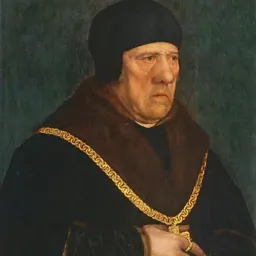




Related people
Same field, nearest in time
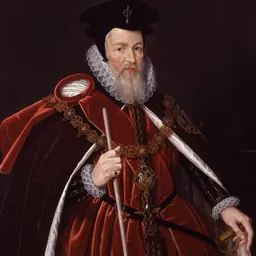
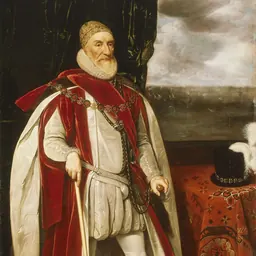
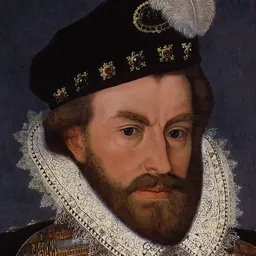
Contemporaries
People whose lives overlapped Thomas Wyatt's





Frequently asked questions
Who was Thomas Wyatt?
English rebel leader during the reign of Queen Mary I (1521-1554)
When was Thomas Wyatt born?
Thomas Wyatt was born on 20 September 1521 in Chatham.
When did Thomas Wyatt die?
Thomas Wyatt died on 21 April 1554 in London.
What was Thomas Wyatt's occupation?
Thomas Wyatt was a politician.
What nationality was Thomas Wyatt?
Thomas Wyatt was English.
Sources & further reading
· DBpedia: Thomas Wyatt the Younger
Cite this page
APA: Biography.guide. (2026). Thomas Wyatt. https://biography.guide/thomas-wyatt-politician/
MLA: "Thomas Wyatt." Biography.guide, https://biography.guide/thomas-wyatt-politician/.
Chicago: "Thomas Wyatt." Biography.guide. https://biography.guide/thomas-wyatt-politician/.
Data last updated: 2026-09-25 · Spot an error? Report a correction.
Page generated 2026-09-27 05:12 UTC