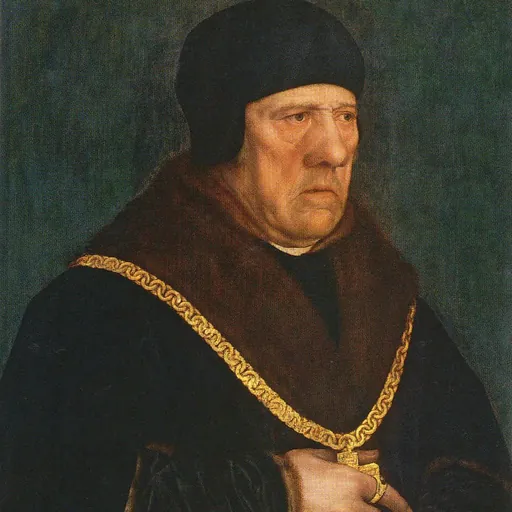
Henry Wyatt
English courtier
About Henry Wyatt
Lived 1460 – 1537 (aged 76–77). Henry Wyatt was an English.
Sir Henry Wyatt KB (c. 1460–1537) was an English nobleman, knight, courtier, and politician.
Early life to 1485
A younger son of a Yorkshire family, little is known of Henry Wyatt before he adopted the cause of Henry Tudor, later to become king Henry VII. Many myths and assumptions have been woven around his privations in prison as a supporter of the Tudor party's opposition to Richard III in the years 1483–85, and are still to be found recounted as facts. Some of them occur in the widely cited entry in the Dictionary of National Biography (c. 1900, available online), s.v. Sir Thomas Wyatt (poet), although the entry has since been modified by the 2004 Oxford Dictionary of National Biography.
The Wyatt family papers in the British Library contain material which provides the nearest that can be found to an authentic account of this period of his life. The relevant documents, although collated and written up in the 18th century, incorporate a self-contained narrative about Wyatt which can be dated to the mid 17th century. At this date the family was intent on reclaiming its former status after falling into disgrace with the execution and attainder of his grandson. The aim was to play up the glory days of Henry's adherence to the Tudor cause, describing him inter alia as "his Country's martyr".
It is unknown why and in what precise capacity he came to act on behalf of the exiled Tudor, or how he came to be imprisoned, or when; and most importantly, whether he was imprisoned once or in two separate occurrences. He appears to have had contacts among those close to the Scots king James III and may have been an intermediary in attempts to secure Scottish support for Henry Tudor's invasion. Another possibility is involvement with the Buckingham Revolt. Possibly he fell into the hands of "some Scottish baron with Yorkist sympathies, only to be released when Henry VII was securely on the throne, after a considerable period of cruel imprisonment, and on the promise of a huge ransom."
He may also have been held captive by Scots after Henry VII sent him to Carlisle, which was under Scottish attack. His possibly apocryphal exploits in the Wyatt family papers included being "imprisoned often, once in a cold and narrow Tower", where he would have starved but for the ministrations of a kindly cat who befriended him and brought him food. This cat is depicted in all extant paintings of Wyatt, including the painting by Holbein. During his incarceration he suffered tortures involving the use of horse-barnacles and being force-fed mustard and vinegar. On one occasion "the Tyrant himself examined him", trying unsuccessfully to persuade Wyatt to change sides.
Eventually, in 1485, he was released from imprisonment, from where is not known, and received the thanks of the newly crowned Henry VII. His first recorded grant was on 11 October 1485 when he was appointed keeper of Norwich castle and gaol.
In a surviving letter written a few months after Wyatt's death, his son Thomas wrote that God had preserved his father "in prison from the handes of the tirant that could find in his hart to see him rakkid, from two yeres and more prisonment in Scotland in Irons and Stoks", and from other tribulations. Writings published by the Richard III Society have interpreted this letter as suggesting that the "tirant" was not Richard III because Richard III never set foot in Scotland during his reign, however it is not clear from Thomas's letter whether the reference to the "tirant that could find his hart to see him rakkid" and the "two yeres and more prisonment in Scotland" reference the same event or two events. However, Richard III is never named by the Wyatt family. The assumption is derived from two instances of the word "tyrant" applied to Wyatt's captor, a term which in the 16th century was used to refer to Richard III but could refer to "Anyone who acts in a cruel, violent, or wicked manner". More likely it referred to the Scottish baron postulated by Conway (above). Records show that Richard III never set foot in Scotland during his reign, although if Wyatt was a captive of Richard III in the Tower of London after the Buckingham Revolt and was years later held at ransom by the Scottish during Scottish attacks on Carlisle, then Richard III's travel itinerary would not be relevant.
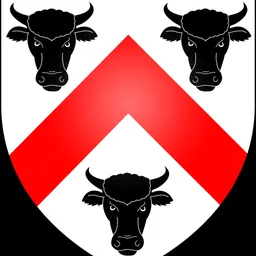
Life under the Tudors Under Henry VII he was appointed Clerk of the King's Jewels and Captain of Carlisle Castle. His close connections with Scotland came to the fore in his later career as Henry VII's agent in that country, for which there is ample evidence of his employment on secret and sensitive missions. being admitted to the privy council in 1504, and was granted arms in 1507–8 (Gules, a barnacle argent). He remained high in the royal favour. He was one of Henry VII's executors, and one of Henry VIII's guardians. He was admitted to the privy council of the new king in April 1509, and was invested a Knight of the Bath on 23 July of the same year. In 1511 he was made, jointly with Sir Thomas Boleyn, constable of Norwich Castle and on 29 July of the same year granted the estate of Maidencote, in Berkshire.
With a contingent of some 100 men he took part in the king's campaign in France in 1513, and was made knight banneret after the Battle of the Spurs, where he had served in the vanguard. In 1520 he accompanied the king to his meeting with Francis I of France at the Field of the Cloth of Gold, where he was responsible for the transportation of the gold and silver plate needed for the banquets. He was also present at the subsequent reception for Charles V, Holy Roman Emperor at Canterbury in 1522.
He was Treasurer of the King's Chamber from 1524 to 1528.
Allington Castle He purchased in 1492 Allington Castle and its estate, near Maidstone in Kent, and made the place his principal residence. Henry VIII visited him there in 1527 to meet Wolsey on his return from the continent. Wyatt remained on good terms with Sir Thomas Boleyn, who resided at Hever Castle.
Marriage and issue About 1502 Wyatt married Anne Skinner, the daughter of John Skinner of Reigate, Surrey, by whom he had two sons and a daughter: Sir Thomas Wyatt, who married Elizabeth Brooke, the daughter of Thomas Brooke, 8th Baron Cobham, by Dorothy Heydon, daughter of Sir Henry Heydon and Elizabeth or Anne Boleyn, daughter of Sir Geoffrey Boleyn Henry Wyatt, assumed to have died an infant. Margaret Wyatt, who married Sir Anthony Lee (d.1549), by whom she was the mother of Queen Elizabeth's champion, Sir Henry Lee
Death Wyatt died on 10 November 1537 (Inq. post mort. 28 Hen. VIII, m. 5), and, in accordance with the directions in his will, which was proved on 21 Feb. 1537–8 (Cromwell, f. 7), was buried at Milton, near Gravesend.
Footnotes
Don’t just read it —
keep it.
Full-length biographies made to live with: read them, listen on the way to work, watch them tonight.
- E-book
- Audio
- Video
Instant download · yours to keep · every purchase keeps this site free
Important facts
Family & relationships
People in Henry Wyatt's life
Named in this biography and alive at the same time




Contemporaries
People whose lives overlapped Henry Wyatt's



Frequently asked questions
Who was Henry Wyatt?
English courtier
When was Henry Wyatt born?
Henry Wyatt was born in 1460.
When did Henry Wyatt die?
Henry Wyatt died on 10 November 1537.
What nationality was Henry Wyatt?
Henry Wyatt was English.
Sources & further reading
· DBpedia: Henry Wyatt (courtier)
Cite this page
APA: Biography.guide. (2026). Henry Wyatt. https://biography.guide/henry-wyatt/
MLA: "Henry Wyatt." Biography.guide, https://biography.guide/henry-wyatt/.
Chicago: "Henry Wyatt." Biography.guide. https://biography.guide/henry-wyatt/.
Data last updated: 2026-09-22 · Spot an error? Report a correction.
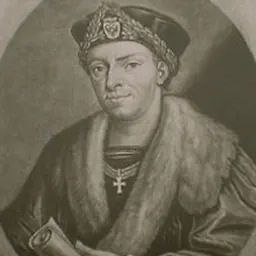
Portrait: Wikimedia Commons · author & licence
Page generated 2026-09-27 05:03 UTC