
Thomas Wakefield
Mayor of Nottingham, England
About Thomas Wakefield
Lived 1791 – 1871 (aged 79–80). Thomas Wakefield was a British businessperson, local politician and newspaper proprietor.
Thomas Wakefield (1791–1871) first mayor of Nottingham for the new municipal borough in 1835 and again in 1842. Wakefield was an English local politician and businessman in Nottingham. He was a success at the former role as "leader of the whig Liberal group that dominated the Nottingham borough council", "that he was frequently referred to as “King Wakefield,”" but, having been involved in a range of businesses, including textile manufacturing, newspapers and mining, he ultimately failed in the latter role. After going bankrupt in 1848, he led a less conspicuous later life as an official.
Life He was the son of the cotton spinner Francis Wakefield (died 1820), who married Mary Ward in 1782. His father Francis was the fourth son of the Rev. George Wakefield and younger brother of Gilbert Wakefield, successful in business and described as "unassuming and polished". He was involved in the development of Nottingham General Hospital, and as a member of the congregation of St Peter's Church active in promoting local Sunday schools.
Wakefield was a generous benefactor to local causes, but also a slum landlord in Nottingham. He lived, as his father had done, on Low Pavement; and then after losing his fortune, in the Exchange Buildings.
In business Wakefield was given a share in his father's firm in 1816, at that time trading as Hancock Wakefield & Harker. With his brother Francis the younger, ran the family textile company, from 1825 when the other partner John Hancock was bought out, a cotton mill in Mansfield. The company was fined under child labour legislation in 1837, for employment of children under 13 in Mansfield in 1837. The Field and Town Mills in Mansfield used by the company were to let in 1840. In 1843, the partnership Francis & Thomas Wakefield was dissolved; and Thomas by 1844 had a share in the textile business Kelly & Co. in Leicester. Francis died in 1848.
The partnership had been involved also in hosiery, and brass and iron foundries. Thomas Wakefield went into the colliery business with Thomas North in 1835. From coal mines in Babbington, he provided capital for investment in further mines in the Nottinghamshire and Derbyshire Coalfield, located in north Nottinghamshire, and a network of railway lines connecting them. Two other partners, including a member of the Morley family, proprietors of hosiery manufacturer I. & R. Morley, had joined by 1845. A Whig and Liberal reformer rather than a radical, Wakefield was a senior councilman of the pre-reform Nottingham borough. In 1819, in the aftermath of Peterloo, he addressed a meeting in Nottingham on the defence of the right to petition.
During the Great Reform Bill period 1830–1, Wakefield organised a local reform petition, with John Heard. It did not prevent him suffering some heckling from the more advanced radicals. His name was brought up at this time as a potential Whig parliamentary candidate for the two-member Nottingham constituency, to stand with Thomas Denman; but Sir Ronald Craufurd Ferguson was preferred.
In 1836, when the Town Council of Nottingham met for the first time, Wakefield was elected as mayor; nominally this was for the year 1835–6. He was elected mayor for a second time in 1842. In 1847 he sold out his major interest in the Nottingham Mercury, which he had used for two decades to campaign against enclosures, to Thomas Bailey.
Later life As bankruptcy proceedings took their course, Wakefield was in 1849 living in Lenton, at that time outside the city of Nottingham. Among the job's he subsequently took on were Mayor's Sergeant, and Keeper of the Exchange and Public Office rooms.
Other interests Wakefield was a Unitarian, and in 1837 supported the founding of a Mechanics' Institute; he was also from 1826 to 1850 president of the Artisans' Library. He clashed in 1830–1, as reported in The Lancet, with Thomas Jowett (1801–1832), a surgeon and botanist, over control of the Nottingham Dispensary. He was a friend of the Nottingham poet Robert Millhouse.
Don’t just read it —
keep it.
Full-length biographies made to live with: read them, listen on the way to work, watch them tonight.
- E-book
- Audio
- Video
Instant download · yours to keep · every purchase keeps this site free
Important facts
People in Thomas Wakefield's life
Named in this biography and alive at the same time

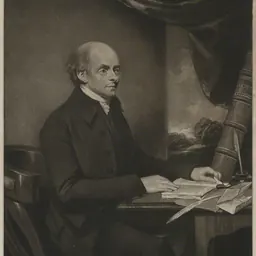
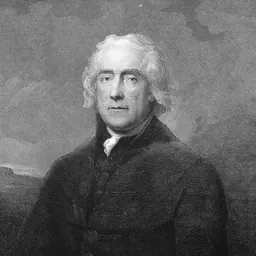



Related people
Same field, nearest in time
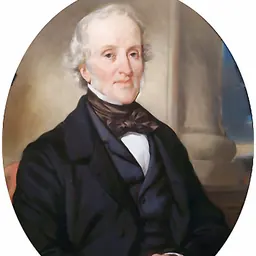


Contemporaries
People whose lives overlapped Thomas Wakefield's


Frequently asked questions
Who was Thomas Wakefield?
mayor of Nottingham, England
When was Thomas Wakefield born?
Thomas Wakefield was born in 1791.
When did Thomas Wakefield die?
Thomas Wakefield died in 1871.
What was Thomas Wakefield's occupation?
Thomas Wakefield was a businessperson, local politician and newspaper proprietor.
What nationality was Thomas Wakefield?
Thomas Wakefield was British.
Sources & further reading
· DBpedia: Thomas Wakefield (mayor of Nottingham)
Cite this page
APA: Biography.guide. (2026). Thomas Wakefield. https://biography.guide/thomas-wakefield-businessperson/
MLA: "Thomas Wakefield." Biography.guide, https://biography.guide/thomas-wakefield-businessperson/.
Chicago: "Thomas Wakefield." Biography.guide. https://biography.guide/thomas-wakefield-businessperson/.
Data last updated: 2026-09-20 · Spot an error? Report a correction.
Page generated 2026-09-27 05:31 UTC