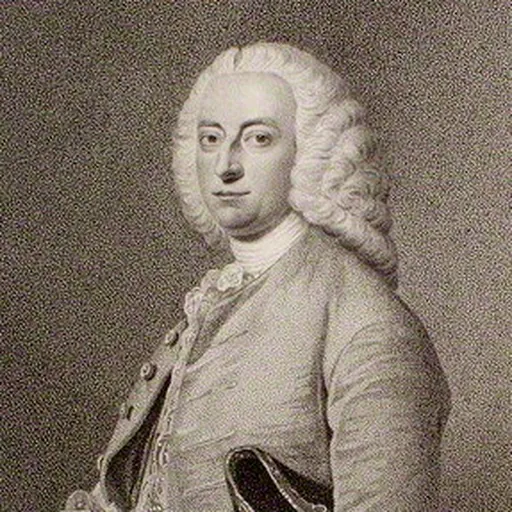
Thomas Villiers, 1st Earl of Clarendon
British diplomat
About Thomas Villiers, 1st Earl of Clarendon
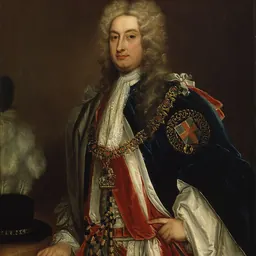
Lived 1709 – 1786 (aged 76–77). Thomas Villiers, 1st Earl of Clarendon was a British diplomat, politician and envoy extraordinary and minister plenipotentiary.
Thomas Villiers, 1st Earl of Clarendon, PC (1709 – 11 December 1786) was a British politician and diplomat from the Villiers family. Clarendon was the second son of William Villiers, 2nd Earl of Jersey, and his wife Judith Herne, daughter of Frederick Herne.
Political career Villiers received his education at Eton College and then Queens' College, Cambridge. Following his graduation, he became a diplomat.
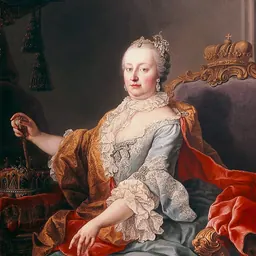
Villiers became the British envoy to both the Polish–Lithuanian Commonwealth and the Electorate of Saxony from 1740 to 1747. At the time both realms were in personal union under Augustus III of Poland. He was also sent to Vienna, capital of the Archduchy of Austria, as an envoy to the court of Maria Theresa of Austria from 1742 to 1743. He was last sent to Berlin, capital of the Kingdom of Prussia, as an envoy to the court of Frederick II of Prussia from 1746 to 1748.
Villiers was also involved in domestic politics as a member of the British Whig Party, which at the time dominated the Parliament of Great Britain. He was elected to Parliament in the 1747 British general election. He sat as a Member of Parliament for Tamworth from 1747 to 1756. He retired from all diplomatic offices at this time.
He was a Lord Commissioner of the Admiralty, one of seven members of the Board of Admiralty exercising command over the Royal Navy from 26 February 1748 to 17 November 1756. He served under First Lords of the Admiralty John Montagu, 4th Earl of Sandwich, and George Anson, 1st Baron Anson throughout his term.
On 3 June 1756, the barony of Hyde held by his wife's ancestors the Earls of Clarendon was revived. Villiers was raised to the peerage as Baron Hyde of Hindon in the County of Wiltshire.
Hyde served as Postmaster General from 1763 to 1765. On 9 September 1763, he was admitted to the Privy Council. He also served as Chancellor of the Duchy of Lancaster from 1771 to 1782 and again from 1783 to 1786.
On 14 June 1776 the earldom of Clarendon, which had become extinct with the death of Henry Hyde, 4th Earl of Clarendon, in 1753, was revived and Hyde was made Earl of Clarendon. In 1782 he was also made a Baron of the Kingdom of Prussia, an honour which he received Royal licence to use in Kingdom of Great Britain.
Clarendon returned to the office of Postmaster-General in commission with Henry Carteret, 1st Baron Carteret, in September 1786. This was to be his final political assignment.
Lord Clarendon died in December 1786, aged 77. He was succeeded in the earldom by his eldest son Thomas.
Family
On 30 March 1752 he married Charlotte Capell, daughter of William Capell, 3rd Earl of Essex, and his wife Jane Hyde, daughter of Henry Hyde, 4th Earl of Clarendon (of the 1661 creation), and Jane Leveson-Gower. They had four children:
Thomas Villiers, 2nd Earl of Clarendon (25 December 1753 – 7 March 1824). John Villiers, 3rd Earl of Clarendon (14 November 1757 – 22 December 1838). George Villiers (23 November 1759 – 21 March 1827). Father of George Villiers, 4th Earl of Clarendon. Lady Charlotte Barbara Villiers (27 March 1761 – 9 April 1810).
Robert Grimston, 1st Baron Grimston of Westbury's daughter, the Hon. Rosemary Sybella Violet Grimston, married the actor Charles Edward Underdown, on the 10 February 1953. Charles Edward Underdown and Rosemary Grimston were sixth cousins, through their common ancestors Thomas Villiers, 1st. Earl of Clarendon, and Lady Charlotte Capell, according to Burke's Peerage, (Volume 2, page 1685, 107th. edition, 2003).
He bought and remodelled The Grove, a country house near Watford, Hertfordshire.
Don’t just read it —
keep it.
Full-length biographies made to live with: read them, listen on the way to work, watch them tonight.
- E-book
- Audio
- Video
Instant download · yours to keep · every purchase keeps this site free
Important facts
Family & relationships
People in Thomas Villiers, 1st Earl of Clarendon's life
Named in this biography and alive at the same time

Related people
Same field, nearest in time
Contemporaries
People whose lives overlapped Thomas Villiers, 1st Earl of Clarendon's

Frequently asked questions
Who was Thomas Villiers, 1st Earl of Clarendon?
British diplomat (1709-1786)
When was Thomas Villiers, 1st Earl of Clarendon born?
Thomas Villiers, 1st Earl of Clarendon was born in 1709.
When did Thomas Villiers, 1st Earl of Clarendon die?
Thomas Villiers, 1st Earl of Clarendon died on 11 December 1786 in Watford.
What was Thomas Villiers, 1st Earl of Clarendon's occupation?
Thomas Villiers, 1st Earl of Clarendon was a diplomat, politician and envoy extraordinary and minister plenipotentiary.
What nationality was Thomas Villiers, 1st Earl of Clarendon?
Thomas Villiers, 1st Earl of Clarendon was British.
Sources & further reading
· Wikipedia: Thomas Villiers, 1st Earl of Clarendon
· DBpedia: Thomas Villiers, 1st Earl of Clarendon
Cite this page
APA: Biography.guide. (2026). Thomas Villiers, 1st Earl of Clarendon. https://biography.guide/thomas-villiers-1st-earl-of-clarendon/
MLA: "Thomas Villiers, 1st Earl of Clarendon." Biography.guide, https://biography.guide/thomas-villiers-1st-earl-of-clarendon/.
Chicago: "Thomas Villiers, 1st Earl of Clarendon." Biography.guide. https://biography.guide/thomas-villiers-1st-earl-of-clarendon/.
Data last updated: 2026-10-01 · Spot an error? Report a correction.
Portrait: Wikimedia Commons · author & licence
Page generated 2026-10-04 14:34 UTC