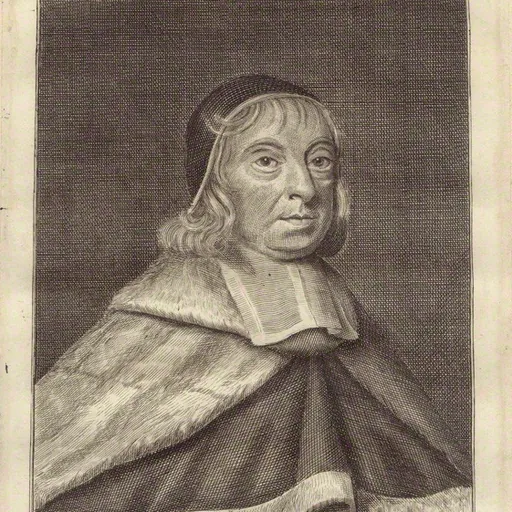
About Thomas Street
Lived 1625 – 1696 (aged 70). Thomas Street was an English judge and politician.
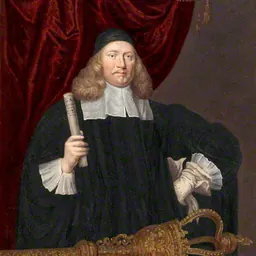
Sir Thomas Street, MP, KB, JP (1625–1696) was an English politician and judge. He became a Baron of the Exchequer in 1681. He represented Worcester in the House of Commons from 1659 to 1679. In 1667, he became the Mayor of Worcester, as his father had been before him. In 1677, he became the Chief Justice of Brecknock, Glamorgan and Radnor. Following Monmouth's Rebellion in 1685, the Catholic King James II took to contravening the Test Act and began filling the military high-command with Catholics, leading to a confrontation with Parliament which took shape as the case of Godden v. Hales, which was to be settled by the King's Bench. Of the ten judges who constituted the last King's Bench before the Glorious Revolution of 1688, Sir Thomas was the only one to rule against King James II's contravention of the Test Act in 1687.
Biography
Street was born in Worcester, England in 1625. His father George Street (1594–1643) was the Mayor of Worcester, his grandfather John Street (d. 1622) was an alderman of Worcester, and his great-grandfather Francis Streate (d. 1607) was a Member of Parliament for Worcester. His father George was a cousin of John Street (1584–1633), who in 1605 killed two of the Gunpowder Plot conspirators and was rewarded with a pension "for that extraordinary service performed in killing those two traitors, Piercie and Catesbie, with two bulletts at one shott out of his muskett." Street matriculated at Lincoln College, Oxford on 22 April 1642, aged 16. He went on to enter Inner Temple in November 1646 and was called to the Bar on 24 November 1653. He was a member of the Oxford Circuit. He had his children by Lady Penelope Berkeley before dying in 1696, aged 70. An active member of parliament, Street was appointed to 175 committees, in twelve of which he took the chair, made sixteen recorded speeches, and three times acted as teller. From 1667 to 1677 he was Puisne judge of great sessions and ex officio JP for Brecknock, Glamorgan and Radnor. He became a Bencher of his Inn on 7 November 1669 but was fined £100 for refusing to come up to the bench when called. He became Serjeant at law on 3 July 1677 and was Chief Justice for Brecknock, Glamorgan and Radnor from 1677 to 1681. He became King's Sergeant on 23 October 1678. He was knighted on 8 June 1681 and was a Baron of the Exchequer from April 1681 to 1684. In 1682 he was recorder of Worcester and 1683 recorder of Droitwich 1683. He was a Justice of the Court of Common Pleas from 1684 to 1689. He died in 1696 and was buried in Worcester Cathedral.
Don’t just read it —
keep it.
Full-length biographies made to live with: read them, listen on the way to work, watch them tonight.
- E-book
- Audio
- Video
Instant download · yours to keep · every purchase keeps this site free
Important facts
Family & relationships
Related people
Same field, nearest in time
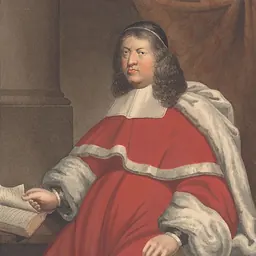

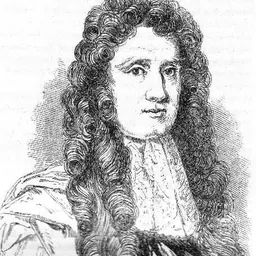
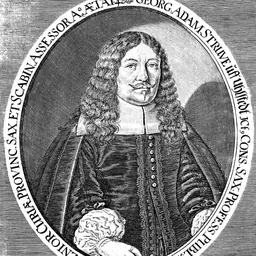
Contemporaries
People whose lives overlapped Thomas Street's






Frequently asked questions
Who was Thomas Street?
English judge and politician
When was Thomas Street born?
Thomas Street was born on 22 March 1625 in Middlesex.
When did Thomas Street die?
Thomas Street died on 8 March 1696.
What was Thomas Street's occupation?
Thomas Street was a judge and politician.
What nationality was Thomas Street?
Thomas Street was English.
Sources & further reading
· DBpedia: Thomas Street (judge)
Cite this page
APA: Biography.guide. (2026). Thomas Street. https://biography.guide/thomas-street-judge/
MLA: "Thomas Street." Biography.guide, https://biography.guide/thomas-street-judge/.
Chicago: "Thomas Street." Biography.guide. https://biography.guide/thomas-street-judge/.
Data last updated: 2026-09-21 · Spot an error? Report a correction.
Portrait: Wikimedia Commons · author & licence
Page generated 2026-09-27 05:00 UTC