
About Thomas Ridgley
Lived 1667 – 1734 (aged 67). Thomas Ridgley was an English and British christian minister and tutor.
Thomas Ridgley ( – 1734) was an English Dissenting minister.
Life Thomas Ridgley was born in London around 1667. He was educated for the ministry in Wiltshire, presumably under John Davison at Trowbridge. In 1695, he was chosen assistant to Thomas Gouge, pastor of the independent church at Three Cranes, Fruiterers' Alley, Thames Street, London. On Gouge's death he succeeded to the pastorate, which he held till his own death, being assisted by John Hurrion and (from 1732) by Samuel Parsons. On the death of Isaac Chauncy, in 1712, he was elected divinity tutor to the Fund Academy in Tenter Alley, Moorfields, established by the London congregational fund board in 1696. His coadjutor in classics and science was John Eames. Ridgley had abundance of theological learning, and was a good instructor. His position as a teacher was that of a bulwark of dissenting orthodoxy against the prevalent tendencies to Arian and Arminian laxity. This duty he discharged with great ability and considerable individuality of treatment.
His scheme of the Trinity, denuded of the generation of the Son and the procession of the Spirit, is essentially Sabellian, and in easing the difficulties of Calvinism he follows the Socinians in limiting the penalties of Adam's sin to death and temporal discomfort.
In 1719, he took the side of subscription in the Salters' Hall debates, thus ranging himself with the older presbyterians; while Hunt, Lowman, Lardner, and Jennings, his juniors among the learned independents, were for non-subscription. His lectures expository of the larger catechism of the Westminster divines constitute his 'Body of Divinity,' which, issued by subscription in 1731, became a textbook of moderate Calvinism, and gained him the diploma of D.D. from Aberdeen.
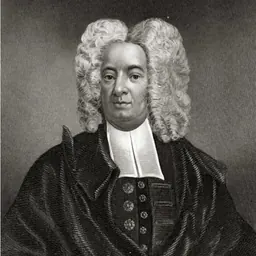
Ridgley died on 27 March 1734, aged 66, and was buried in Bunhill Fields. His portrait by Bartholomew Dandridge was engraved by Vandergucht.
Publications He published, besides single sermons, including funeral sermons for Gertrude Clarkson (1701), Elizabeth Bankes (1711), Nathan Hall (1719), Thomas Tingey (1729), John Hurrion (1732), and John Sladen (1733, two editions same year): The Unreasonableness of the Charge of Creed-making, (1719), (related to the Salters' Hall controversy), An Essay Concerning Truth and Charity, (1721), (related to the Salters' Hall controversy), The Doctrine of Original Sin, (1725); two editions same year (two lectures at Pinners' Hall, with postscript) A Body of Divinity, (1731)
Don’t just read it —
keep it.
Full-length biographies made to live with: read them, listen on the way to work, watch them tonight.
- E-book
- Audio
- Video
Instant download · yours to keep · every purchase keeps this site free
Important facts
People in Thomas Ridgley's life
Named in this biography and alive at the same time


Related people
Same field, nearest in time

Contemporaries
People whose lives overlapped Thomas Ridgley's



Frequently asked questions
Who was Thomas Ridgley?
English Independent minister and tutor
When was Thomas Ridgley born?
Thomas Ridgley was born on 17 January 1667.
When did Thomas Ridgley die?
Thomas Ridgley died on 17 January 1734.
What was Thomas Ridgley's occupation?
Thomas Ridgley was a christian minister and tutor.
What nationality was Thomas Ridgley?
Thomas Ridgley was English and British.
Sources & further reading
Cite this page
APA: Biography.guide. (2026). Thomas Ridgley. https://biography.guide/thomas-ridgley/
MLA: "Thomas Ridgley." Biography.guide, https://biography.guide/thomas-ridgley/.
Chicago: "Thomas Ridgley." Biography.guide. https://biography.guide/thomas-ridgley/.
Data last updated: 2026-09-20 · Spot an error? Report a correction.
Page generated 2026-09-27 05:25 UTC