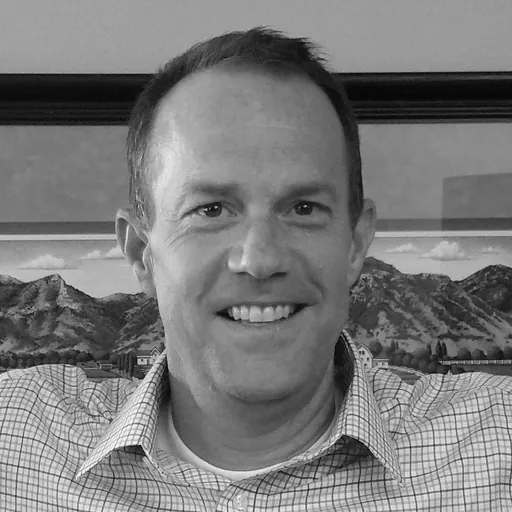
About Thomas Rex Lee
Born 1964. Thomas Rex Lee is an American lawyer and judge.
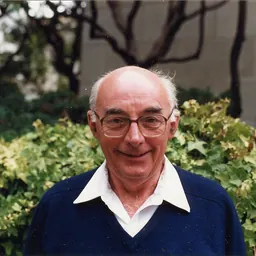
Thomas Rex Lee (born December 28, 1964) is an American jurist who was a justice of the Utah Supreme Court from 2010 to 2022. Lee is also a lecturer at Harvard Law School and an adjunct professor/distinguished lecturer at Brigham Young University's (BYU) J. Reuben Clark Law School (JRCL) following his appointment to the bench.
Lee is a pioneer in law and corpus linguistics—the application of corpus linguistics to determine ordinary meaning in statutes—being the first American judge to do so in an opinion.
Early life and education Thomas Rex Lee was born in 1964 to Janet (née Griffin) and Rex E. Lee. He grew up in Arizona, Utah, and Northern Virginia. Lee attended Brigham Young University, graduating in 1988 with a Bachelor of Arts summa cum laude in economics. He then attended the University of Chicago Law School, where he was an editor of the University of Chicago Law Review and graduated in 1991 with a J.D. degree with high honors.
After law school, Lee clerked for J. Harvie Wilkinson III of the U.S. Court of Appeals for the Fourth Circuit from 1991 to 1992. He then entered private practice at the Salt Lake City-based law firm of Kimball, Parr, Waddoups, Brown & Gee, taking a one-year leave of absence to serve as a law clerk for Justice Clarence Thomas of the U.S. Supreme Court from 1994 to 1995.
Career After his Supreme Court clerkship, Lee entered private practice at the Salt Lake City law firm Kimball, Parr, Waddoups, Brown & Gee. He left the firm in 1997 to join the faculty at BYU's JRCL. At the law school, Lee taught courses in Civil Procedure and Intellectual Property Law, and a seminar on the United States Supreme Court. He also served as Associate Dean (2008-2010) and was named the Rex and Maureen Rawlinson Professor of Law. Following his 2010 appointment to the bench Lee remained a Distinguished Lecturer in Law at the JRCL.
Lee took leave of the JRCL from 2004 to 2005 to serve as Deputy Assistant Attorney General in the Civil Division of the United States Justice Department. While at the JRCL, from 2002 to 2004, Lee also served as the lead counsel in cases brought by the state of Utah in relation to plans to put nuclear waste on the Goshute Indian Reservation.
Utah Supreme Court On May 28, 2010, Utah Governor Gary Herbert nominated Lee to fill the vacancy in the Utah Supreme Court left by the retirement of Michael J. Wilkins. Receiving a unanimous vote (5–0) from the Utah Senate Judicial Confirmation Committee in mid-June 2010, Lee was confirmed by the full Senate on June 23, 2010. Lee was sworn into office on July 19, 2010; his mentor, U.S. Supreme Court Justice Clarence Thomas, administered the oath. On January 19, 2022, Lee sent a letter to Governor Spencer Cox, informing him that he would be resigning, effective July 31, 2022. His stated reason was "to pursue other opportunities in the legal profession.". However, Lee ended up retiring from the court on June 30, 2022.
Authorship of opinions Lee has been a prolific judicial writer. An empirical study of Utah Supreme Court opinions by political scientist, Adam Brown, found that in the approximately first three years on the court, Lee authored more opinions than any other justice over the 16-year period studied, writing some form of opinion (whether majority, dissenting, or concurring) in 43% of the opinions published while he was a justice.
"Whereas some justices release a concurring or dissenting opinion in only a handful of cases that they hear," Lee is a prolific writer of such opinions, releasing them in around 16% of the Court's opinions. Of the ten Utah Supreme justices who served on the court from 1997 to 2012, Lee has the second-highest rate of dissent, filing dissenting opinions in 10% of cases over this time period. (The justice with the highest dissent rate was I. Daniel Stewart, who dissented 11% of the time).
Jurisprudence
A 2016 paper written by Jeremy Kidd of the Mercer University Walter F. George School of Law and others attempted to measure the "Scalia-ness" of various potential nominees to the Supreme Court to fill the seat left vacant by Antonin Scalia's death. The study created a "Scalia Index Score" combining the various measures of "Scalia-ness," and Lee scored highest. The study found that Lee was the most likely to endorse or engage in originalism in judicial opinions, was second most likely to cite Scalia's non-judicial writings in opinions, and the third most likely to write separately when not writing the majority opinion. The study was updated again in 2018, adding new variables and more names, and Lee again scored the highest.
In a 2016 article, John McGinnis, of the Northwestern University School of Law, argued that Lee was similar to Scalia in being "capable of pressing the intellectual case for following the Constitution as written" because of Lee "has pioneered the application of corpus linguistics to law," and further wrote that if elevated to the U.S. Supreme Court, "Lee would create a transmission belt from the best work of originalists in the academy to the Supreme Court."
Hannah Clayson Smith, writing in the National Review, praised Lee as a possible successor to Scalia because of Lee's similar jurisprudential style to the late Justice, but noted that with respect to Lee's views on judicial precedent, "Justice Lee is more like Justice Thomas than like Justice Scalia." Smith noted that Lee (like Thomas) has repeatedly advocated for overruling precedent that he views as "contrary to the original meaning of the Utah constitution," even if precedent takes a different approach.
Works Title PublicationData-Driven Originalism University of Pennsylvania Law Review, Vol. 167, pp. 261-335, 2019Judging Ordinary Meaning Yale Law Journal, Vol. 127, pp. 788-1105, 2018Corpus Linguistics & Original Public Meaning: A New Tool To Make Originalism More Empirical Yale Law Journal Forum, Vol. 126, pp. 21–32, 2016 Trademarks, Consumer Psychology, and the Sophisticated Consumer Emory Law Journal, Vol. 57, pp. 575-650, 2008 Demystifying Dilution Boston University Law Review, Vol. 84, pp. 859–944, 2004 The Original Understanding of the Census Clause: Statistical Estimates and the Constitutional Requirement of an 'Actual Enumeration' Washington Law Review, Vol. 77, pp. 1–64, 2002 Preliminary Injunctions and the Status Quo Washington & Lee Law Review, Vol. 58, pp. 109–166, 2001 The Anastasoff Case and the Judicial Power to "Unpublish" Opinions Notre Dame Law Review, Vol. 77, pp. 135–173, 2001 In Rem Jurisdiction in Cyberspace 75 Wash. L. Rev 97 (2000) Stare Decisis in Historical Perspective: From the Founding Era to the Rehnquist Court Vanderbilt Law Review, Vol. 52, pp. 647–735, 1999 Pleading and Proof: The Economics of Legal Burdens Brigham Young University Law Review, Vol. 1997, pp. 1–34, 1997 Comment: The Standing of Qui Tam Relators Under the False Claims Act University of Chicago Law Review, Vol. 57, pp. 543–571, 1990
Personal life Lee and his wife, Kimberly, have six children. His brother, Mike Lee, is a U.S. Senator representing the state of Utah. He is the son of Rex E. Lee, a former Solicitor General of the United States and the 10th president of BYU.
Don’t just read it —
keep it.
Full-length biographies made to live with: read them, listen on the way to work, watch them tonight.
- E-book
- Audio
- Video
Instant download · yours to keep · every purchase keeps this site free
Important facts
Family & relationships
People in Thomas Rex Lee's life
Named in this biography and alive at the same time



Related people
Same field, nearest in time


Contemporaries
People whose lives overlapped Thomas Rex Lee's


Frequently asked questions
Who is Thomas Rex Lee?
Utah Supreme Court justice
When was Thomas Rex Lee born?
Thomas Rex Lee was born in 1964.
What is Thomas Rex Lee's occupation?
Thomas Rex Lee is a lawyer and judge.
What nationality is Thomas Rex Lee?
Thomas Rex Lee is American.
Sources & further reading
Cite this page
APA: Biography.guide. (2026). Thomas Rex Lee. https://biography.guide/thomas-rex-lee/
MLA: "Thomas Rex Lee." Biography.guide, https://biography.guide/thomas-rex-lee/.
Chicago: "Thomas Rex Lee." Biography.guide. https://biography.guide/thomas-rex-lee/.
Data last updated: 2026-09-21 · Spot an error? Report a correction.
Portrait: Wikimedia Commons · author & licence
Page generated 2026-09-27 04:59 UTC