
About Thomas Power O'Connor
Lived 1848 – 1929 (aged 81). Thomas Power O'Connor was a British journalist and politician.
Tomb of T. P. O'Connor at St Mary's Catholic Cemetery, Kensal Green, London Thomas Power O'Connor, PC (5 October 1848 – 18 November 1929), known as T. P. O'Connor and occasionally as Tay Pay (mimicking the Irish pronunciation of the initials T. P.), was an Irish nationalist politician and journalist who served as a Member of Parliament (MP) in the House of Commons of the United Kingdom of Great Britain and Ireland for nearly fifty years.
Early life and education O'Connor was born in Athlone, County Westmeath, on 5 October 1848. He was the eldest son of Thomas O'Connor, an Athlone shopkeeper, and his wife Teresa (née Power), the daughter of a non-commissioned officer in the Connaught Rangers. His family were supporters of the Liberal Party. He was educated at the College of the Immaculate Conception in Athlone, and Queen's College Galway, where he won scholarships in history and modern languages and built up a reputation as an orator, serving as auditor of the college's Literary and Debating Society.
Career From 1867, O'Connor attempted unsuccessfully to gain a position in the Civil Service before working for the Royal Irish Constabulary as a reporting assistant on nationalist political demonstrations. from 1898 to 1911.
O'Connor was elected Member of Parliament for Galway Borough in the 1880 general election, as a representative of the Home Rule League (which was under the leadership of William Shaw, though virtually led by Charles Stewart Parnell, who would win the party's leadership a short time later). O'Connor had been invited to stand as the Liberal candidate for the constituency on the strength of the unflattering biography of then Conservative Prime Minister Benjamin Disraeli he had written in 1878. However, after being persuaded by Parnell, O'Connor stood reluctantly as an Irish party candidate. Despite opposition from Irish Catholic clergymen to the selection of the reputedly agnostic O'Connor as the Irish Nationalist candidate, he won the seat - allegedly with some support from the Irish Republican Brotherhood - because of his vocal support for the ideals of the Irish National Land League. By now a permanent resident of London, who spoke with a London accent, he did not generally speak at land rallies but was appointed to the Land League executive by Parnell. He also made four visits to the U.S. to raise funds for his party from politically engaged Irish Americans. Although in his later years he was often criticised for distancing himself from the Irish community, he remained the most prominent Irish nationalist politician in Great Britain, and was on close terms with each successive government, and with David Lloyd George in particular. Just before the 1921 Northern Ireland general election O'Connor made clear his feelings on nationalist participation in the Parliament of Northern Ireland: "...the Nationalists are determined not to give even the fig leaf of respectability to the whole rotten arrangement by attending the [northern] Parliament." He nonetheless supported the 1921 Anglo-Irish Treaty, although he subsequently appealed in vain to the British government to moderate its demand for a substantial contribution from the newly created Irish Free State to the imperial exchequer. The gangs would often buy a copy of the music at full price, copy it, and resell it, often at half the price of the original. The film I'll Be Your Sweetheart (1945), commissioned by the British Ministry of Information, is based on the events of the day. Bust of journalist and politician T. P. O'Connor in Fleet Street, London. The inscription reads, "His pen could lay bare the bones of a book or the soul of a statesman in a few vivid lines." He was appointed as the second president of the Board of Film Censors in 1916 and appeared in front of the Cinema Commission of Inquiry (1916), set up by the National Council of Public Morals where he outlined the BBFC's position on protecting public morals by listing forty-three infractions, from the BBFC 1913–1915 reports, on why scenes in a film may be cut.
Publications Lord Beaconsfield – A Biography (1879); The Parnell Movement (1886); Gladstone's House of Commons (1885); Napoleon (1896); The Phantom Millions (1902); Memoirs of an Old Parliamentarian (1929).
Personal life In 1885, O'Connor married American woman Elizabeth Howard (née Paschal), whose father was Arkansas Supreme Court associate justice George W. Paschal. They had no children, rarely lived together, and had separated permanently some time before World War I broke out; however, they remained married until O'Connor's death.
Death O'Connor fell seriously ill in 1929; a substantial collection for him was raised in the House of Commons. He died at his flat in Westminster on 18 November 1929 and is buried at St Mary's Catholic Cemetery, Kensal Green in north-west London. He was the last Father of the House to die as a sitting MP until Sir Gerald Kaufman in 2017.
Don’t just read it —
keep it.
Full-length biographies made to live with: read them, listen on the way to work, watch them tonight.
- E-book
- Audio
- Video
Instant download · yours to keep · every purchase keeps this site free
Important facts
People in Thomas Power O'Connor's life
Named in this biography and alive at the same time



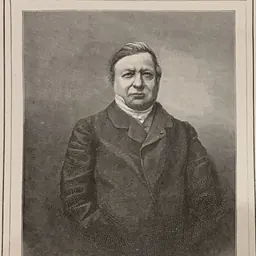
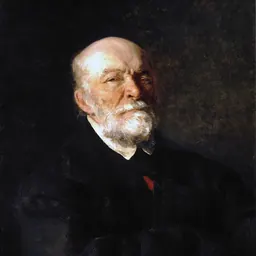
Related people
Same field, nearest in time

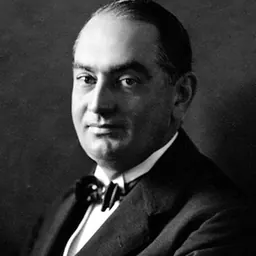
Contemporaries
People whose lives overlapped Thomas Power O'Connor's



Frequently asked questions
Who was Thomas Power O'Connor?
British politician (1848-1929)
When was Thomas Power O'Connor born?
Thomas Power O'Connor was born on 5 October 1848 in Athlone.
When did Thomas Power O'Connor die?
Thomas Power O'Connor died on 18 November 1929 in London.
What was Thomas Power O'Connor's occupation?
Thomas Power O'Connor was a journalist and politician.
What nationality was Thomas Power O'Connor?
Thomas Power O'Connor was British.
Sources & further reading
· Wikipedia: Thomas Power O'Connor
Cite this page
APA: Biography.guide. (2026). Thomas Power O'Connor. https://biography.guide/thomas-power-o-connor/
MLA: "Thomas Power O'Connor." Biography.guide, https://biography.guide/thomas-power-o-connor/.
Chicago: "Thomas Power O'Connor." Biography.guide. https://biography.guide/thomas-power-o-connor/.
Data last updated: 2026-09-26 · Spot an error? Report a correction.
Page generated 2026-09-27 05:14 UTC