
Thomas Posthumous Hoby
Member of Parliament and claimed as the inspiration for Shakespeare's character Malvolio
About Thomas Posthumous Hoby
Lived 1566 – 1640 (aged 73–74). Thomas Posthumous Hoby was a politician.
Sir Thomas Posthumus Hoby (October 1566 – 30 December 1640),
Life
Hoby was the younger son of Sir Thomas Hoby (1530–1566), the English Ambassador to France in 1557, by his wife, Elizabeth Cooke. Elizabeth was one of the daughters of the humanist Sir Anthony Cooke (1504–1576). Hoby was born after his father's death, which led to his gaining the additional name Posthumus. His sisters Elizabeth and Anne died within a few days of each other in February 1571. His elder brother was the diplomat and scholar Sir Edward Hoby (1560–1617). Hoby was also a nephew of Sir Philip Hoby, Master-General of the Ordnance and an English ambassador to the Holy Roman Empire.
Hoby was a very small boy and grew up to be nicknamed "the little knight" for his slightness and short stature. He was educated at Eton and at Trinity College, Oxford, matriculating in 1574 at the age of eight.
Also in 1574, some years after his father's death, Hoby's mother married John, Lord Russell, the eldest surviving son of the Earl of Bedford, and with him had three further children, Elizabeth, Anne and Francis. Among his many other first cousins were the philosopher and statesman Francis Bacon and the spy Anthony Bacon.
In 1589 Hoby was elected Member of Parliament for Appleby. He was re-elected MP for Appleby in 1593. In 1595, Hoby married Margaret Sidney (1571–1633), daughter and heiress of Arthur Dakins, a landed gentleman of Linton, already the widow of two men, of Walter Devereux, a younger brother of the Earl of Essex, and of Thomas Sidney, a brother of the poet Philip Sidney. Hoby had been an unsuccessful suitor four years earlier, after Margaret had lost her first husband. They set up home at Hackness, Yorkshire, but had no children. Margaret Hoby is notable as a diarist.
In 1597 Hoby was elected MP for Yorkshire and Scarborough, but was declared ineligible at Yorkshire. He was elected MP for Scarborough again in 1604. In 1614 he was elected MP for Ripon and was re-elected MP for Ripon in 1621, 1624, 1625, 1626 and 1628.
A Puritan, in 1600 Hoby took legal action against William Eure, 4th Baron Eure (1579–1646) and several of his other neighbours, alleging that they had entered his house, taken drink, played cards, ridiculed Puritanism, and threatened to ravish his wife. In 1609 he alleged in the Star Chamber that Sir Richard Cholmley had twice spoken contemptuously to him in the hope of provoking a duel. One historian of the period has described Hoby as "that most overbearing, touchy, and resentful of Yorkshire magistrates". and that his legal action of 1600 inspired Scene III of Act 2 of Twelfth Night, in which Malvolio is disturbed by drunken merry-making.
As a magistrate, Hoby has been described as "exceptionally conscientious".
On his mother's death in 1609 Hoby inherited from her "all my pastures of the manor of Gyfford in Gloucestershire", and in 1617 he inherited the estates of his brother, Sir Edward. A memorial to him was erected in the church at Hackness in 1682 by Sir John Posthumous Sydenham (1643–1696), the son of Hoby's principal heir and a knight of the shire for Somerset. There is an even more impressive memorial to him in All Saints' Church, Bisham, where a painted statue of Hoby is among a family group on his mother's monument in the Hoby chapel.
Although Hoby had no children, his brother Edward's natural son Peregrine Hoby (1602–1679) was the father of Sir Edward Hoby, 1st Baronet (1634–1675), whose baronetcy continued until the fifth Baronet died in 1766.
Don’t just read it —
keep it.
Full-length biographies made to live with: read them, listen on the way to work, watch them tonight.
- E-book
- Audio
- Video
Instant download · yours to keep · every purchase keeps this site free
Important facts
People in Thomas Posthumous Hoby's life
Named in this biography and alive at the same time

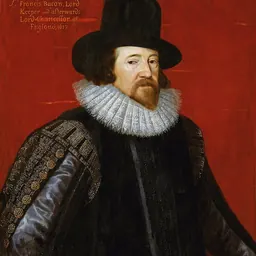
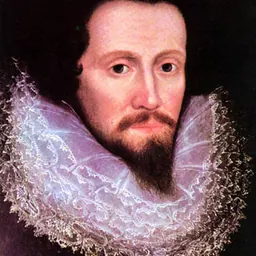
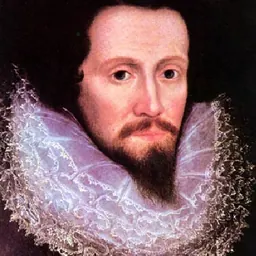
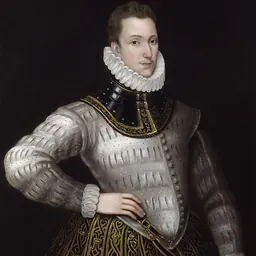



Related people
Same field, nearest in time



Contemporaries
People whose lives overlapped Thomas Posthumous Hoby's



Frequently asked questions
Who was Thomas Posthumous Hoby?
Member of Parliament and claimed as the inspiration for Shakespeare's character Malvolio
When was Thomas Posthumous Hoby born?
Thomas Posthumous Hoby was born in 1566.
When did Thomas Posthumous Hoby die?
Thomas Posthumous Hoby died on 30 December 1640.
What was Thomas Posthumous Hoby's occupation?
Thomas Posthumous Hoby was a politician.
Sources & further reading
· Wikipedia: Thomas Posthumous Hoby
· DBpedia: Thomas Posthumous Hoby
Cite this page
APA: Biography.guide. (2026). Thomas Posthumous Hoby. https://biography.guide/thomas-posthumous-hoby/
MLA: "Thomas Posthumous Hoby." Biography.guide, https://biography.guide/thomas-posthumous-hoby/.
Chicago: "Thomas Posthumous Hoby." Biography.guide. https://biography.guide/thomas-posthumous-hoby/.
Data last updated: 2026-09-20 · Spot an error? Report a correction.
Page generated 2026-09-27 05:03 UTC