
About Edward Hoby
Lived 1560 – 1617 (aged 56–57). Edward Hoby was an English diplomat, politician and translator.
Sir Edward Hoby (1560 – 1 March 1617) was an English diplomat, Member of Parliament, scholar, and soldier during the reigns of Elizabeth I and James I. He was the son of Thomas Hoby and Elizabeth Cooke, the nephew of William Cecil, Lord Burghley, and the son-in-law of Queen Elizabeth's cousin Henry Carey, 1st Baron Hunsdon.
A favourite of King James, Hoby published several works supporting the Protestant cause as well as translations from French and Spanish. His heir was his illegitimate son, Peregrine Hoby.
Biography
Born at Bisham Abbey, Berkshire, in 1560, Edward Hoby was the eldest son of Sir Thomas Hoby and his wife Elizabeth, third daughter of Sir Anthony Cooke or Coke of Gidea Hall, Essex. He was educated at Eton, where he formed a lasting friendship with Sir John Harington, and at Trinity College, Oxford. At Trinity Thomas Lodge, who later became a dramatist, was "servitor or scholar" under him. he rose into high favour at the Elizabethan court and was frequently employed on confidential missions.
Death Hoby died in Queenborough Castle on 1 March 1617. He and his wives had no children, but he brought up his illegitimate son by Katherine Pinkney, Peregrine Hoby, and made the boy his heir.
Works
An excellent scholar himself, Hoby cultivated the friendship of learned men, especially that of William Camden, who eulogises his bounty and accomplishments in his Britannia. Camden also dedicated his Hibernia (1587) to him.
In 1612 Hoby presented a copy of Sir Henry Savile's sumptuous edition of St Chrysostom to the library of Trinity College, Oxford. Hoby was also a keen Protestant theologian, sparring in print with the Roman Catholic convert Theophilus Higgons and the Jesuit John Fludd or Floyd.
Hoby's theological writings include: A Letter to Mr. T[heophilus] H[iggons], late Minister: now Fugitive ... in answere of his first Motive, (1609), which was answered by Higgons during the same year. A Counter-snarle for Ishmael Rabshakeh a Cycropedian Lycaonite (1613), being a reply to The Overthrow of the Protestants Pulpet Babels, by "J. R." (John Fludd or Floyd). Floyd forthwith replied with his Purgatories triumph over Hell, maugre the barking of Cerberus in Syr Edward Hobyes "Counter-snarle" (1613). A Curry-combe for a сохе-combe . . . In answer to a lewd Libel lately foricated by Jabal Rachil against Sir Edward Hobies "Counter-Snarle," entitled "Purgatories triumph over Hell," (1615), written under the ponderous pseudonym of "Nick-Groome of the Hobie-Stable Reginoburgi," in the form of a dialogue.
Hoby also translated Matthieu Coignet's Politique discourses on trueth and lying from French (1586), and Bernardino de Mendoza's Theorique and Practise of Warre from Spanish (1597).
Don’t just read it —
keep it.
Full-length biographies made to live with: read them, listen on the way to work, watch them tonight.
- E-book
- Audio
- Video
Instant download · yours to keep · every purchase keeps this site free
Important facts
People in Edward Hoby's life
Named in this biography and alive at the same time



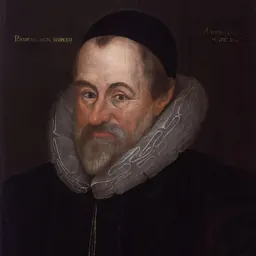
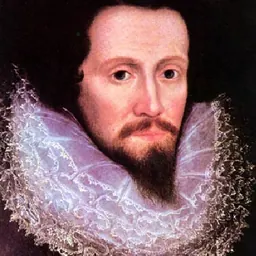

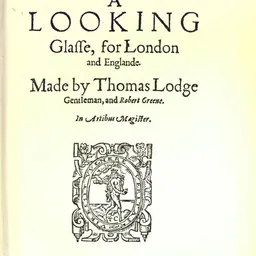

Related people
Same field, nearest in time
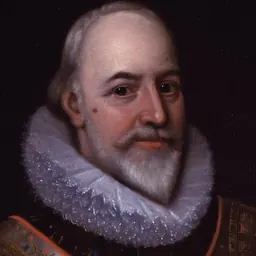

Contemporaries
People whose lives overlapped Edward Hoby's


Frequently asked questions
Who was Edward Hoby?
English politician
When was Edward Hoby born?
Edward Hoby was born in 1560.
When did Edward Hoby die?
Edward Hoby died on 1 March 1617.
What was Edward Hoby's occupation?
Edward Hoby was a diplomat, politician and translator.
What nationality was Edward Hoby?
Edward Hoby was English.
Sources & further reading
Cite this page
APA: Biography.guide. (2026). Edward Hoby. https://biography.guide/edward-hoby/
MLA: "Edward Hoby." Biography.guide, https://biography.guide/edward-hoby/.
Chicago: "Edward Hoby." Biography.guide. https://biography.guide/edward-hoby/.
Data last updated: 2026-09-20 · Spot an error? Report a correction.
Page generated 2026-09-27 05:18 UTC