
About Thomas Pellow
Lived 1704 – 1747 (aged 42–43). Thomas Pellow was a British sailor and writer.
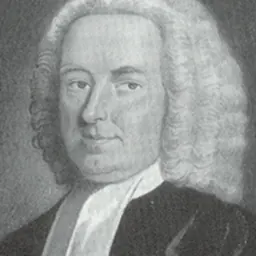
Thomas Pellow (1704–1745) was a Cornish author and who spent around 20 years as an enslaved person in the Sultanate of Morocco, on the Barbary Coast. He is best known for the extensive captivity narrative entitled The History of the Long Captivity and Adventures of Thomas Pellow in South-Barbary.
Early life and education Thomas Pellow was born in 1704, the son of Thomas Pellow of Penryn, Cornwall and his wife Elizabeth (née Lyttleton).
Captivity Pellow's captivity began at the age of eleven when sailing abroad in the summer of 1716 when his ship was attacked by Barbary pirates after crossing the Bay of Biscay travelling with his uncle, John Pellow, who was the ship's captain, along with five Englishmen. Pellow and his shipmates were taken captive and delivered to Sultan Moulay Ismail (aka Ismail Ibn Sharif) of Morocco as prisoners. Pellow was one of the individuals handpicked by the sultan along with three others.
Life as an elite slave With time, Moulay Ismail assigned Pellow into the Abid al-Bukhari ("Black Guard"). According to Pellow's text, white European converts could rise within the Moroccan military system, but were confined to their own separate fighting units. These units were generally much less important to Ismail's government and military operations than their counterparts in the ‘Abid.
Pellow's extensive slave narrative The History of the Long Captivity and Adventures of Thomas Pellow chronicles his life from his captivity as a captain's boy to his eventual military role as a preeminent captain in the Moroccan Army. Elite slaves like him played a vital role in the armed forces, often serving as soldiers and as officers, leading to the acquisition of important roles in administration, politics, and all aspects of public affairs.
Pellow was only one of many European males who were taken and placed into military slavery. Pellow was part of a "band of European slaves mixed among other races that formed an elite army corps". Pellow fought on the frontlines with ferocious proficiency, and his role in combat was primarily as an infantryman, as were most of these slave soldiers. The monarchs viewed their role in their armies as "an integral, perhaps a primary, part of the conquering Ottoman army". Pellow joined the sultan's army later in life. He led other slave-soldiers into battle and once took part in a slave-gathering expedition in sub-Saharan Africa.
There was a stark difference between the independent renegades encountered in the narrative and their slave counterparts. According to Daniel Pipes in his 1979 article "The strategic rationale for military slavery", "As the mercenaries or allies, they retained their own loyalties, but as slaves, they could be subjected to reorientation. Prior to enrollment in the army, they were prepared for service; the government secured their loyalty and fitted their military skills to the needs of the army". Unlike the free-thinking allies and mercenaries for hire, a slave's life depended on their masters. They were trained to fight and forced into combat against their will. As such, the process of making them submissive to their masters was a long and arduous one by which they were beaten into shape and into a fearful loyalty to their masters. The alien soldiers were isolated figures whose isolation and alienation caused them to adopt what they were left with as normality.
A few days later he found himself a ship bound for London and managed to secure himself a ride. After a brief stint in London, Pellow made multiple trips to eventually find his way back to Penryn, in October 1738, at the age of 34. Pellow's difficulty with reintegration is severely administered by his life in Barbary. Not only was he far from home, but he was indoctrinated into the Arab world and accepted his reality and their religion. Pellow's irreversible change was what made him an outsider, and made finding meaning in a place that was once his home impossible. "Pellow's inability to settle back in and make good, may have been due to more, however, than his own alienation. In his absence, not only he but his country had been transformed."
Pellow died in 1745, and was buried at St Gluvias, unmarried in England. Pellow's book chronicles his many adventures spent during his 23-year-long captivity (summer 1715 – July 1738) giving a detailed account of his capture by Barbary pirates, his experiences as a slave under Sultan Moulay Ismail, and his final escape from Morocco back to his Cornish origins.
Commentary Allen R. Meyers wrote a paper in 1998 that "describes the development of a slave army, the 'Abid al Bukhari, which enabled Ismail ibn al-Sharif (aka Moulay), to establish a large and relatively durable Moroccan state". Ismail created the slave army in an effort to "consolidate his power, to expand the kingdom, to suppress internal dissent, and to repulse the European and Ottoman threat". Creating this self-sufficient army could also have its drawbacks, with uprisings and rebellions, such as a poor relationship with Islamic scholars due to his enslaving of fellow Muslims, an act that was considered to be blasphemous.
Don’t just read it —
keep it.
Full-length biographies made to live with: read them, listen on the way to work, watch them tonight.
- E-book
- Audio
- Video
Instant download · yours to keep · every purchase keeps this site free
Important facts
People in Thomas Pellow's life
Named in this biography and alive at the same time
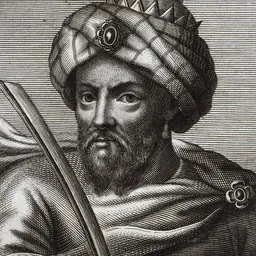
Related people
Same field, nearest in time

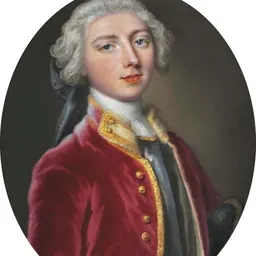
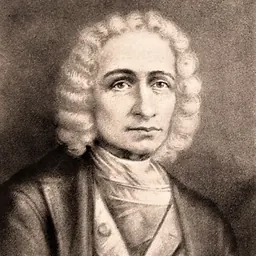

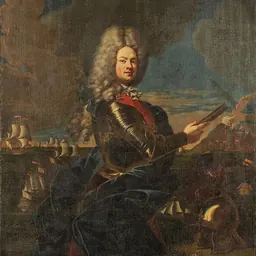
Contemporaries
People whose lives overlapped Thomas Pellow's




Frequently asked questions
Who was Thomas Pellow?
English author and enslaved person
When was Thomas Pellow born?
Thomas Pellow was born in 1704 in Penryn.
When did Thomas Pellow die?
Thomas Pellow died in 1747.
What was Thomas Pellow's occupation?
Thomas Pellow was a sailor and writer.
What nationality was Thomas Pellow?
Thomas Pellow was British.
Sources & further reading
Cite this page
APA: Biography.guide. (2026). Thomas Pellow. https://biography.guide/thomas-pellow/
MLA: "Thomas Pellow." Biography.guide, https://biography.guide/thomas-pellow/.
Chicago: "Thomas Pellow." Biography.guide. https://biography.guide/thomas-pellow/.
Data last updated: 2026-09-26 · Spot an error? Report a correction.
Page generated 2026-09-27 05:13 UTC