
About Thomas P. O'Neill
Lived 1921 – 1996 (aged 74). Thomas P. O'Neill was an Irish writer, historian, biographer and ethnologist, known for James Fintan Lalor and Éamon de Valera.
Thomas P. O'Neill ( 1 November 1921 – 1 March 1996) was an Irish historian, noted for his biographies of James Fintan Lalor and Éamon de Valera (1970).
Early life and family Thomas Patrick O'Neill was born in Ballon, County Carlow on 1 November 1921. He was one of three sons of Thomas O'Neill, a farmer, and his wife, Anna Maria (née Murphy). He attended the local national school, and then Knockbeg College. He went on to study in University College Dublin (UCD), graduating with an MA in 1946. While at the National Library he acted as historical adviser on the documentary films about the 1916 Rising and the War of Independence, Mise Éire (released in 1959) and Saoirse(released 1961).
O'Neill published an Irish language biography of James Fintan Lalor in 1962. O'Neill could both speak and write in Irish, but was heavily assisted by Donncha Ó Céileachair in getting this book to a publishing standard. This biography drew on previously unused newspaper and archival sources, and is still regarded as the standard text on Lalor. Among the discoveries that O'Neill made was that Lalor had corresponded with Sir Robert Peel regarding his animosity towards the repeal movements and made proposals to quash it with land reform. O'Neill was encouraged to suppress some less favourable facts about Lalor he uncovered, but he refused. Gallagher had only completed a few chapters on the Anglo-Irish treaty negotiations. A contract for the work was signed in 1962, and O'Neill was formally seconded to the presidential staff. He conducted long, regular interviews with de Valera, working directly in Áras an Uachtaráin for a period to have direct and easy access to de Valera's private papers. O'Neill would develop a rapport with de Valera and his family, leading to him remaining in contact with them for the rest of his life. In 1968 and 1970, the biography was published in the Irish language in two volumes, with an t-Athair Pádraig Ó Fiannachta as co-author. The English language version was published in 1970 with Lord Longford as O'Neill's co-author. The addition of Lord Longford was by the publishers, as they believed a high profile name would boost sales. The English version of the biography differs somewhat from the Irish language version, only partly due to the new co-author: unlike the Irish version, it brings the story right up to events contemporary with its publication, commenting on the formation of the European Union which Ireland was then planning to join.
In 1984, he suggested to the Galway City Manager of the time, Seamus Keating, that there should be a significant celebration of the 500th anniversary of Galway's first charter, having discovered the original document in the British Library in 1947. They took the idea to Galway Corporation, who embraced it as a means of encouraging cultural celebrations and developing Galway's tourism. He toured the United States twice with the Galway mayor, Michael Leahy, and the city manager publicising the "Quincentennial". The success of the event, both financially and culturally, led to other cities marking their own similar anniversaries. As part of Galway's celebrations, O'Neill published a weekly column on Galway history in the Galway Advertiser. The column was originally intended to finish in 1984, but was so popular that O'Neill continued to write it until his death.
Later life and death Following his retirement and return to Dublin, O'Neill spent a great deal of time in the NLI and was active in a number of historical bodies such as the Royal Society of Antiquaries of Ireland, the Catholic Record Society of Ireland, and the Carlow Historical & Archaeological Society. He had been conducting research into the Registry of Deeds, which never appeared as a written work, but he was awarded the medal of the Old Dublin Society for his 1983 lecture on the impact of the penal laws on Dublin property ownership. Towards the end of his life, he expressed a wish to revisit and expand on his work on the famine, wanting to counter any revisionist narratives that may diminish the negative role of the English government in the events. His last public appearance was to launch Gréithe Den Ghorta, a collection of Radió na Gaeltachta talks by Cathal Poirtéir.
O'Neill died on 1 March 1996 in St Vincent's Hospital, Dublin after a long illness due to cancer. His papers were bequeathed to the NLI. He is buried in Shanganagh Cemetery.
Don’t just read it —
keep it.
Full-length biographies made to live with: read them, listen on the way to work, watch them tonight.
- E-book
- Audio
- Video
Instant download · yours to keep · every purchase keeps this site free
Important facts
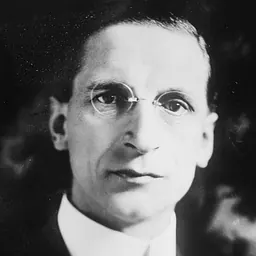
People in Thomas P. O'Neill's life
Named in this biography and alive at the same time





Related people
Same field, nearest in time



Contemporaries
People whose lives overlapped Thomas P. O'Neill's


Frequently asked questions
Who was Thomas P. O'Neill?
Irish scholar (1921-1996)
When was Thomas P. O'Neill born?
Thomas P. O'Neill was born on 1 November 1921 in Ballon.
When did Thomas P. O'Neill die?
Thomas P. O'Neill died on 2 March 1996 in Dublin.
What was Thomas P. O'Neill's occupation?
Thomas P. O'Neill was a writer, historian, biographer and ethnologist.
What was Thomas P. O'Neill known for?
Thomas P. O'Neill was known for James Fintan Lalor and Éamon de Valera.
What nationality was Thomas P. O'Neill?
Thomas P. O'Neill was Irish.
Sources & further reading
· Wikipedia: Thomas P. O'Neill
· DBpedia: Thomas P. O'Neill (historian)
Cite this page
APA: Biography.guide. (2026). Thomas P. O'Neill. https://biography.guide/thomas-p-o-neill/
MLA: "Thomas P. O'Neill." Biography.guide, https://biography.guide/thomas-p-o-neill/.
Chicago: "Thomas P. O'Neill." Biography.guide. https://biography.guide/thomas-p-o-neill/.
Data last updated: 2026-09-20 · Spot an error? Report a correction.
Page generated 2026-09-27 05:11 UTC