
About Thomas of Galloway
Lived 1101 – 1231. Thomas of Galloway was a Scottish aristocrat, known for Irish Sea.
Thomas of Galloway, known in Gaelic sources as Tomás Mac Uchtraigh (died 1231), was a Gall-Gaidhil prince and adventurer. The son of Lochlann, king of Galloway, Thomas was an active agent of his brother Alan of Galloway as well as the English and Scottish kings. When King John, the English monarch, decided that central and western Ulster were to be added to his dominions (with the earldom of Ulster already created by John de Courcy), he conscripted Thomas and Alan of Galloway to his aid, offering them much of later counties Antrim, Londonderry and Tyrone as incentive.
Thomas had begun his recorded career as a mercenary in Angevin service, and obtained much land in Ireland while gaining several victories with his fleet. In Scotland he obtained from William the Lion marriage to Isabella of Atholl, heiress to the province of Atholl in central Scotland. Although little is otherwise known about his life in Scotland, he was involved in the affairs of Coupar Angus Abbey, while much of his Irish activity coincided with and supported the interests of the Scottish ruling dynasty there in opposing the allies of the MacWilliams. He left one heir in Patrick, mormaer of Atholl, but the latter's premature death at the hands of the Bisset family meant that Thomas's line had failed by the 1240s.
Background Thomas was the son of Lochlann mac Uchtraigh [Roland fitz Uhtred] (died 1200), king of the Gall-Gaidhil, and the brother of Alan of Galloway [Ailean]. His mother was Helen de Morville (died 1217), daughter of Richard de Morville, Anglo-Norman lord of Cunninghame and Lauderdale. The Gall-Gaidhil (modern Scottish Gaelic: Gall-Ghàidheil; Gallwedienses in Latin) were a Gaelic-speaking people in what is now south-western Scotland who gave their name to Galloway (Gall-Ghàidheillaib, "land of the Gall-Ghàidheil"), and were regarded neither as "Scottish" nor as "Irish" before the 13th century.
James Balfour Paul, early 20th-century historian of the nobility of Scotland, remarked that Thomas's activities are very poorly documented in the Scottish records compared with those elsewhere. Thomas first appears in English records early 1205, receiving gifts from John, King of England, perhaps as a reward for supplying John Galwegian galleys. Thomas assisted the English king in his Poitou campaign of 1205, and had perhaps been brought into John's service for this purpose.
Thomas temporarily acquired various estates and land rights in England—in Northumberland, Herefordshire, Worcestershire, and Warwickshire—though he no longer held these lands after 1209. Thomas appears to have raped someone at York in this era, an offence for which he received a royal pardon in 1212 at the request of the Scottish king William the Lion. In 1214, accompanied by Ruaidhrí mac Raghnaill, Thomas led another attack on Derry, sacking the city again and looting the church.
Tír Eoghain at the time had two rival kin-groups, the Inishowen-based Mac Lochlainn group and the Ó Néill based south of Sperrin Mountains. It is probable that the former were the main victims of Thomas's attack. Two years later, in 1216, Muireadhach mac Ailein, son of the mormaer of Lennox, defeated and killed the chief of an Inishowen group known as the Cineál Fearghusa, perhaps in support of Thomas's aims. During Thomas's 1212 raid on Derry, the men of Tír Conaill had simultaneously attacked the Cineál Eoghain in Inishowen. There have been some connection between Meic Uilleim activities and Thomas's campaigns against Derry, with the Meic Uilleim perhaps being sheltered and supported by the Ó Néill, Aodh Méith.
Nonetheless, from 1210 King John had already set about trying to conquer Ulster west of the River Bann, and granted much of what are now counties Antrim, Londonderry and Tyrone to Thomas's brother Alan, the grant later being extended to include Thomas. Thomas himself was granted the core territories of Tír Eoghain in 1213, but the grant was "speculative" [Oram] and Thomas never became ruler of Tír Eoghain.
He did however, with English help, construct a castle at Coleraine, and the English appointed him keeper of the castle at Antrim in 1215. He appears to have travelled to England in 1219 in order to do homage to the new king of England, Henry III, but in 1221 was back in the region as he defeated and killed Diarmaid Ua Conchobhair, son of former Irish high king Ruaidhrí Ua Conchobhair; Diarmaid was returning to Ireland with a fleet he had raised in the Hebrides to help restore to the Connacht kingship the Ó Néill-backed anti-English Cathal Croibhdhearg Ó Conchobhair.
The Galloway lands in Ulster were threatened by Hugh de Lacy's return to the earldom of Ulster. The former earl of Ulster had previously fallen out of favour with the king, and suffered forfeiture. He returned to force his way back into power in Ulster and by 1227 had forced King Henry to acknowledge his claim to the earldom. it may be significant that when the castle at Coleraine was restored in 1228 it was by Earl Hugh and not Thomas. It is possible that Thomas's ability to manage his Irish possessions was hindered by his brother Alan's use of the Galwegian fleet to interfere in Manx succession disputes. Isabella was Henry's heiress, and subsequently succeeded to Atholl with Thomas taking the style of "Mormaer" or "Earl" in her name.
Thomas attended the coronation of the new Scottish king, Alexander II, at Scone on 6 December 1214.
The Chronicle of Melrose recorded Thomas's death in 1231, and noted that he was buried in the abbey of Coupar Angus. In July 1230 Thomas had been preparing ships as Henry III was planning an expedition to western France. Thomas left one son by his wife Isabella, Patrick [Padraig], who became mormaer of Atholl in 1242 after the death of his mother. Thomas also left at least one illegitimate son, Alan [Ailean]. It is likely that the murder was provoked by the disputed inheritance in Antrim, the Bissets subsequently securing their takeover of the Galloway Antrim lordship. Patrick was succeeded in Atholl by his aunt Forbhlaith.
Don’t just read it —
keep it.
Full-length biographies made to live with: read them, listen on the way to work, watch them tonight.
- E-book
- Audio
- Video
Instant download · yours to keep · every purchase keeps this site free
Important facts
Family & relationships
People in Thomas of Galloway's life
Named in this biography and alive at the same time



Related people
Same field, nearest in time



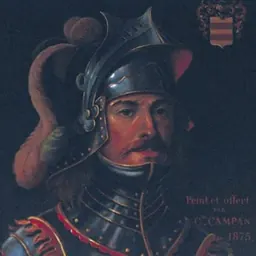
Contemporaries
People whose lives overlapped Thomas of Galloway's
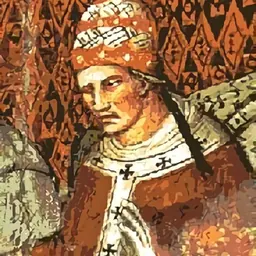

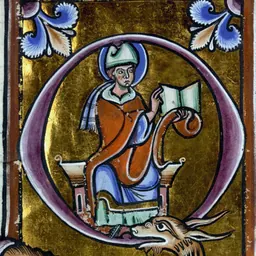

Frequently asked questions
Who was Thomas of Galloway?
Scottish prince and adventurer
When was Thomas of Galloway born?
Thomas of Galloway was born in 1101 in Dumfries and Galloway.
When did Thomas of Galloway die?
Thomas of Galloway died in 1231.
What was Thomas of Galloway's occupation?
Thomas of Galloway was an aristocrat.
What was Thomas of Galloway known for?
Thomas of Galloway was known for Irish Sea.
What nationality was Thomas of Galloway?
Thomas of Galloway was Scottish.
Sources & further reading
· Wikipedia: Thomas of Galloway
Cite this page
APA: Biography.guide. (2026). Thomas of Galloway. https://biography.guide/thomas-of-galloway-aristocrat/
MLA: "Thomas of Galloway." Biography.guide, https://biography.guide/thomas-of-galloway-aristocrat/.
Chicago: "Thomas of Galloway." Biography.guide. https://biography.guide/thomas-of-galloway-aristocrat/.
Data last updated: 2026-09-20 · Spot an error? Report a correction.
Page generated 2026-09-27 05:02 UTC