
About Thomas Lewis
Lived 1940 – 2008 (aged 68). Thomas Lewis was an American activist, artist and peace activist, known for Catonsville Nine.
Thomas P. Lewis (March 17, 1940 – April 4, 2008) was an artist and peace activist, primarily noted for his participation in the antiwar activist groups the Baltimore Four and the Catonsville Nine, and his work in the Plowshares movement.
Biography Thomas Pahl Lewis was born in Uniontown, Pennsylvania and raised in Baltimore, Maryland. His middle name was his mother's maiden name. He graduated from Mount Saint Joseph High School, where he was a star football halfback. He turned down a college football scholarship, instead studying art at the Maryland Institute College of Art, Johns Hopkins University, and two Jesuit institutions, Georgetown University, and Loyola University Maryland. His brother went to Vietnam in 1965, and the experience turned Lewis against the war. He joined the National Guard after high school, hoping to serve his country, and served eight years. Many of his pieces still survive in galleries and archives throughout the USA. He was an art teacher at Anna Maria College, and he taught printmaking at the Cambridge School of Weston, and Worcester Art Museum.left
Entry into peace activism Lewis traced his life in activism back to a protest by the Congress of Racial Equality (CORE) against the segregated Gwynn Oak Amusement Park in 1963. He had planned on sketching as a journalist for a Catholic publication, but when he saw the racist actions from some in the counter-protest, he felt compelled to participate. He subsequently joined CORE. His art became political accordingly, without severing ties with his religious background; in one example, in 1965 he made a woodcut of an antiwar speech Pope Paul VI made at the United Nations.
He became a memorable figure in peace circles for his combination of art and activism. Daniel Berrigan described his art as "…a poignant and powerful witness to the survival of the endangered conscience…. He heals the ancient split between ethics and imagination."
Baltimore Four and Catonsville Nine He and Philip Berrigan co-founded the Baltimore Interfaith Peace Mission in 1967. After Lewis attended an interfaith antiwar gathering in the midwest that year, he returned to Baltimore thinking about planning nonviolent actions at draft boards.
In 1967 he co-gathered the anti-war activist group that became known as the Baltimore Four, pouring their own blood on draft files at the Baltimore Customs House. Besides Lewis, the Four were Philip Berrigan; poet, teacher and writer David Eberhardt; and United Church of Christ missionary and pastor James L. Mengel). As they waited for the police to arrive and arrest them, the group passed out Bibles and calmly explained to draft board employees the reasons for their actions.
While on trial for this protest, Lewis engaged in a more daring one with the Catonsville Nine, who burned draft files with homemade napalm in Catonsville, Maryland. One week later he was sentenced to six years in federal prison for the Baltimore Four protest, and in November 1968 to another three and a half years for the Catonsville Nine. He was ultimately released in 1971, serving out his sentence chiefly at the minimum-security prison farm at Lewisburg Federal Penitentiary.
PeaceChain 18 The day after the invasion of Iraq on March 21, 2003, Lewis and 17 other activists using a peace chain organized by the Peace Abbey Foundation in Sherborn, Massachusetts. They blocked the Natick Chemical Weapons Research Laboratory and were arrested. In this context, a peace chain is a line of people (a few, or even hundreds) who hold onto links of a chain that they carry. It is inherently nonviolent, but difficult to break apart even if law enforcement succeeds in arresting some of its human links, and it has been used worldwide. A photo of the Peace Chain 18 is on the cover of the 2003 book Liberating Faith: Religious Voices for Justice, Peace, and Ecological Wisdom. Lewis spoke before the judge during the trial about the consequences of the invasion, concluding along with others in the group that "I morally can't pay a fine." He, along with the other members of PeaceChain 18, was convicted for trespassing and disturbing the peace. Student murals dedicated to Tom Lewis, who taught them art along with their teacher, Alice Gentili.
Personal life He met his wife Andrea Borbély at the Community for Creative Nonviolence in Washington, DC, in 1988, and a reporter for National Catholic Reporter noted that "resistance was part of their wedding vows." During his marriage he sometimes signed his work Tom Lewis-Borbely. They had a daughter, Nora Lewis-Borbely, who is an animation line producer at DreamWorks.
In this later years he lived at and managed Emma House, a community in Worcester, Massachusetts named for a late African-American woman who once lived there.
Lewis died at age 68 in his sleep on April 4, 2008. A memorial mass was held at the Mustard Seed Catholic Worker. A portion of his cremated remains is buried at the Conscientious Objectors cemetery on the grounds of the Pacifist Memorial in Sherborn, Massachusetts.
Don’t just read it —
keep it.
Full-length biographies made to live with: read them, listen on the way to work, watch them tonight.
- E-book
- Audio
- Video
Instant download · yours to keep · every purchase keeps this site free
Important facts
People in Thomas Lewis's life
Named in this biography and alive at the same time






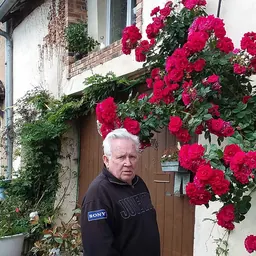
Related people
Same field, nearest in time
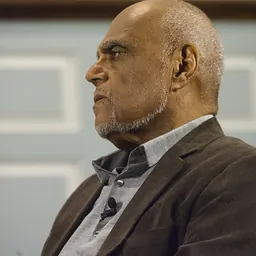
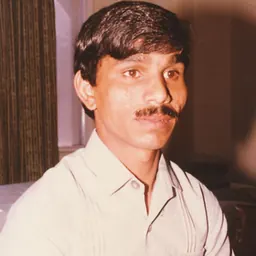


Contemporaries
People whose lives overlapped Thomas Lewis's

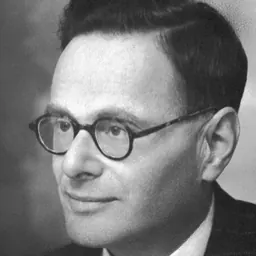


Frequently asked questions
Who was Thomas Lewis?
artist and peace activist, born 1940 (1940–2008)
When was Thomas Lewis born?
Thomas Lewis was born on 17 March 1940 in Baltimore.
When did Thomas Lewis die?
Thomas Lewis died on 4 April 2008 in Worcester.
What was Thomas Lewis's occupation?
Thomas Lewis was an activist, artist and peace activist.
What was Thomas Lewis known for?
Thomas Lewis was known for Catonsville Nine.
What nationality was Thomas Lewis?
Thomas Lewis was American.
Sources & further reading
· DBpedia: Thomas Lewis (activist)
Cite this page
APA: Biography.guide. (2026). Thomas Lewis. https://biography.guide/thomas-lewis-activist/
MLA: "Thomas Lewis." Biography.guide, https://biography.guide/thomas-lewis-activist/.
Chicago: "Thomas Lewis." Biography.guide. https://biography.guide/thomas-lewis-activist/.
Data last updated: 2026-09-25 · Spot an error? Report a correction.
Page generated 2026-09-27 05:11 UTC