
About Thomas L. Kane
Lived 1822 – 1883 (aged 61). Thomas L. Kane was an American military officer, social reformer and soldier.
Thomas Leiper Kane (January 27, 1822 – December 26, 1883) was an American attorney, abolitionist, philanthropist, and military officer who was influential in the western migration of the Latter-day Saint movement and served as a Union Army colonel and general of volunteers in the American Civil War. He received a brevet promotion to major general for gallantry at the Battle of Gettysburg.
After meeting members of the Church of Jesus Christ of Latter-day Saints at an 1846 Philadelphia conference, Kane offered to help in their conflicts with the US government as they tried to migrate West. He negotiated to allow them to occupy land along the Missouri River, and later worked to help Utah achieve statehood. He passed on an offer to govern the territory, giving the position to Brigham Young. During 1857 and 1858, Kane attempted to mediate a dispute between the Latter-day Saints and the US government, persuading Young to concede his governorship to President James Buchanan's appointee, preventing further escalation of the Utah War.
During the American Civil War, Kane organized a Pennsylvania regiment (the "Bucktails"), and served as lieutenant colonel. After his promotion of brigadier general of volunteers, he journeyed by railroad and buggy to convey intelligence about Robert E. Lee's Gettysburg Campaign. Kane and his brigade were victorious at Gettysburg, but Kane had fallen ill and was forced to resign his commission. After the war, Kane and his family settled and helped establish Kane, Pennsylvania. He died of pneumonia in 1883. Both Kane County, Utah, and Kanesville Tabernacle are named for Kane. The Kane Historic Preservation Society maintains the Thomas L. Kane Memorial Chapel in Kane, Pennsylvania, and a statue of Kane stands in the Utah State Capitol, titled "Friend of the Mormons".
Early life and education Kane was born in Philadelphia, Pennsylvania, on January 27, 1822, to John Kintzing Kane, a US district judge, and Jane Duval Leiper. He was described as being of small stature, or "jockey-like", and food was always marginal. In correspondence, he referred to himself as an invalid. After receiving a stateside education, he traveled to Europe to study in Great Britain and France, and to build up his constitution. During his several years in Paris, he became proficient in French and contributed articles to several French magazines. He began to study law after returning to the states, and was admitted to the Pennsylvania bar in 1846. The US Supreme Court later overturned this arrest. He maintained a correspondence with Horace Greeley and Ralph Waldo Emerson, and wrote newspaper articles on abolition and social issues related to members of the Church of Jesus Christ of Latter-day Saints.
With the help of his father, Kane obtained US government permission for the refugee Mormons to occupy Pottawattamie and Omaha Indian lands along the Missouri River. After carrying dispatches relating to the land agreements and battalion criteria to Fort Leavenworth, Kane sought out Little in the Latter-day Saint encampments on the Missouri River. On July 17, 1846, a meeting was held with Kane, LDS leaders, and Army Captain James Allen to create the Mormon Battalion.
During this stay, Kane became seriously ill. Although good care from both an army physician from Fort Leavenworth and church members helped him recover, he suffered poor health the rest of his life.
Utah territory and statehood In March 1850, in the midst of debate over establishing Utah Territory, Kane delivered an important lecture before the Philadelphia Historical Society. He described the religion of the Latter-day Saints, their conflicts with other settlers, and the desolation he witnessed during a visit to the recently abandoned Nauvoo, Illinois. He also described the Saints' westward trek. One thousand copies of the lecture, with associated notes and materials, were printed and distributed, primarily to members of Congress and influential men in the Executive Branch. The lecture was reprinted in several Mormon publications: the Frontier Guardian (August 7, 1850), and in the Millennial Star (April 15 to July 15, 1851), where it reached an even larger audience.
Kane married his British-born cousin Elizabeth Dennistown (or Dennistoun) Wood on April 21, 1853. Elizabeth Wood Kane completed a medical degree from the Philadelphia Female Medical College in 1883, though she never practiced independently.
The brother of General Kane, Elisha Kent Kane, was a civil engineer, and later an arctic explorer.
After Thomas Kane died in 1883, his widow built the home Anoatok in Kane, Pennsylvania.
In a work produced in 1902, historian William Alexander Linn, evidently believing that no non-Mormon would serve as an advocate for the group, asserted that Kane was a secret member of the LDS church and dated his baptism to his 1846 stay on the Missouri River. Kane, his family, and LDS Church leaders all stated that, despite his interest in Mormons and Mormon doctrine and practices, Kane never joined the LDS church. His wife Elizabeth Kane's letters and journals indicate that, to her distress, her husband was unable to state unequivocally that he was a Christian.
Unfortunately, Buchanan did not officially notify Young about the change in appointment, and rumors of planned US army attacks on Utah communities flew just ahead of the troops. During the winter, Kane and Young laid plans for the Mormon settlement of sections of Arizona and the Sonora Valley in Mexico. In turn, Young consulted Kane as an attorney on dealing with federal charges pending against him. Statue of Thomas L. Kane, Kane Memorial Chapel, Kane, Pennsylvania Elizabeth Kane corresponded with her family during her visit to Utah. Her father, William Wood, later published selected letters as a book titled Twelve Mormon Homes, since issued in several editions. The journal that she kept during her winter in St. George was edited and published in 1992 as Elizabeth Kane's St. George Journal. Kane returned to Utah upon Young's death in 1877, attending his funeral and offering condolences to family and church leaders. Ownership of these properties was transferred to his successor in the presidency, John Taylor. As the Civil War began, Kane raised a mounted rifle regiment, the 42nd Pennsylvania Infantry, also referred to as the 13th Pennsylvania Reserves. He recruited woodsmen and lumbermen from western Pennsylvania—men who were experienced in the woods, could forage for themselves, and could shoot rifles.
Kane has been described as a "visionary" of infantry tactics. After his horse stumbled in the Rapidan River and dumped him into the water on April 28, 1863, Kane developed a case of pneumonia. He was sent to a Baltimore, Maryland, hospital, where he remained through June. Upon hearing of General Robert E. Lee's second invasion of the North (Lee's Gettysburg campaign), Kane volunteered to convey intelligence to the commander of the Army of the Potomac, George Gordon Meade, and rose from his sickbed to join his men. On a difficult ride by railroad and buggy, he avoided capture by Maj. Gen. J.E.B. Stuart's cavalry by disguising himself as a civilian. He arrived at Gettysburg, Pennsylvania, on the morning of July 2, 1863. Kane acted as a director of the Sunbury and Erie Railroad. and a member of the American Philosophical, American Geographical, and Pennsylvania Historical Societies. He was a Freemason. His later years were spent in charitable work and writing. He died of pneumonia in Philadelphia and is buried in Kane, Pennsylvania. as was the Kanesville Tabernacle in Council Bluffs, Iowa. The Church of Jesus Christ of Latter-day Saints maintains as a historic site the Thomas L. Kane Memorial Chapel, in Kane, Pennsylvania, in recognition of Kane's friendship and assistance. Kane was a founder of the Borough and is buried in the chapel. In addition, a bronze statue of Thomas L. Kane is displayed in Utah's Capitol Building, identified as a "Friend of the Mormons". An area of the Hooper Ward, in northeast Hooper, Utah was divided off and was named Kanesville in honor of Thomas L. Kane. The area was known as Kanesville which was later incorporated into Hooper, Utah and Farr West, Utah. A stone and bronze memorial stands behind a church building with his likeness.
Publications
Don’t just read it —
keep it.
Full-length biographies made to live with: read them, listen on the way to work, watch them tonight.
- E-book
- Audio
- Video
Instant download · yours to keep · every purchase keeps this site free
Important facts
People in Thomas L. Kane's life
Named in this biography and alive at the same time



Related people
Same field, nearest in time

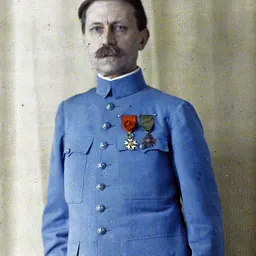
Contemporaries
People whose lives overlapped Thomas L. Kane's


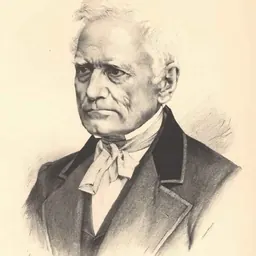


Frequently asked questions
Who was Thomas L. Kane?
Union United States Army general (1822-1883)
When was Thomas L. Kane born?
Thomas L. Kane was born on 27 January 1822 in Philadelphia.
When did Thomas L. Kane die?
Thomas L. Kane died on 26 December 1883 in Philadelphia.
What was Thomas L. Kane's occupation?
Thomas L. Kane was a military officer, social reformer and soldier.
What nationality was Thomas L. Kane?
Thomas L. Kane was American.
Sources & further reading
Cite this page
APA: Biography.guide. (2026). Thomas L. Kane. https://biography.guide/thomas-l-kane/
MLA: "Thomas L. Kane." Biography.guide, https://biography.guide/thomas-l-kane/.
Chicago: "Thomas L. Kane." Biography.guide. https://biography.guide/thomas-l-kane/.
Data last updated: 2026-09-20 · Spot an error? Report a correction.
Page generated 2026-09-27 05:18 UTC