
About Thomas J. Oakley
Lived 1783 – 1857 (aged 73). Thomas J. Oakley was an American politician, judge and lawyer.
Thomas Jackson Oakley (November 10, 1783 – May 11, 1857) was a New York attorney, politician, and judge. He served as a United States representative from 1813 to 1815, and from 1827 to 1828, and as New York State Attorney General from 1819 to 1821.
Early life Oakley was born in Beekman, New York on November 10, 1783. He was the son of Jerusha (Petera) Oakley and Jesse Oakley, a farmer and veteran of the American Revolution.
He graduated from Yale College in 1801, studied law with attorney Philo Ruggles in Poughkeepsie, and was admitted to the bar in 1804.
Career Oakley practiced first in Poughkeepsie, and later in New York City. Among his notable cases, Oakley and Thomas Addis Emmet represented Aaron Ogden in the landmark case Gibbons v. Ogden, which the United States Supreme Court ultimately resolved in favor of Gibbons, who was represented by Daniel Webster and William Wirt.
Oakley was Surrogate of Dutchess County from 1810 to 1811. He was elected as a Federalist to the Thirteenth United States Congress (March 4, 1813 – March 3, 1815). During this term, Oakley was an anti-war Federalist and opposed U.S. participation in the War of 1812.
Oakley was a member of the New York State Assembly in 1816, and again from 1818 to 1820. From 1819 to 1821, he was New York State Attorney General.
In 1826, he was again elected to Congress, serving from March 4, 1827, until May 9, 1828, when he resigned to accept a judgeship. He was a judge of the superior court of New York City from 1828 to 1847. In 1847, he was appointed chief judge, and he served until his death in office.
In 1853, Oakley received the honorary degree of LL.D. from Union College.
Personal life In 1808, Oakley married Lydia Williams, the daughter of Abigail (née Sayre) Williams and Robert Williams, a prominent business and political figure in Poughkeepsie. They were the parents of a son:, Robert Williams Oakley, a Union College graduate, attorney, and militia officer who died unmarried in 1832.
After the death of his first wife Oakley married Matilda Cruger (1809–1891); the daughter of Henry Cruger, who had the unique distinction of serving as both a member of Parliament (1774–1780; 1784–1790) and as a New York State Senator (1792–1796) Thomas and Matilda were the parents of five children, three daughters and two sons. Oakley died May 11, 1857, and was buried at Trinity Churchyard in New York City.
Descendants Through his daughter Matilda Cruger (née Oakley) Rhinelander (1827–1914), who married William Rhinelander, he was the grandfather of Thomas Jackson Oakley Rhinelander (1858–1946) and Philip Jacob Rhinelander (1865–1940), both of whom were prominent in New York society during the Gilded Age.
Don’t just read it —
keep it.
Full-length biographies made to live with: read them, listen on the way to work, watch them tonight.
- E-book
- Audio
- Video
Instant download · yours to keep · every purchase keeps this site free
Important facts
People in Thomas J. Oakley's life
Named in this biography and alive at the same time
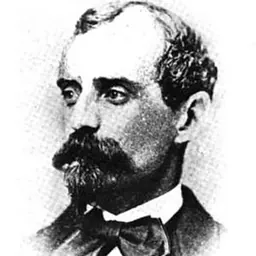
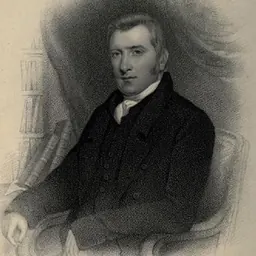

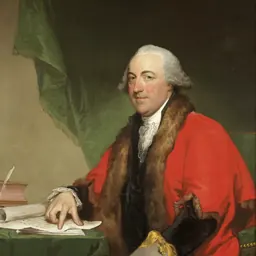
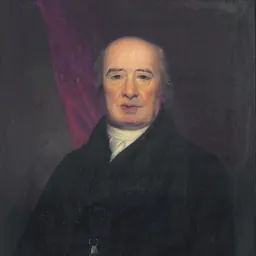

Related people
Same field, nearest in time



Contemporaries
People whose lives overlapped Thomas J. Oakley's


Frequently asked questions
Who was Thomas J. Oakley?
American politician (1783-1857)
When was Thomas J. Oakley born?
Thomas J. Oakley was born on 10 November 1783 in Poughkeepsie.
When did Thomas J. Oakley die?
Thomas J. Oakley died on 11 May 1857 in New York City.
What was Thomas J. Oakley's occupation?
Thomas J. Oakley was a politician, judge and lawyer.
What nationality was Thomas J. Oakley?
Thomas J. Oakley was American.
Sources & further reading
Cite this page
APA: Biography.guide. (2026). Thomas J. Oakley. https://biography.guide/thomas-j-oakley/
MLA: "Thomas J. Oakley." Biography.guide, https://biography.guide/thomas-j-oakley/.
Chicago: "Thomas J. Oakley." Biography.guide. https://biography.guide/thomas-j-oakley/.
Data last updated: 2026-09-20 · Spot an error? Report a correction.
Page generated 2026-09-27 05:28 UTC