
Thomas J. Hagerty
American priest and trade union activist
About Thomas J. Hagerty
Lived 1862 – 1925 (aged 62–63). Thomas J. Hagerty was an American trade unionist and catholic priest.
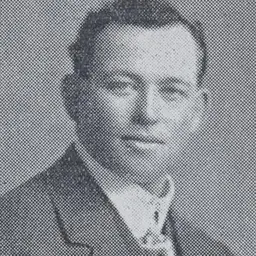
Thomas Joseph Hagerty (October 1857 – sometime in the 1920s) was an American Roman Catholic priest and trade union activist. Hagerty is remembered as one of the founding members of the Industrial Workers of the World (IWW), as author of the influential Preamble to the Constitution of the IWW, and as the creator of "Hagerty's Wheel", a frequently reproduced illustration depicting the interrelation of the IWW's constituent industrial unions.
Hagerty abruptly abandoned the radical movement shortly after the formation of the IWW, adopting the pseudonym "Ricardo Moreno" and working as a Spanish teacher and an oculist. After 1920, Hagerty lived on the streets of Chicago in conditions of dire poverty, eking out a meager existence as a beggar.
Biography
Early years
Thomas Joseph Hagerty was born in Illinois to Irish immigrant parents.
Activist priest
Hagerty is believed to have become a Marxist about 1892 and to have spent his early life attempting to rectify the teachings of the church and the socialist movement.
Upon arriving in New Mexico in 1901, Hagerty became associated with the American Labor Union (ALU) and the Western Federation of Miners (WFM). Despite this fall from grace with the church hierarchy, Hagerty continued to consider himself a priest in good standing, writing in International Socialist Review:
"While it is true that I have withdrawn from the technical work of the ministry, the withdrawal implies no derogation of my sacerdotal character. I am as much a priest today as I ever was. I have not separated myself from the communion of the Catholic Church; and I hold myself as much a member thereof as the Pope himself."
Hagerty remained defiant of his superiors, declaring that "bishops and priests exceed their authority when they use the influence of their position to oppose a movement whose highest purpose is the industrial liberation of the wage slaves of the world."
Hagerty was further radicalized during 1903 and 1904, a period marked by particular violence among the mining communities of the American west. Hagerty help to draft the gathering's "Industrial Union Manifesto," a document which was to serve as an intellectual foundation stone for the establishment of the Industrial Workers of the World at a convention later that same year. Hagerty's Wheel of Fortune Father Hagerty's Wheel of Fortune, a classification of the industrial population, 1905. Hagerty also produced a circular graphic commonly known as "Hagerty's Wheel", which depicted the various industrial unions comprising the Industrial Workers of the World (IWW) organization as interrelated spokes. The diagram was around the clock divided into eight departments: Manufacture, Public Service, Distribution, Food Stuffs, Agriculture, Mining, Transportation, and Building, and in the centre a Central Administration. The diagram pretend to encompass "every imaginable type of economic activity and form of employment." It was Samuel Gompers who sarcastically labelled the diagram "Father Hagerty's Wheel of Fortune".
Later years
Details about his later life remain murky. According to some accounts, Hagerty severed his connections with both the church and the IWW, adopted the pseudonym "Ricardo Moreno" and henceforth earned his living as a teacher of Spanish and an oculist. One newspaper, during Hagerty's speaking tour on socialism in 1903, claimed that Hagerty had been educated in medicine and became a doctor before entering the priesthood.
From 1920 until the time of his death, Hagerty-Moreno lived as a derelict on the streets of Chicago's skid row. Hagerty-Moreno's death passed unremarked, probably sometime in the 1920s.
Works Socialism and Freedom of Conscience. —Title listed among Hagerty's works in Economic Discontent, no known copies. Why Physicians Should Be Socialists. Terre Haute, IN: Standard Publishing Co., 1902. Economic Discontent and Its Remedy. Terre Haute, IN: Standard Publishing Co., 1902. "Socialism Versus Fads," International Socialist Review [Chicago], vol. 3, no. 8 (February 1903), pp. 449–453.
Don’t just read it —
keep it.
Full-length biographies made to live with: read them, listen on the way to work, watch them tonight.
- E-book
- Audio
- Video
Instant download · yours to keep · every purchase keeps this site free
Important facts
People in Thomas J. Hagerty's life
Named in this biography and alive at the same time

Related people
Same field, nearest in time

Contemporaries
People whose lives overlapped Thomas J. Hagerty's





Frequently asked questions
Who was Thomas J. Hagerty?
American priest and trade union activist
When was Thomas J. Hagerty born?
Thomas J. Hagerty was born in 1862.
When did Thomas J. Hagerty die?
Thomas J. Hagerty died in 1925 in Chicago.
What was Thomas J. Hagerty's occupation?
Thomas J. Hagerty was a trade unionist and catholic priest.
What nationality was Thomas J. Hagerty?
Thomas J. Hagerty was American.
Sources & further reading
· Wikipedia: Thomas J. Hagerty
Cite this page
APA: Biography.guide. (2026). Thomas J. Hagerty. https://biography.guide/thomas-j-hagerty/
MLA: "Thomas J. Hagerty." Biography.guide, https://biography.guide/thomas-j-hagerty/.
Chicago: "Thomas J. Hagerty." Biography.guide. https://biography.guide/thomas-j-hagerty/.
Data last updated: 2026-09-20 · Spot an error? Report a correction.
Page generated 2026-09-27 05:18 UTC