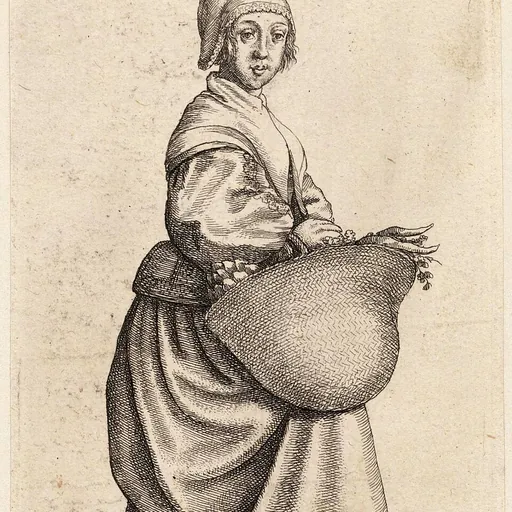
About Thomas(ine) Hall
Lived 1603 – 1699 (aged 95–96). Thomas(ine) Hall was a British domestic worker and military personnel.
Thomas Hall, born Thomasine Hall, was an English intersex soldier and became an indentured servant after immigrating to colonial Virginia. Hall wore both masculine and feminine garments, and they behaved according to the gender expectations of their dress. Hall and "Great Besse", a fellow servant in Warrosquyoake, had a sexual liaison which was made known to the town in 1629. Hall was subjected to multiple physical inspections, and the case concerning their gender was sent to the Quarter Court in Jamestown, which ruled that Hall was to present in public as both masculine and feminine. The court defined them as both a man and a woman.
Hall's given name is typically written as "Thomas(ine)" or "Thomas/ine" in scholarly literature on the case.
Early life Hall was born and christened Thomasine Hall at All Saints' Church, Newcastle upon Tyne in England. Hall was raised as a girl and performed traditional women's crafts, such as needlework. At the age of twelve, Hall was sent to London to live with an aunt. Hall lived there for ten years and observed the popularity among the aristocracy of crossover male and female fashion. They also had ample opportunity to engage with the emerging feminine street-culture. These trends may have influenced Hall to break away from social norms. Hall adopted a masculine gender presentation in order to follow their brother into the military. Hall served in the English military at the Isle of Rhe, France, in 1627. This confession announced to the courts that a woman asked her masculine indentured servant to sew, which subverted expected gender roles. While it is unconfirmed whether this Thomas Hall is Thomas(ine) Hall, this detail makes such an interpretation plausible. Hall worked as a maidservant at John Atkins' plantation in 1628 and 1629.
Even after this declaration, Hall was asked by Captain Nathanial Basse on the matter of his/her womanly clothing, and Hall continued to declare gender ambiguity. Hall accused Alice Longe of starting this rumour, though she blamed an unnamed servant of Jane and John Tyos. On April 8th 1629, the townspeople brought Hall to the General Court without charges for a case that would determine if he/she could be charged with fornication or "unnatural" sex.
In the proceedings Hall explicitly identifies as both a man and a woman, and there are two witnesses who corroborate that Hall cross-dressed and had "gender-crossing" genitalia. The gender ambiguity of this statement for both Hall and any potential partners represents one aspect of Hall's consistent attention to gender presentation. Under the threat of death, Hall was expected to pick a gender presentation and stick to it.
Context and legacy In the early modern era common peoples would have been familiar with the concept of hermaphroditism. Medical journals and books often had at least one chapter dedicated to the topic. In combination with the pervasive spectrums of Galenic medicine there were many interpretations of hermaphrodites in the early 18th century. Due to the spectrum of sexual markers, gender presentation was often the lens through which sex was determined. Early modern medicine upkept an aristocratic and elite view on the fluidity of sexual markers as indicators of sex and gender. Despite this fluid aspect of sex and gender being understood in the legal and social spheres an Aristotelian model of differentiation prevailed.
The 12th-century states that "Whether an hermaphrodite may witness a testament, depends on which sex prevails", while Henry de Bracton's De Legibus et Consuetudinibus Angliae ("On the Laws and Customs of England"), c. 1235, states that "A hermaphrodite is classed with male or female according to the predominance of the sexual organs." The Lawes Resolutions of Womens Rights (1632) approaches how one is to attempt to legally categorize hermaphrodites in a world where men and women are afforded different rights and roles. Civil and canon European law eventually came to adopt the same policy as outlined in the Roman Lex Repetundarum. This stated that hermaphrodites are legally, and likely socially, interacted with based upon dominating sexual characteristics. Legally hermaphrodites could only exist as the perceived dominating gender. Women's and men's roles were interpreted to rule out egalitarian separation and insist upon a womanly inferiority. Colonists interpretations allowed for reconstruction of gender based on performative tasks and presentation. Clothing was an integral aspect of identifying a person's gender and class status.
Reis states that the novel solution required by the court was a deliberate form of unjust punishment, "not to endorse uncertainty, but to preclude future acts of deception, to mark the offender, and to warn others against similar abomination. Dual-sexed Hall embodied a category of sex considered impermissible at that time." She states that making Hall a public spectacle would have been devastating and limiting of Hall's personhood, and this radical act contradicts not only earlier legal accounts, but also later legal and medical responses to the state of being intersex.
Don’t just read it —
keep it.
Full-length biographies made to live with: read them, listen on the way to work, watch them tonight.
- E-book
- Audio
- Video
Instant download · yours to keep · every purchase keeps this site free
Important facts
People in Thomas(ine) Hall's life
Named in this biography and alive at the same time


Related people
Same field, nearest in time





Contemporaries
People whose lives overlapped Thomas(ine) Hall's




Frequently asked questions
Who was Thomas(ine) Hall?
English servant
When was Thomas(ine) Hall born?
Thomas(ine) Hall was born in 1603 in Newcastle upon Tyne.
When did Thomas(ine) Hall die?
Thomas(ine) Hall died in 1699.
What was Thomas(ine) Hall's occupation?
Thomas(ine) Hall was a domestic worker and military personnel.
What nationality was Thomas(ine) Hall?
Thomas(ine) Hall was British.
Sources & further reading
Cite this page
APA: Biography.guide. (2026). Thomas(ine) Hall. https://biography.guide/thomas-ine-hall/
MLA: "Thomas(ine) Hall." Biography.guide, https://biography.guide/thomas-ine-hall/.
Chicago: "Thomas(ine) Hall." Biography.guide. https://biography.guide/thomas-ine-hall/.
Data last updated: 2026-09-22 · Spot an error? Report a correction.
Portrait: Wikimedia Commons · author & licence
Page generated 2026-09-27 05:04 UTC