
About Thomas Grantham
Lived 1634 – 1692 (aged 57–58). Thomas Grantham was a theologian.
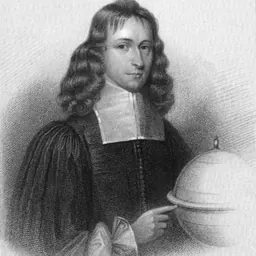
Thomas Grantham (January 1634 – 17 January 1692) was an English General Baptist divine (theologian), minister, and author. Grantham was one of the leading theologians for English Baptists and made petitions on behalf of the Baptist tenets, having access to King Charles II, in 17th century England.
Life
Early life Thomas Grantham was born in January 1634 at Halton Holegate, near Spilsby, Lincolnshire, to William Grantham, being part of the ancient Grantham family in the region. Grantham was a husbandman and tailor by trade, owning three plots of land at Halton, Hundleby, and Ashby by Partney. He was initially an Anglican layman, and probably used to attend the parish church of St. Andrew's in his hometown. Travelling in South Marsh district, Grantham encountered a group of Puritans who seceded from a Nonconformist church between Spilsby and Boston in 1651, having adopted Baptist views. Grantham became convinced of the baptism of believers only, in contrast with the baptism of infants, and went to Boston Baptist Church. There, Grantham was baptised and received into the church in 1653.
Ministry Shortly, Grantham was ordained minister in 1656 and brought the Baptist views to Halton Holegate. He organized the South Marsh church in Halton which initially had services held in private residence, but after considerable opposition, the church obtained a grant of the medieval Northolme Chapel, at Thorpe Northolme, near Wainfleet.
Grantham's key convert was John Watts, a wealthy man of some property who had received proper university education. Watts was ordained minister of a Baptist church with services conducted in his residence. By the efforts of Grantham and his evangelists, a number of Nonconformist Puritan Baptist churches were established in the south of Lincolnshire holding a full Arminian soteriology, differently from the Particular Baptists and other General Baptists.
Under Charles II Grantham's name is not appended to the original 1660 edition of the Standard Confession of Faith, but he seems to have drawn up shortly after the Narrative and Complaint, which was signed by 35 General Baptists in Lincolnshire. Grantham and Joseph Wright were admitted on 26 July 1660 to present the Standard Confession and the Narrative to King Charles II, with a petition for toleration. Thomas Venner's insurrection of Fifth Monarchy Men in January 1661 raised fears of Anabaptist outbreaks. Two addresses to the throne were then drawn up by Baptists from Lincolnshire. The second of these was presented (23 February) by Grantham to Charles, who expressed himself as well disposed. The Quæries Examined, or, Fifty anti-queries seriously propounded to the people called Presbyterians, 1676. Against John Barret. Christianismus Primitivus, 1678, (four books, each book and each part of bk. ii. separately paged; bk. iv. has separate title-page); it is a collection of treatises, and reprinted a number of the works above. An Epistle for Plain Truth and Peace, 1680. A Friendly Epistle to the Bishops and Ministers of the Church of England, 1680. Presumption, No Proof, 1687?. in reply to Samuel Petto. St. Paul's Catechism, 1687; 2nd ed. 1693. Hear the Church, an Appeal to the Mother of us all, 1688. The Infants' Advocate, 1688; 2nd part, 1689 (against Giles Firmin and Joseph Whiston). Truth and Peace: a Friendly Debate concerning Infant Baptism, 1689. A Dialogue between the Baptist and the Presbyterian, 1691, against John Collinges; answered by Martin Fynch. It contains lines of verse on Michael Servetus. Grantham apparently had access to the manuscript copy of the Christianismi Restitutio of Servetus, in the library (now at Cambridge) of John Moore. These verses (1691) are an early favourable notice of Servetus in English. The Forerunner to a Further Answer to Two Books, (1691?). The Grand Imposter caught in his own Snare, 1691. The Dying Words of [Thomas] Grantham, 1692.
Among his unpublished manuscripts were The Baptist's Complaints against the Persecuting Priests, 1685, and Christianitas Restaurata, of which the title seems borrowed from Servetus; both are quoted by Thomas Crosby for their biographical matter. William Richard in 1805 could not gain access to Grantham's manuscripts.
Notes and references
Don’t just read it —
keep it.
Full-length biographies made to live with: read them, listen on the way to work, watch them tonight.
- E-book
- Audio
- Video
Instant download · yours to keep · every purchase keeps this site free
Important facts
People in Thomas Grantham's life
Named in this biography and alive at the same time





Related people
Same field, nearest in time


Contemporaries
People whose lives overlapped Thomas Grantham's



Frequently asked questions
Who was Thomas Grantham?
English General Baptist minister and theologian
When was Thomas Grantham born?
Thomas Grantham was born in 1634 in Halton Holegate.
When did Thomas Grantham die?
Thomas Grantham died in 1692.
What was Thomas Grantham's occupation?
Thomas Grantham was a theologian.
Sources & further reading
· DBpedia: Thomas Grantham (Baptist)
Cite this page
APA: Biography.guide. (2026). Thomas Grantham. https://biography.guide/thomas-grantham-theologian/
MLA: "Thomas Grantham." Biography.guide, https://biography.guide/thomas-grantham-theologian/.
Chicago: "Thomas Grantham." Biography.guide. https://biography.guide/thomas-grantham-theologian/.
Data last updated: 2026-09-24 · Spot an error? Report a correction.
Page generated 2026-09-27 05:04 UTC