
About Thomas Gnielka
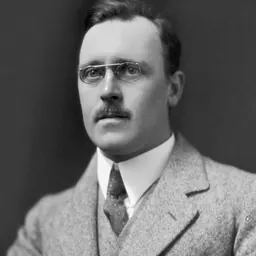
Lived 1928 – 1965 (aged 36–37). Thomas Gnielka was a German journalist and writer.
Thomas Gnielka (1928 – January 1965) was a West German journalist.
Aged 15, he was one of a group of senior boys from his Berlin secondary school to be conscripted for war service. The boys were sent to a base near Auschwitz. Given a number guard assignments at the concentration camp during the second part of 1944, Gnielka became aware of various Shoah atrocities several months before the arrival of the Red army in January 1945 opened the way for the Nazi atrocities to become more widely known. He never forgot those experiences, and as an investigative reporter for a regional newspaper reporter in the 1950s and early 1960s he played a pivotal role in ensuring that these more nightmarish aspects of Nazi Germany could not simply be forgotten. A file of papers passed on by Thomas Gnielka to the state (prosecutor) Fritz Bauer triggered the Auschwitz Trials of 1963–65 in Frankfurt, although Gnielka himself died of skin cancer some months before August 1965 when the court delivered its verdicts on the twenty defendants.
Life Child soldier Thomas Gnielka was born and grew up in Berlin. Towards the end of the Second World War he was conscripted to serve as a "Luftwaffenhelfer" (child soldier). With fellow pupils from the in Berlin-Spandau he was sent in 1944 to the Auschwitz region. Their mission was to defend the IG Farben plant there: duties included supervising the emaciated concentration camp inmates who were sent out each day to be used for forced labour. One of the tasks the boys were required to supervise involved the construction of a protective wall around the plant.
Journalism and marriage After the war Gnielka volunteered for an Internship with the newspaper , based in the Berlin quarter where he had grown up. where in 1948 he met and teamed up with the cabaret artiste (subsequently better known for her work as an author and television journalist) Ingeborg Euler. He set her lyrics to music and accompanied her on the piano when she appeared on the stages in the Simpl quarter of Munich, generally seen as one of the city's "entertainment hubs": as often as not they would perform together in exchange for no more than a hot dinner. They were married towards the end of 1949, Between 1950 and 1962 the marriage produced five recorded children.
Traumatic memories In May 1952 Gnielka was invited to join the twice yearly meetings of Hans Werner Richter's Group 47 writers' circle. ) At his first meeting he read from his "novel", which sixty-two years later would be published with the title "Geschichte einer Klasse" ("The story of a [school] class [group]"). The "dismally authentic" text concerns a group of school classmates sent from Berlin to serve as directly beside the Auschwitz concentration camp complex during the closing part of the Second World War. With effect from 11 February 1957 he switched, becoming the Wiesbaden local editor for the Frankfurter Rundschau, a regional newspaper launched twelve years earlier which had already acquired a national reach. Gnielka, in his article, had expressed concern that office employees were processing compensation claims from surviving holocaust victims, if at all, only with great reluctance: some of the clerical employees were prepared to identify themselves as former Nazis. According to Gnielka's report, approximately 50,000 compensation claims were sitting unprocessed in a large heap. Applicants were being treated with a marked absence of courtesy, and old Nazi-era antisemitic songs could sometimes be heard from the back offices.
Fritz Bauer The state prosecutor for the state of Hessen at this time was a man called Fritz Bauer who was by this time already active in the post–war efforts to obtain justice and compensation for victims of the Nazi regime, and was already investigating suspected war crimes committed at the Auschwitz concentration camp during the Hitler years. Finding evidence that would stand up in court was a major challenge for Bauer, however. But when the Frankfurt Auschwitz trials opened in 1963 it was widely acknowledged that the entire investigation had been made possible by the handing over of those vital files by Thomas Gnielka.
Political journalist: investigative journalist Gnielka remained a member of the Frankfurter Rundschau editorial team till September 1960. A particularly high-profile case in point was Richard Baer, who served, in Gnielka's words, "as the last and cruellest of the camp commanders" ("der letzte, grausamste Kommandant des Lagers") at Auschwitz between May 1944 and the establishment's hasty dissolution and abandonment (by the Germans) in January 1945. After the war he seemed to have disappeared.
He located and visited the home of Baer's wife, Maria, in Hamburg. Maria was not at home, but her sister was. Gnielka found the answers provided by Baer's sister-in-law "cautious", and her overblown praise for the human qualities of her sister's "exemplary husband" unpersuasive. Gnielka returned home and produced a report which was published in a German illustrated magazine: in his article, he aired his suspicion that Richard Baer was at liberty, leading the "life of a respectable citizen under a false name" ("...irgendwo unter einem falschen Namen das Leben eines Biedermanns...").
Don’t just read it —
keep it.
Full-length biographies made to live with: read them, listen on the way to work, watch them tonight.
- E-book
- Audio
- Video
Instant download · yours to keep · every purchase keeps this site free
Important facts
Family & relationships
People in Thomas Gnielka's life
Named in this biography and alive at the same time

Related people
Same field, nearest in time


Contemporaries
People whose lives overlapped Thomas Gnielka's


Frequently asked questions
Who was Thomas Gnielka?
German journalist
When was Thomas Gnielka born?
Thomas Gnielka was born in 1928 in Berlin.
When did Thomas Gnielka die?
Thomas Gnielka died in 1965 in Herold.
What was Thomas Gnielka's occupation?
Thomas Gnielka was a journalist and writer.
What nationality was Thomas Gnielka?
Thomas Gnielka was German.
Sources & further reading
Cite this page
APA: Biography.guide. (2026). Thomas Gnielka. https://biography.guide/thomas-gnielka/
MLA: "Thomas Gnielka." Biography.guide, https://biography.guide/thomas-gnielka/.
Chicago: "Thomas Gnielka." Biography.guide. https://biography.guide/thomas-gnielka/.
Data last updated: 2026-09-22 · Spot an error? Report a correction.
Page generated 2026-09-27 05:05 UTC