
About Thomas Gillespie
Lived 1708 – 1774 (aged 65–66). Thomas Gillespie was a civil servant.
Thomas Gillespie (1708 – 19 January 1774) was a Scottish minister of the Church of Scotland. He was founder of the Synod of Relief. Thomas Gillespie, born in 1708, at Clearburn, Duddingston, was the son of a well-to-do brewer and bonnet-laird — the only son of a second marriage. An interview with Thomas Boston, arranged by his mother, turned his thoughts to the ministry.
On the completion of his Arts course in Edinburgh, he entered the Divinity Hall. After some months, however, he left for the Divinity Hall of the Secession Church in Perth. A few weeks’ experience of its narrowness being more than enough, he betook himself to Northampton to complete his studies under Philip Doddridge. He was ordained by a "classis" of the English Presbyterians. Presented and called to Carnock, he was inducted by the Presbytery of Dunfermline in 1741. In the early years of his ministry he was a leader in the Cambuslang and Kilsyth Revivals, and became a trusted correspondent of George Whitfield and Jonathan Edwards. Taking his stand, with the majority of the Presbytery, against the Inverkeithing Intrusion, he was summarily deposed by the General Assembly of 1752.
In 1761, with two other ministers and their flocks, he formed a new body — the Presbytery of Relief, which had attained a quite considerable place in many parts of Scotland, by the time of his death in 1774.
Early life Gillespie was born at Clearburn Farm, in the parish of Duddingston, Edinburgh (then part of Midlothian). His father, Thomas Gillespie (1688-1712), was a farmer who died when Thomas was young, and his mother, Mary Haliburton (1689-1758), ran the family farm and brewery. She encouraged him to hear Thomas Boston the elder preach.
After a period in the family businesses, Gillespie studied at the University of Edinburgh from 1732. In 1738 he went north to attend the seminary run at Perth by William Wilson (1690–1741) of the Secession Church; but was not impressed and moved on after a short while. There he was ordained in January 1741. He ministered at Hartbarrow in Lancashire, and September 1741 was admitted minister of the parish of Carnock, Fife ander the patronage of Col Erskine.
1740s revival
Gillespie was closely involved in the religious revivalism of the 1740s in Lanarkshire, at Kilsyth and Cambuslang. It was associated with the preaching of George Whitefield in Glasgow in 1741–2, and was taken up as a phenomenon by John Erskine, The Signs of the Times Consider'd (1742). The local ministers involved were William McCulloch at Cambuslang, and James Robe at Kilsyth. The evangelical John Maclaurin was drawn in from outside, as was Gillespie, who edited the conversion testimonies collected by McCulloch.
Maclaurin and Robe wrote to Jonathan Edwards in New England, in 1742. In ensuing correspondence, Gillespie was in touch with Edwards from 1746/7.
The Inverkeithing case
Gillespie absented himself from presbytery meetings held to ordain Andrew Richardson, an unacceptable presentee, as minister of Inverkeithing, in southern Fife not far from Carnock. He was then deposed by the General Assembly of the Church of Scotland of 1752. for maintaining that the refusal of the local presbytery to act in this case was justified. John Erskine, on the other hand, became a leader of the "Popular Party" opposing the Moderates.
After the deposition John Witherspoon wrote the anonymous Ecclesiastical Characteristics (1753) to satirise the Moderates, and James Baine became a supporter of Gillespie. Gillespie himself continued to preach, first at Carnock, and then in nearby Dunfermline.
In 1756, John Bonar received a presentation to the church of Jedburgh, from William Kerr, 4th Marquess of Lothian. He was unable to take it up, however, in the face of strong local opposition, from supporters of Thomas Boston the younger. Boston was minister at Oxnam, just outside Jedburgh, and had the support of the Town Council. The Marquess was on good terms with Selina, Countess of Huntingdon, and supported George Whitefield; his objection to the evangelical Boston was personal, rather than theological. When John Douglas was nominated instead of Bonar, Boston persisted, but lost out. In 1759 Gillespie visited Boston in the Lowlands, to give support after he resigned his ministry at Oxnam.
The Relief Church In 1761, with Thomas Boston of Jedburgh, and Thomas Colier at Colinsburgh, Gillespie formed a distinct communion under the name of the "Presbytery of Relief"—relief, that is to say, from patronage and the church courts.
Early expansions of the Presbytery were after secessions at Blairlogie (where William Cruden was rejected by the General Synod in 1760, and Auchtermuchty where Thomas Scott of Hexham came as minister in 1763. As the 1760s proceeded, congregations joined at Duns, Scottish Borders and Bellshill, where Gillespie preached in 1762. James Baine took an Edinburgh church, Lady Yester's, for the Presbytery at the end of 1766, inducted by Gillespie, over the claims of William Cruden; who went to a Glasgow church in 1767 after Boston had died.
From 1769 the Relief Church, as it had become after further rapid growth, experienced internal tensions. Gillespie was believed to favour a reconciliation with the Church of Scotland, and began to distance himself, but on his death in 1774, the Relief Church maintained its independence. It eventually became one of the communions combining to form the United Presbyterian Church of Scotland.
Don’t just read it —
keep it.
Full-length biographies made to live with: read them, listen on the way to work, watch them tonight.
- E-book
- Audio
- Video
Instant download · yours to keep · every purchase keeps this site free
Important facts
People in Thomas Gillespie's life
Named in this biography and alive at the same time
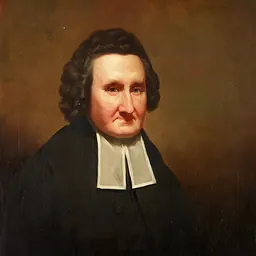

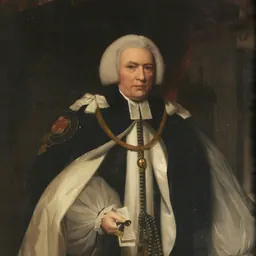
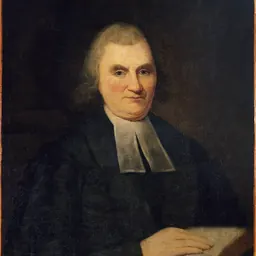
Related people
Same field, nearest in time
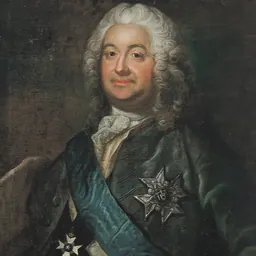


Contemporaries
People whose lives overlapped Thomas Gillespie's




Frequently asked questions
Who was Thomas Gillespie?
Scottish church leader
When was Thomas Gillespie born?
Thomas Gillespie was born in 1708.
When did Thomas Gillespie die?
Thomas Gillespie died on 19 January 1774.
What was Thomas Gillespie's occupation?
Thomas Gillespie was a civil servant.
Sources & further reading
· DBpedia: Thomas Gillespie (minister)
Cite this page
APA: Biography.guide. (2026). Thomas Gillespie. https://biography.guide/thomas-gillespie-civil-servant/
MLA: "Thomas Gillespie." Biography.guide, https://biography.guide/thomas-gillespie-civil-servant/.
Chicago: "Thomas Gillespie." Biography.guide. https://biography.guide/thomas-gillespie-civil-servant/.
Data last updated: 2026-09-20 · Spot an error? Report a correction.
Page generated 2026-09-27 05:12 UTC