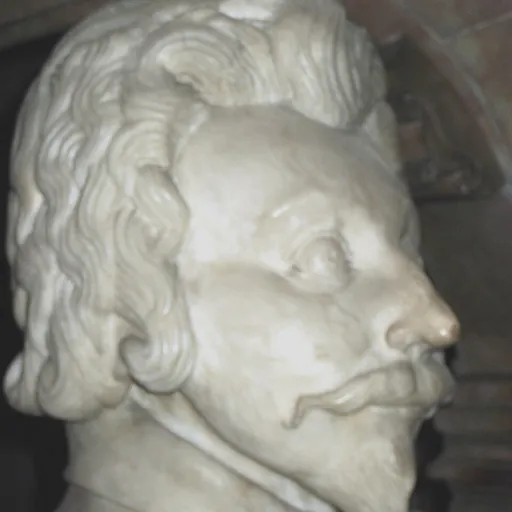
About Thomas Gerard, 1st Baron Gerard
Lived 1560 – 1618 (aged 57–58). Thomas Gerard, 1st Baron Gerard was a politician.
Thomas Gerard, 1st Baron Gerard (c. 1564–1618). from a composite family memorial in the Gerard Chapel, Church of St John the Baptist, Ashley, Staffordshire.
Thomas Gerard, 1st Baron Gerard (c. 1564 – 15 January 1618) was a Staffordshire and Lancashire landowner and politician, a member of six English parliaments for three different constituencies. Although a prominent member of the Essex faction in the reign of Elizabeth I, he avoided involvement in the Essex Rebellion and received greater honours, including a peerage, in the reign of James I.
Background and early life Thomas Gerard's mother: Anne Radcliffe or Ratcliffe of Winmarleigh, Lancashire, wife of Gilbert Gerard. Gerard memorial, Ashley. Thomas Gerard's father: Gilbert Gerard (before 1523–1593), Attorney General 1559–81, Master of the Rolls 1581–93. Gerard memorial, Ashley.
Thomas Gerard's parents were:
Sir Gilbert Gerard of Ince, Lancashire, and Gerrard's Bromley, Staffordshire. Gilbert was a distinguished barrister who was appointed Attorney General at the beginning of Elizabeth's reign and held the post for more than 22 years, until he was appointed Master of the Rolls in 1581. He was an important figure in the imposition of the Elizabethan Religious Settlement. Like many of the Lancashire gentry, she remained a Catholic to the end of her life.
In 1584, they simply sent a blank indenture or election return to Gilbert Gerard, the duchy's chief law officer, and he filled in the name of his son. Thomas was returned alongside Henry Sadler, son of Ralph Sadler, the Chancellor of the Duchy of Lancaster. Sadler had already represented Lancaster in the two previous parliaments. Both Sadler and Gerard were returned as members for Lancaster again in 1586.
Robert Devereux, 2nd Earl of Essex, long a favourite of Elizabeth I, rival to the Cecils, and a patron of Thomas Gerard. Robert Cecil, later 1st Earl of Salisbury. Although Cecil was an enemy of Essex, Gerard cultivated good relations with him through their shared love of falconry. In the parliamentary elections of October 1588, Thomas Gerard was returned by both Lancashire and Staffordshire. His family had estates in both counties and he had by this time married Alice Rivet, daughter and heiress of Sir Thomas Rivet of Chippenham, who had lands in Staffordshire. So it was for Staffordshire he decided to sit. It is possible that both he and the electors were influenced by Robert Devereux, 2nd Earl of Essex, who was the rising power in the county and leader of a powerful court faction. As a result, Lancashire was forced to hold a by-election in February 1589, just after the assembly of the parliament. The county contained Chartley Castle, his main seat, and Lettice Knollys, his mother, lived at Drayton Bassett with Sir Christopher Blount, her husband, who was a crony of Essex. The earl was appointed Staffordshire's Custos Rotulorum sometime in the early 1590s. He gathered around him a faction made up of ambitious, mainly young, members of local landowning families, particularly the Littleton, Bagot, Chetwynd, Trew and Aston families. While leaning personally towards the Puritan wing of the Church of England, Essex was tolerant of other beliefs. In 1590 it was rumoured he had links to the Catholic double agent Gilbert Gifford, son of the Staffordshire landowner John Giffard. Gerard's own father was accused of being "a protestant at London and a papist in Lancashire", so the relatively relaxed attitude of Essex may have been an attraction, and he was similar in age and background to the majority of the earl's Staffordshire supporters.
Gerard proved particularly helpful and accommodating to Essex in 1593. A parliament was summoned on 4 January. Essex had already appointed Sir Edward Littleton, Sir Edward Aston and Richard Bagot as his agents in Staffordshire. On 2 January 1593 Essex he had written urging them to secure the return of his step-father Christopher Blount in the forthcoming elections. A week later he wrote again, this time asking them to support Gerard as second member. By this time, however, Harcourt had also thrown his hat into the ring. Essex never wrote to clarify or resolve the situation, leaving his Staffordshire supporters confused. and there was a serious danger that Derby might promote one or more candidates against the pair of them and thus create a contest for the seats. In the event, Gerard was returned with Molyneux. Before the parliament convened, Gilbert Gerard died, leaving Thomas as heir to his substantial estates and his properties in London. Derby waited until after the short-lived parliament to pursue his feud with Molyneux, committing him to the Fleet prison and hauling him before the Privy Council, although the earl died in September and his eldest son and successor a few months later. Thereafter, Gerard was able to build good relationships with both the great Merseyside landowning families.
Gerard's efficient and uncomplaining service was well-rewarded, as his connection with Essex opened up many lines of preferment, especially in various military ventures. In 1595 he was appointed captain of the Isle of Man. He was instructed to reorganise the defences discreetly, without disturbing the civil government.
In November 1597 Gerard was returned again to the House of Commons as member for Lancashire, although not before Molyneux, now High Sheriff of Lancashire, had his revenge for past slights by sending back the election writ to London on a technicality. Molyneux's position barred his standing, and Gerard's colleague this time was Robert Hesketh of Rufford Hall.
Breach with Essex It was the Irish war that finally split Gerard from the Essex faction. Essex was nominated for the post of Lord Lieutenant of Ireland by the Cecil faction, in the expectation that he would fail. Gerard travelled with Essex to Ireland in April 1599 and they stayed at his Staffordshire manor of Gerrard's Bromley together on the way. They reached Dublin on 15 April but Gerard left within five days. It is not clear what his duties, if any, had been in Ireland and he did not return. The Privy Council ordered Gerard to send supplies to Ireland from the Isle of Man, but he had no further dealings with Essex in Ireland. In April 1600 he was still attending to his duties in and around London, conducting the French ambassador to the coast to meet messengers from Henry IV, and keeping in close touch with Cecil.
When Essex returned to disgrace in May, Gerard left the court and headed for the country. It seems he had been accused of something, perhaps concerning his dealings with Essex, by Roger Manners, 5th Earl of Rutland, a strong supporter of Essex. Gerard wrote to Robert Cecil on 9 May in abject terms, seeking to explain his actions, although he had clearly panicked:
Gerard succeeded in creating enough distance between himself and Essex to resume his responsibilities within a few months. In July he wrote to Cecil asking that the Isle of Man garrison be paid in cash, not kind, to benefit the local economy, a measure suggested by George Lloyd, the Bishop of Sodor and Man.
Abd el-Ouahed ben Messaoud ben Mohammed Anoun, Moorish Ambassador to Queen Elizabeth I. Gerard was responsible for ensuring his well-being during his stay.
In August 1600 Gerard was living in his house at Charing Cross and again carrying out diplomatic escort duties, this time looking after the travel and dietary arrangements of the man he called the "Barbery Embassador" . This was a sensitive and important task, entrusted to him by Cecil. England was in the process of cementing the Anglo-Moroccan alliance. The Sultan of Morocco, Ahmad al-Mansur, was an ally against Spain and a major commercial partner. Gerrard was deputed to arrange accommodation for Abd el-Ouahed ben Messaoud, the sultan's ambassador. On 11 August he wrote to Cecil to explain that he had arranged via the Lord Mayor of London to house the ambassador in Alderman Radclyffe's house. Three days later, Gerard rode down to Gravesend to make first contact with the Moroccan party, who were awaiting a favourable tide to carry them swiftly into the capital. Tactfully, he let them rest overnight before talking further, and then rode back to London to make sure they were fully provided for.
When the Essex Rebellion occurred in February 1601, Gerard was among the first to denounce it. It was he who handed over Essex, Rutland, and Southampton at the Tower of London on 9 February. They had children of whom four survived him. Dutton (1613-1640), who became 3rd Baron Gerard, married firstly, after 18 May 1625, Lady Mary Fane (1606-1634), daughter of Francis Fane, 1st Earl of Westmorland. Secondly, he married, on 21 August 1636, Lady Elisabeth O'Brien (d. 1656-1659), daughter of Henry O'Brien, 5th Earl of Thomond. Alice, who married Roger Owen. Frances (d. 1636), who married Robert Needham, 3rd Viscount Kilmorey (d. 1657), son of Robert Needham, 2nd Viscount Kilmorey. Elizabeth (d. 1679), who married, on 6 November 1642, Sir Peter Leycester, 1st Baronet of Nether Tablery, Cheshire. William. John. Elizabeth, daughter of Robert Woodford of Burnham, Buckinghamshire, was his second wife. The marriage seems to have been childless. After Gerard's death, Elizabeth married Patrick Ruthven, a member of the disgraced Scottish Ruthven family. They had three sons, including Patrick Ruthven (died 1667) who was a soldier in Swedish service. Their daughter Mary Ruthven (died 1645) was a maid of honour to Henrietta Maria. She married the painter Anthony van Dyck. He painted her portrait several times. Their daughter Justiniana van Dyck was baptised on the day the painter died, 9 December 1641.
Don’t just read it —
keep it.
Full-length biographies made to live with: read them, listen on the way to work, watch them tonight.
- E-book
- Audio
- Video
Instant download · yours to keep · every purchase keeps this site free
Important facts
People in Thomas Gerard, 1st Baron Gerard's life
Named in this biography and alive at the same time






Related people
Same field, nearest in time
Contemporaries
People whose lives overlapped Thomas Gerard, 1st Baron Gerard's


Frequently asked questions
Who was Thomas Gerard, 1st Baron Gerard?
English landowner and politician
When was Thomas Gerard, 1st Baron Gerard born?
Thomas Gerard, 1st Baron Gerard was born in 1560.
When did Thomas Gerard, 1st Baron Gerard die?
Thomas Gerard, 1st Baron Gerard died on 15 January 1618.
What was Thomas Gerard, 1st Baron Gerard's occupation?
Thomas Gerard, 1st Baron Gerard was a politician.
Sources & further reading
· Wikipedia: Thomas Gerard, 1st Baron Gerard
· DBpedia: Thomas Gerard, 1st Baron Gerard
Cite this page
APA: Biography.guide. (2026). Thomas Gerard, 1st Baron Gerard. https://biography.guide/thomas-gerard-1st-baron-gerard/
MLA: "Thomas Gerard, 1st Baron Gerard." Biography.guide, https://biography.guide/thomas-gerard-1st-baron-gerard/.
Chicago: "Thomas Gerard, 1st Baron Gerard." Biography.guide. https://biography.guide/thomas-gerard-1st-baron-gerard/.
Data last updated: 2026-09-24 · Spot an error? Report a correction.
Portrait: Wikimedia Commons · author & licence
Page generated 2026-09-27 05:09 UTC