
Thomas Gaisford
English classical scholar
About Thomas Gaisford
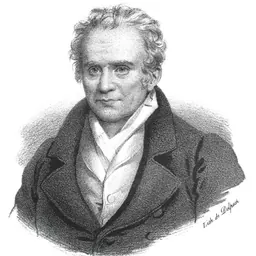
Lived 1779 – 1855 (aged 75). Thomas Gaisford was a British classical philologist, university teacher and theologian.
Thomas Gaisford (22 December 1779 – 2 June 1855) was an English classical scholar and clergyman. He served as Dean of Christ Church from 1831 until his death.
Early life Gaisford was born at Iford Manor, Wiltshire, the son of John Gaisford. He was educated at Hyde Abbey School, Winchester. He entered Christ Church, Oxford in 1797, graduating B.A. 1801, M.A. 1804, B.D. & D.D. 1831.
Academic career He became a Student (i.e. a Fellow) at Christ Church in 1800,
As curator of the Bodleian Library and principal delegate of the Oxford University Press, Gaisford was instrumental in securing the co-operation of distinguished European scholars as collators, notably Bekker and Dindorf. His numerous contributions to Greek literature include: Hephaestion's Encheiridion (1810); Poëtae minores Graeci (1814–1820); Stobaeus' Florilegium (1822); Herodotus, with variorum notes (1824); Suidas's Lexicon (1834); Etymologicum Magnum (1848). Eusebius's Praeparatio evangelica (1843) and Demonstratio evangelica (1852).
Personal life On 11 May 1815 Gaisford married Helen Margaret Douglas (1791–1830) the daughter of the Rev. Robert Douglas. They had five children. After she died in 1830, he married Jane Catharine Jenkyns (1787–1863); she was the sister of Dr Richard Jenkyns, master of Balliol College and Dr Henry Jenkyns.
On 23 June 1843, Gaisford's 21-year-old son, William Gaisford, drowned while swimming in the river Thames at Sandford Lock, a notoriously dangerous spot. He got into difficulties and his friend, Richard Phillimore (the son of Joseph Phillimore), entered the water to save him. However, both men perished. They are buried in Christ Church Cathedral. They are commemorated by an obelisk at Sandford Lock and two memorial tablets in the north walk of the Cathedral cloisters.
Legacy The Gaisford Prize was founded in Gaisford's honour in 1856, shortly after his death. Gaisford Street in Kentish Town, north London, was named in his honour.
Works
Εὐριπιδου Ἀλκηστις. Euripidis Alcestis, ex optimis exemplaribus expressa..., 1806 Hephæstionis Alexandrini Enchiridion,1810 Catalogus sive notitia manuscriptorum qui a cel. E. D. Clarke ..., 1812 Volume 1/2 Lectiones Platonicae e membranis Bodleianis, 1820 Poetae graeci minores, 5 voll., 2ª ed., Lipsia, 1816-1823: vol.I, vol.II, vol.III/ vol. I, vol.II, vol. III, vol.IV Iōannou Stobaiou Anthologion, 1822 vol.1, vol. 2, vol.3, vol. 4 Notes on Herodotus, 1824 Vol. 1 Hērodotou Halikarnēssēos Historiōn logoi IX.: Lib. I-IV - Historiarum libri IX: codicem sancrofti manuscriptum denuo contulit reliquam lectionis varietatem commodius digessit, 1824-1839 vol.1, vol. II, vol. IV Scholia in Sophoclis tragoedias septem. E codice MS. Laurentiano descripsit P. Elmsley..., 1825 Ēphastiōnos encheiridion peri metrōn kai poiēmatōn, 1832 Suidae Lexicon, 1834 vol.1, vol.3 Paroemiographi graeci, 1836 Etymologicum magnum, 1848* Ioannis Stobaei Eclogarum physicarum et ethicarum libri duo ad mss ..., 1850 Volume 2 Suidae Lexicon, Graece et Latine, 1853 vol.1, vol.2
Quotations "Nor can I do better, in conclusion, than impress upon you the study of Greek literature, which not only elevates above the vulgar herd, but leads not infrequently to positions of considerable emolument." –Th. Gaisford, Christmas Day Sermon in the Cathedral, Oxford (Rev. W. Tuckwell, Reminiscences of Oxford, 2nd ed., 1907, p. 124) "It was said that Gaisford, on his visit to Germany, had some difficulty in escaping from the 'umarmung' [hug, embrace] of some of its scholars, exclaiming (in the apprehension of a 'kuss' [kiss] on both cheeks) 'Ohe ! jam satis, amice'." G.V. Cox, Recollections of Oxford, London : Macmillan, 1870, p. 411, fn. 3. 'Ohe ! jam [iam] satis, amice' means idiomatically : 'Oh, that's quite enough, my friend.' The quotation derives with amendment from Abraham Cowley's Naufragium Joculare [Ioculare] ('The Hilarious Shipwreck'.), 1638, Act 1, sc. 6. (Geoffrey Thomas, Birkbeck College, University of London.)
Don’t just read it —
keep it.
Full-length biographies made to live with: read them, listen on the way to work, watch them tonight.
- E-book
- Audio
- Video
Instant download · yours to keep · every purchase keeps this site free
Important facts
People in Thomas Gaisford's life
Named in this biography and alive at the same time


Related people
Same field, nearest in time
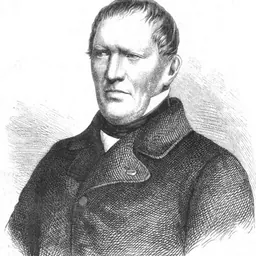
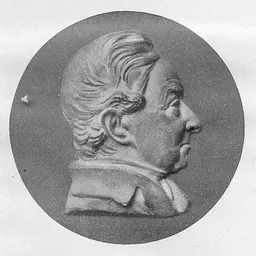

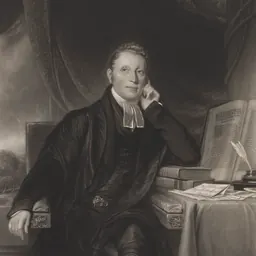
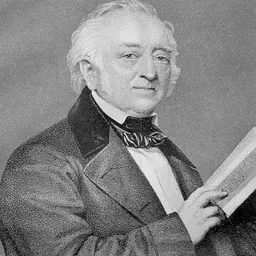

Contemporaries
People whose lives overlapped Thomas Gaisford's



Frequently asked questions
Who was Thomas Gaisford?
English classical scholar
When was Thomas Gaisford born?
Thomas Gaisford was born on 22 December 1779 in Wiltshire.
When did Thomas Gaisford die?
Thomas Gaisford died on 2 June 1855 in Oxford.
What was Thomas Gaisford's occupation?
Thomas Gaisford was a classical philologist, university teacher and theologian.
What nationality was Thomas Gaisford?
Thomas Gaisford was British.
Sources & further reading
Cite this page
APA: Biography.guide. (2026). Thomas Gaisford. https://biography.guide/thomas-gaisford/
MLA: "Thomas Gaisford." Biography.guide, https://biography.guide/thomas-gaisford/.
Chicago: "Thomas Gaisford." Biography.guide. https://biography.guide/thomas-gaisford/.
Data last updated: 2026-09-22 · Spot an error? Report a correction.
Page generated 2026-09-27 05:22 UTC