
About Thomas Eagleton
Lived 1929 – 2007 (aged 77). Thomas Eagleton was an American politician, military officer, lawyer, lieutenant governor and jurist.
Thomas Francis Eagleton (September 4, 1929 – March 4, 2007) was an American lawyer who served as a United States senator from Missouri from 1968 to 1987. He was briefly the Democratic vice presidential nominee under George McGovern in 1972. He suffered from bouts of depression throughout his life, resulting in several hospitalizations, which were kept secret from the public. When they were revealed, the McGovern campaign was humiliated, and Eagleton was forced to quit the race. He later became adjunct professor of public affairs at Washington University in St. Louis.
Early life and political career
Eagleton was born in St. Louis, Missouri, the son of Zitta Louise (Swanson) and Mark David Eagleton, a politician who had run for mayor. His paternal grandparents were Irish immigrants, and his mother had Swedish, Irish, French, and Austrian ancestry.
Eagleton graduated from St. Louis Country Day School, served in the U.S. Navy for two years, and graduated in 1950 from Amherst College, where he was a member of Delta Kappa Epsilon fraternity (Sigma chapter). He then attended Harvard Law School. After graduating in 1953, Eagleton practiced law at his father's firm and later became associated with Anheuser-Busch's legal department.
Eagleton married Barbara Ann Smith of St. Louis on January 26, 1956. A son, Terence, was born in 1959, and a daughter, Christin, in 1963. He was elected circuit attorney of the City of St. Louis in 1956. During his tenure, he appeared on the TV show What's My Line? (episode #355) as "District Attorney of St. Louis". (He stumped the panel.) He was elected Missouri Attorney General in 1960 at age 31 (the youngest in the state's history). He was elected the 38th lieutenant governor of Missouri in 1964, and won a U.S. Senate seat in 1968, unseating incumbent Edward V. Long in the Democratic primary and narrowly defeating Congressman Thomas B. Curtis in the general election.
Eagleton suffered from depression; he checked himself into hospital three times between 1960 and 1966 for physical and nervous exhaustion, receiving electroconvulsive therapy (shock therapy) twice. He later received a diagnosis of bipolar II from Frederick K. Goodwin.
The hospitalizations, which were not widely publicized, had little effect on his political aspirations. The St. Louis Post-Dispatch noted in 1972, immediately after Eagleton's vice-presidential nomination: "He had been troubled with gastric disturbances, which led to occasional hospitalizations. The stomach troubles have contributed to rumors that he had a drinking problem." Novak quoted the senator as saying: The people don't know McGovern is for amnesty for draft dodgers, abortion, and legalization of pot. Once middle America—Catholic middle America, in particular—finds this out, he's dead. even though he only supported the decriminalization of marijuana and maintained that legalized abortion fell under the purview of states' rights.
On July 15, 2007, several months after Eagleton's death, Novak said on Meet the Press that the unnamed senator was Eagleton. Eagleton did not mention his hospitalizations, and in fact decided with his wife to keep them secret from McGovern while he was flying to his first meeting with McGovern.
Replacement on the ticket On July 25, 1972, just over two weeks after the 1972 Democratic Convention, Eagleton said that news reports that he had received electroshock therapy for clinical depression during the 1960s were true. McGovern initially said he would back Eagleton "1,000 percent". McGovern consulted confidentially with preeminent psychiatrists, including Eagleton's doctors, who advised him that a recurrence of Eagleton's depression was possible and could endanger the country should Eagleton become acting president. On August 1, nineteen days after being nominated, Eagleton withdrew at McGovern's request and, after a new search by McGovern, was replaced by Sargent Shriver, former U.S. Ambassador to France, and former (founding) director of the Peace Corps and the Office of Economic Opportunity.
A Time poll taken at the time found that 77% of the respondents said "Eagleton's medical record would not affect their vote." Nonetheless, the press made frequent references to his "shock therapy", and McGovern feared that this would detract from his campaign platform.
McGovern's failure to vet Eagleton Eagleton told reporters that the extorted money was to be turned over to the Church of Scientology, to which Weigand and Poludniak both belonged. Weigand appealed her conviction, arguing that her trial should have been moved out of St. Louis because of extensive publicity that might have prejudiced jurors. The U.S. Supreme Court declined her appeal in 1982.
Eagleton did not seek a fourth term in 1986. Former Republican Governor Kit Bond succeeded him in the Senate.
Senate career
In the Senate, Eagleton was active in matters dealing with foreign relations, intelligence, defense, education, health care, and the environment. He was instrumental to the Senate's passage of the Clean Air Act and the Clean Water Act, and sponsored the amendment that halted the bombing in Cambodia and effectively ended American involvement in the Vietnam War.
Notably, Eagleton was one of only three senators to oppose the nomination of Gerald Ford as vice president in 1973. The other two senators were William Hathaway of Maine and Gaylord Nelson of Wisconsin.
Eagleton was involved in the unsuccessful attempt to pass the Human Life Amendment, a series of proposals to amend the United States Constitution with the effect of overturning the Supreme Court 1973 decision Roe v. Wade, which ruled that abortion bans were unconstitutional. The version of the Human Life Amendment in which Eagleton was most involved, the Hatch-Eagleton Human Life Federalism Amendment, was the only one to receive a formal vote in the Senate.
Post-Senate career In January 1987, Eagleton returned to Missouri as an attorney, political commentator, and professor at Washington University in St. Louis, where until his death he was professor of public affairs. Throughout his Washington University career, Eagleton taught courses in economics with former chairman of the Council of Economic Advisors Murray Weidenbaum and with history professor Henry W. Berger on the Vietnam War.
During the 2000s, Eagleton served on the Council of Elders for the George and Eleanor McGovern Center for Leadership and Public Service at Dakota Wesleyan University.
In January 2001, he joined other Missouri Democrats to oppose the nomination of former governor and senator John Ashcroft for United States Attorney General. Eagleton was quoted in the official Judiciary Committee record: "John Danforth (Ashcroft's predecessor, alongside whom Eagleton served) would have been my first choice. John Ashcroft would have been my last choice."
In 2005 and 2006, he co-taught a seminar on the U.S. presidency and the Constitution with Joel Goldstein at Saint Louis University School of Law. He was also a partner in the St. Louis law firm Thompson Coburn and a chief negotiator for a coalition of local business interests that lured the Los Angeles Rams football team to St. Louis. The amendment ensures that any federally approved stem cell research and treatments would be available in Missouri. "he letter from Catholics for Amendment 2 said the group felt a moral obligation to respond to what it called misinformation, scare tactics and distortions being spread by opponents of the initiative, including the church." He wrote a farewell letter to his family and friends months before he died, saying that his dying wishes were for people to "go forth in love and peace—be kind to dogs—and vote Democratic".
Honors and awards On behalf of then-President Ronald Reagan, Eagleton threw out the ceremonial first pitch to end the pregame ceremonies of Game 5 of the 1985 World Series.
The 8th Circuit federal courthouse in St. Louis is named after Eagleton. Dedicated on September 11, 2000, it is named the Thomas F. Eagleton United States Courthouse.
Eagleton has been honored with a star on the St. Louis Walk of Fame.
Personal life Eagleton was a Roman Catholic. He strongly opposed abortion despite his reputation as a liberal. His religion was one of the defining factors of his political career, as religion was an important political issue in Missouri. Eagleton's Catholicism increased his appeal to the working class of St. Louis and offset the "elitist stigma" of his private school education. At the same time, Missouri's suburbs were staunchly anti-Catholic, which proved a challenge during the 1960 election. Because of his religion and youth, Eagleton was often compared to John F. Kennedy; in 1972, the St. Louis Post Dispatch wrote: "With his good looks, style, youth, liberal views and Catholic religion, Eagleton is the closest thing to a Kennedy Missouri has to offer". In his 2006 farewell letter, Eagleton wrote: "In the era of a Christian right, we seem to have merged God's power into political power".
Eagleton married Barbara Ann Smith Eagleton in 1956, and the couple had two children together, a son and a daughter. Eagleton was survived by his wife and their children.
Don’t just read it —
keep it.
Full-length biographies made to live with: read them, listen on the way to work, watch them tonight.
- E-book
- Audio
- Video
Instant download · yours to keep · every purchase keeps this site free
Important facts
People in Thomas Eagleton's life
Named in this biography and alive at the same time



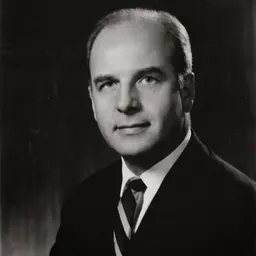
Related people
Same field, nearest in time






Contemporaries
People whose lives overlapped Thomas Eagleton's


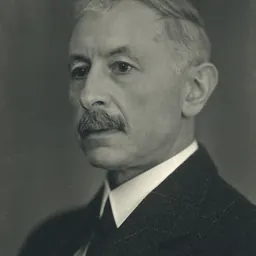
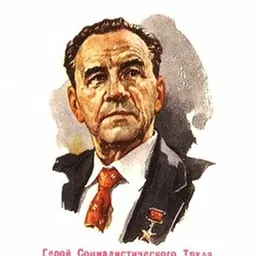
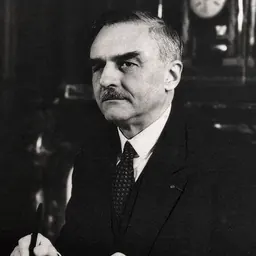
Frequently asked questions
Who was Thomas Eagleton?
American politician (1929–2007)
When was Thomas Eagleton born?
Thomas Eagleton was born on 4 September 1929 in St. Louis.
When did Thomas Eagleton die?
Thomas Eagleton died on 4 March 2007 in St. Louis.
What was Thomas Eagleton's occupation?
Thomas Eagleton was a politician, military officer, lawyer, lieutenant governor and jurist.
What nationality was Thomas Eagleton?
Thomas Eagleton was American.
Sources & further reading
Cite this page
APA: Biography.guide. (2026). Thomas Eagleton. https://biography.guide/thomas-eagleton/
MLA: "Thomas Eagleton." Biography.guide, https://biography.guide/thomas-eagleton/.
Chicago: "Thomas Eagleton." Biography.guide. https://biography.guide/thomas-eagleton/.
Data last updated: 2026-09-20 · Spot an error? Report a correction.
Page generated 2026-09-27 05:24 UTC