
Thomas Dalton
American abolitionist
About Thomas Dalton
Lived 1794 – 1883 (aged 88–89). Thomas Dalton was an American abolitionist.
Thomas Dalton (1794–1883) was a free African American raised in Massachusetts who was dedicated to improving the lives of people of color. He was active with his wife Lucy Lew Dalton, Charlestown, Massachusetts, in the founding or ongoing activities of local educational organizations, including the Massachusetts General Colored Association, New England Anti-Slavery Society, Boston Mutual Lyceum, and Infant School Association, and campaigned for school integration, which was achieved in 1855.
Lucy and Thomas Dalton strongly believed that integrating schools and improving education for the colored children of Boston was the best avenue "to remove the prejudice which exists against the people of color."
Early life Thomas Dalton was born on October 17, 1794, in Gloucester, Massachusetts. His father was Thomas Dalton.
Marriages After Thomas Dalton moved from Gloucester to Boston and he married Patience Young in 1818. She died in 1832 in Boston.
The widower Thomas Dalton married Lucy Lew Francis in 1834. Lucy Lew was born in Dracut, Massachusetts (now Lowell), on May 7, 1790, one of 13 children. Her father, Barzillai Lew (1743–1822), born a free black, was a Revolutionary War soldier and a musician. Her mother Dinah Bowman (1744–1837), born a slave, was of mixed-race and described as fair-skinned. About 1766, Brazillai bought Dinah's freedom from the Blood family for 400 pounds (today $28,000.) Lucy Lew and her siblings attended the integrated public Coburn Mission School. Her father sang in the choir at the Pawtucket Congregational Church.
Lucy Lew had married her first husband, Samuel Francis, in 1816 or 1817 and they lived in the African American community on the north side of Beacon Hill, and were involved in the community's cultural activities.
Residences In 1823, Dalton worked as a bootblack and lived on Botolph Street, Boston, Massachusetts. Dalton lived at 29 South Russell Street in Boston from 1848 to 1853. In 1850 William Dalton, a waiter, was also living at the address. His "prosperous" #tag:ref|At the time of his death, his business was worth $500,000. O'Connor says that his estate was worth $50,000, also a sizable estate at that time. #tag:ref|The address given for Thomas was 29 S. Russell Street.
African celebration Dalton was one of the marshals of the 1820 annual "African celebration", so named by newspapers, of the ending of the African slave trade by the United States and Great Britain. This was an important annual event that began about 1808, with participation from prominent African-American community leaders.
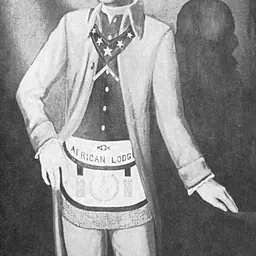
Prince Hall Freemason Dalton joined the Prince Hall Freemasonry Lodge in 1825 to build a network who could improve the lives of African Americans. He was selected Grand Master of the lodge from 1831 to 1832 and again from 1863 to 1872. Other association members included Walker Lewis and David Walker (abolitionist), who became the organization's spokesman and wrote the 1829 Appeal to colored and white people.
New England Anti-Slavery Society In January 1833, Dalton as president led a successful petition for the Massachusetts General Colored Association to join the New England Anti-Slavery Society founded by William Lloyd Garrison, editor of The Liberator. Together they organized Anti-Slavery conventions and speaking programs throughout New England.
In 1844, the Massachusetts General Colored Association published Light and Truth by Robert Benjamin Lewis, the first history of the colored race written by an African American. Joining the New England Anti-Slavery Society provided greater participation by Boston's African-American community.
Background Boston's African-American community has worked for educational opportunities since shortly after the American Revolutionary War; in 1787 Prince Hall petitioned the legislature for equal access to public schools. His and other people's efforts to gain access to schools were denied. Parents on Beacon Hill organized to hold classes for a school at the home of Hall's son, Primus Hall, starting in 1798. Ten years later the school was moved to the African Meeting House. Parents gained partial support from the city in 1812 for the school, but continued to press for a regular public school. In the 1820s the city government provided 2 primary schools for black children.
The Abiel Smith School was built in 1834 following the bequest of $4,000 by Abiel Smith, a white philanthropist interested in supporting black education. The primary and grammar school was the first building built as a public school for African Americans in the country.
Boston Mutual Lyceum In the spring of 1833, the year before they were married, Thomas Dalton and Lucy Lew Francis were among a small group of women and men who formed the Boston Mutual Lyceum on West Central Street to sponsor educational lectures for the colored citizens of the Boston area. Thomas was treasurer and Lucy was one of the managers.
School integration Parents complained because school conditions and teacher quality was not maintained by the Boston School Committee. Children of color were excluded from Boston's high school and Latin school. The efforts to create a separate but equal school system in Boston failed.
In the mid-1840s, through successful lawsuits, the towns of Nantucket and Salem were forced to integrate their schools. Dalton led seventy other fellow citizens in a renewed effort to gain access for their children into the white public schools of Boston. Together with William Cooper Nell, and attorney Robert Morris, they sent petitions imploring the Boston School Committee: "It is very hard to retain self-respect if we see ourselves set apart and avoided as a degraded race by others. Do not say to our children that however well-behaved their very presence is in a public school, is contamination to your children."
Regarding attempts at school integration, Arthur T. White wrote:
Final years Lucy Lew Dalton died of old age in Charlestown on April 12, 1865. At the time of her death, she and Dalton were living at 29 South Russell Street.
Thomas Dalton died on August 30, 1883, then living at 384 Bunker Hill Street. He left an estate of $50,000
Don’t just read it —
keep it.
Full-length biographies made to live with: read them, listen on the way to work, watch them tonight.
- E-book
- Audio
- Video
Instant download · yours to keep · every purchase keeps this site free
Important facts
People in Thomas Dalton's life
Named in this biography and alive at the same time



Related people
Same field, nearest in time

Contemporaries
People whose lives overlapped Thomas Dalton's





Frequently asked questions
Who was Thomas Dalton?
American abolitionist
When was Thomas Dalton born?
Thomas Dalton was born in 1794 in Massachusetts.
When did Thomas Dalton die?
Thomas Dalton died on 30 August 1883.
What was Thomas Dalton's occupation?
Thomas Dalton was an abolitionist.
What nationality was Thomas Dalton?
Thomas Dalton was American.
Sources & further reading
· DBpedia: Thomas Dalton (abolitionist)
Cite this page
APA: Biography.guide. (2026). Thomas Dalton. https://biography.guide/thomas-dalton/
MLA: "Thomas Dalton." Biography.guide, https://biography.guide/thomas-dalton/.
Chicago: "Thomas Dalton." Biography.guide. https://biography.guide/thomas-dalton/.
Data last updated: 2026-09-26 · Spot an error? Report a correction.
Page generated 2026-09-27 05:16 UTC