Louis Celeste Lecesne
Caribbean anti-slavery activist
About Louis Celeste Lecesne
Lived 1796 – 1847 (aged 50–51). Louis Celeste Lecesne was an abolitionist.
Disputed birth Lecesne was the son of Charlotte Celeste and Louis Nicholas Lecesne, and was born in either Port au Prince or Kingston in 1796 or 1798. His mother and father had arrived in Jamaica on 25 August 1798 with a child called Figge. Others disagree with this version as his mother said that when they arrived in Jamaica they did have a two-year-old child but he died just after the birth of this child.
Lecesne had two younger brothers Lamorette and Louis Nicholas Lecesne. His mother was manumised by Lescesne's father. The date of the birth was important as a later law gave privileges to children born on the island.
At least three children were born to Louis Celeste Lecesne and Hannah Escoffery in Kingston. The first was Louise Amelia Lecesne (born 20 June 1817), followed by Elizabeth Adeline Lecesne (born 24 July 1818) and Celestine Aglaé Lecesne (19 June 1820 – 11 August 1821). On 7 May 1823 Louis Celeste Lecesne was a witness to the marriage of his wife's brother, Edward Escoffery to Marie Montagnac in the Roman Catholic Church, Kingston. In 1823 Lecesne and his wife were the owners of eleven slaves. He had been involved in trade with South America and in 1822 his interest also included Haiti. They were Anglicans but they took a charitable interest in 1819 in the cause of Catholic people of colour.
While Lecesne and Escoffery were held in gaol, petitions made to the Governor were rejected as it was claimed that the signatories were all owed money by the accused. Later investigations showed that the largest debt involved was 25 pounds. After consideration by the judges, the two were released as they were considered to be British-born despite the arguments described earlier. Chief Justice Scarlett released them without bail as there were no charges.
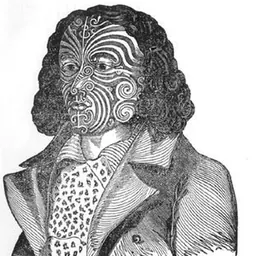
A young English sailor boy, Barnet Burns, had been found ill in Jamaica and was cared for by Lecesne and his family. Following the deportation of Lecesne, Burns followed Lecesne's family to London, where he received an education under the patronage of Lecesne.
England The case of Lecesne and Escoffery was raised in the House of Commons by Stephen Lushington who was a known abolitionist and anti-slavery campaigner. Lushington spoke to the house on 16 June 1825. This resulted in a number of publications:
Debate in house of commons 16 June 1825 regarding deportation of two persons of colour A Reply to the Speech of Dr. Lushington, in the House of Commons by Mr Barret of the House in Jamaica, 1828
There was a libel case against John Murray, not because he was the author, but because he was the publisher of a book that libelled Lecesne and Escoffery. The case was based on the fact that the book recorded that the politicians in Jamaica considered Lecesne and Escoffery guilty of a criminal conspiracy. This case was held in Britain in order that it should not be biased.
The libel case was successful and Lecesne was therefore innocent. Parliament ruled that they should both be allowed to return and be given compensation.
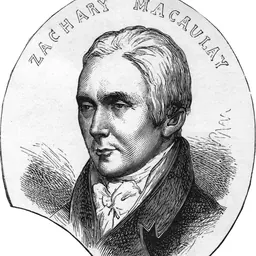
Lecesne was on the board of the Anti-Slavery Agency in 1832 with other notable abolitionists such as William Allen, Zachary Macaulay, Robert Forster, George Stacey and Josiah Forster
Louis Celeste Lecesne and his wife had a son whilst they were in London whom they christened Stephen Lushington Macauley Lecesne. He was born on 6 March 1834 and was christened at Saint Matthew Church, Bethnal Green, London, on 25 June 1834.
In July 1838, Lecesne was one of the supporters of a campaign to raise a monument to Zachary Macaulay in Westminster Abbey.
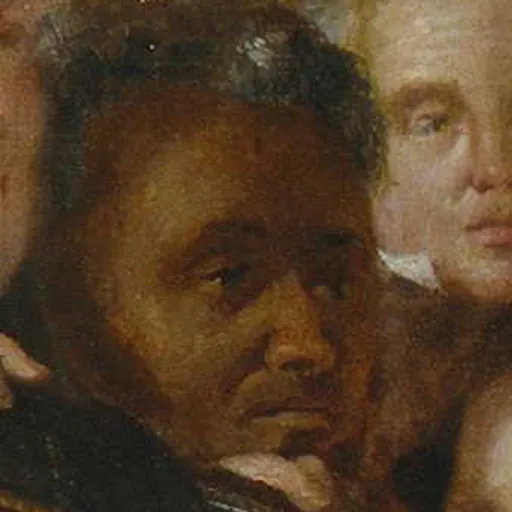
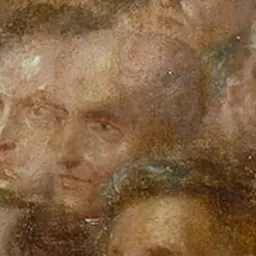
1840 Anti-Slavery Society convention caption=Lecesne is to the left in this painting, (above the lady in bonnet), which is of the 1840 Anti-Slavery Convention.
Following a bout of pneumonia, Louis Celeste Lecesne died on 22 November 1847 at his residence at the Fenchurch buildings, Fenchurch Street in London. At the end of May in 1848, The Times announced the sale of the "superior" effects of the late L. C. Lecesne Esq including his mahogany four poster and a six octave pianoforte.
Don’t just read it —
keep it.
Full-length biographies made to live with: read them, listen on the way to work, watch them tonight.
- E-book
- Audio
- Video
Instant download · yours to keep · every purchase keeps this site free
Important facts
People in Louis Celeste Lecesne's life
Named in this biography and alive at the same time



Related people
Same field, nearest in time

Contemporaries
People whose lives overlapped Louis Celeste Lecesne's






Frequently asked questions
Who was Louis Celeste Lecesne?
Caribbean anti-slavery activist
When was Louis Celeste Lecesne born?
Louis Celeste Lecesne was born in 1796 in Port-au-Prince.
When did Louis Celeste Lecesne die?
Louis Celeste Lecesne died on 22 November 1847.
What was Louis Celeste Lecesne's occupation?
Louis Celeste Lecesne was an abolitionist.
Sources & further reading
· Wikipedia: Louis Celeste Lecesne
· DBpedia: Louis Celeste Lecesne
Cite this page
APA: Biography.guide. (2026). Louis Celeste Lecesne. https://biography.guide/louis-celeste-lecesne/
MLA: "Louis Celeste Lecesne." Biography.guide, https://biography.guide/louis-celeste-lecesne/.
Chicago: "Louis Celeste Lecesne." Biography.guide. https://biography.guide/louis-celeste-lecesne/.
Data last updated: 2026-09-23 · Spot an error? Report a correction.
Portrait: Wikimedia Commons · author & licence
Page generated 2026-09-27 05:07 UTC