
Thomas Cogswell Upham
American philosopher and psychologist
About Thomas Cogswell Upham
Lived 1799 – 1872 (aged 73). Thomas Cogswell Upham was an American philosopher, psychologist and writer.
Thomas Cogswell Upham (January 30, 1799 – April 2, 1872) was an American philosopher, psychologist, educator, poet, pacifist, and religious writer. He served for more than four decades as professor of mental and moral philosophy at Bowdoin College and became known for widely used textbooks in mental philosophy. In religious literature, he was an important figure in the nineteenth-century holiness movement, especially through writings that interpreted Christian perfection, the interior life, and the works of Madame Guyon, François Fénelon, Catherine of Genoa, and other mystical authors for American Protestant readers.
Life and academic career
Upham was born in Deerfield, New Hampshire, the son of Nathaniel Upham and Judith Cogswell Upham. His father later served in the United States House of Representatives. Upham graduated from Dartmouth College in 1818 and from Andover Theological Seminary in 1821. He taught Hebrew at Andover from 1821 to 1823, served briefly as a Congregational minister in Rochester, New Hampshire, and then joined the faculty of Bowdoin College, where he became professor of mental and moral philosophy in 1824 or 1825 and remained until his retirement in 1867 or 1868.
His Elements of Mental Philosophy, first published in the 1820s and later revised and expanded, became a standard American textbook. Patricia A. Ward describes Upham's work as a synthesis of epistemology and psychology drawing on John Locke, French sensationalism, Scottish empiricism, Jonathan Edwards, and Immanuel Kant. David Bundy states that Mental Philosophy appeared in fifty-seven editions over a seventy-three-year period. His textbooks helped define the teaching of "mental philosophy" in American colleges before psychology emerged as an experimental discipline.
Psychology and moral philosophy
Upham's psychology belonged to the period before psychology emerged as a separate experimental discipline. His work combined Scottish common sense realism, moral philosophy, and religious anthropology. Todd L. Adams identifies him as one of several prominent early nineteenth-century American philosophers who followed the common-sense realism of Thomas Reid, and as one of the first Americans in that tradition to publish widely on a range of philosophical topics.
Upham divided mental phenomena into the understanding or intellect, the sensibilities, and the will, while maintaining that the mind itself was indivisible.
Religious thought and holiness teaching
Upham became associated with the nineteenth-century holiness movement after an experience of sanctification in 1839–1840. His wife, Phebe Lord Upham, had first come into contact with holiness teaching, and Ward notes that she brought him to one of Phoebe Palmer's Tuesday meetings in New York. These meetings had originally been for women, but Phebe Upham asked permission to bring her husband; Upham later became an influential interpreter of Madame Guyon and Fénelon for the holiness movement. Salter similarly emphasizes the importance of Palmer's circle for Upham's entrance into the holiness movement and for the widening of the Tuesday Meeting beyond its original female constituency. Ward describes his works as primers that translated the tradition of interior holiness for an American readership shaped by mid-nineteenth-century perfectionist aspirations.
Ward argues that Upham united Wesleyan holiness with the Edwardsian tradition of disinterested benevolence and, like Palmer, made the experience of holiness more acceptable to middle-class Protestant readers. In its preface, Upham places his teaching in relation to Augustine of Hippo, Johannes Tauler, Johann Arndt, Henry Scougal, Jonathan Edwards, and writers on sanctification in the present life.
The treatise presents divine union as the restoration of the divine image in the soul rather than as forgiveness alone. Upham argues that the soul must be restored through a renewed participation in divine life, so that the person is brought into union with God in faith, knowledge, love, will, providence, redemption, and rest. The book's structure reflects Upham's attempt to bring the whole person—intellect, affections, will, conduct, and social life—into relation with God.
The sections on the will are especially important for Upham's theology. He treats the union of the human and divine will, degrees of union with God's will, the training of the will to habits of subjection, and the relation of suffering to union. The final part of the book describes the peace or rest of the soul in a state of union, including rest from anxious reasoning, restless desires, fears, conflicts with providence, and anxieties of labour.
Although the language of rest, quietude, and surrender connects Upham with Catholic and Quaker mystical traditions, his presentation is framed within Protestant holiness theology. Ward writes that the American reception of Guyon and Fénelon centred on themes such as the interior way, pure or disinterested love, submission to the will of God, Christian perfection, union with God, quietude, rest, and stillness. Salter argues that Upham maintained a critical distance from mystical sources when interpreting language about annihilation, loss of will, indifference, and union with God, understanding divine union chiefly as moral, spiritual, and religious conformity rather than as a fusion of substance or the erasure of personality.
Ward argues that Upham placed Guyon and Fénelon within a lineage of interior piety and Christian perfection that could be read by American holiness Protestants as a tradition of "living examples". For Upham, Guyon exemplified pure love and the sanctifying power of religion. Ward notes that he concluded his account of Guyon with the expectation that sanctification would receive philosophical, practical, and exegetical exposition, tested by living examples. Ward notes that the Guide to Christian Perfection and later Guide to Holiness published extracts from Guyon, Fénelon, Miguel de Molinos, Catherine of Genoa, Francis de Sales, Gregory Lopez, and Francis of Assisi during the 1840s and 1850s, and that Upham's writings helped American holiness readers claim kinship with Catholic mystical experience. A 1915 newspaper profile later called him Bowdoin College's "gentle apostle of peace".
Salter treats Upham's pacifism, opposition to capital punishment, views on slavery, and concern for social redemption as expressions of his holiness ethic rather than as isolated reform opinions.
Relationship with Harriet Beecher Stowe
Upham and his family were close to Harriet Beecher Stowe during her residence in Brunswick, Maine. Stowe described the Upham household as "delightful... such a perfect sweetness and quietude in all its movements... It is a beautiful pattern of a Christian family." Stowe and Upham differed sharply, however, over abolitionism and obedience to law. In a letter to her sister, Stowe recalled arguing with him about whether he would obey the law if a fugitive slave came to him.
Reception and criticism
Later Reformed critics treated Upham as a major representative of mystical perfectionism. Benjamin Breckinridge Warfield devoted a long study to "The Mystical Perfectionism of Thomas Cogswell Upham", first published in The Union Seminary Review in 1920–1922 and later included in Studies in Perfectionism.
Writing from a strongly anti-perfectionist Calvinist standpoint, Warfield argued that Upham attempted to revive elements of seventeenth-century Quietist perfectionism and adapt them to nineteenth-century American Protestant life. He claimed that Upham drew on a series of Quietist and mystical writers, from Molinos to Antoinette Bourignon, and reshaped their teachings into what Warfield regarded as a form of evangelical Protestantism.
Don’t just read it —
keep it.
Full-length biographies made to live with: read them, listen on the way to work, watch them tonight.
- E-book
- Audio
- Video
Instant download · yours to keep · every purchase keeps this site free
Important facts
People in Thomas Cogswell Upham's life
Named in this biography and alive at the same time
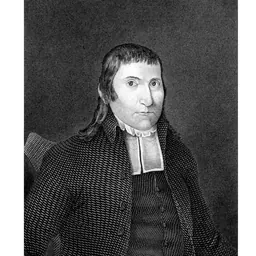

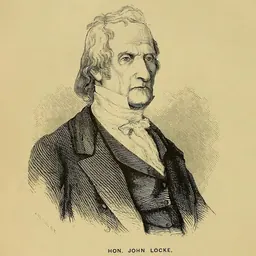



Related people
Same field, nearest in time


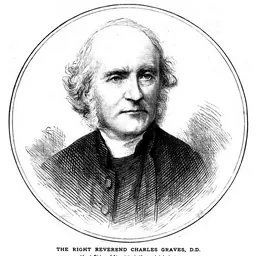


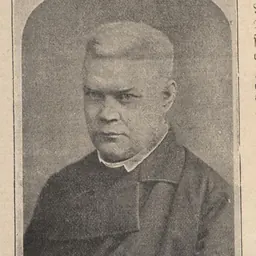
Contemporaries
People whose lives overlapped Thomas Cogswell Upham's






Frequently asked questions
Who was Thomas Cogswell Upham?
American philosopher and psychologist (1799–1872)
When was Thomas Cogswell Upham born?
Thomas Cogswell Upham was born on 20 January 1799 in Rochester.
When did Thomas Cogswell Upham die?
Thomas Cogswell Upham died on 2 April 1872 in New York City.
What was Thomas Cogswell Upham's occupation?
Thomas Cogswell Upham was a philosopher, psychologist and writer.
What nationality was Thomas Cogswell Upham?
Thomas Cogswell Upham was American.
Sources & further reading
· Wikipedia: Thomas Cogswell Upham
· DBpedia: Thomas Cogswell Upham
Cite this page
APA: Biography.guide. (2026). Thomas Cogswell Upham. https://biography.guide/thomas-cogswell-upham/
MLA: "Thomas Cogswell Upham." Biography.guide, https://biography.guide/thomas-cogswell-upham/.
Chicago: "Thomas Cogswell Upham." Biography.guide. https://biography.guide/thomas-cogswell-upham/.
Data last updated: 2026-09-20 · Spot an error? Report a correction.
Page generated 2026-09-27 05:33 UTC