Thomas Cochrane
Scottish royal favourite and architect (death 1482)
About Thomas Cochrane
Lived 1450 – 1482 (aged 31–32). Thomas Cochrane was a favourite, architect and military personnel, known for James III of Scotland.
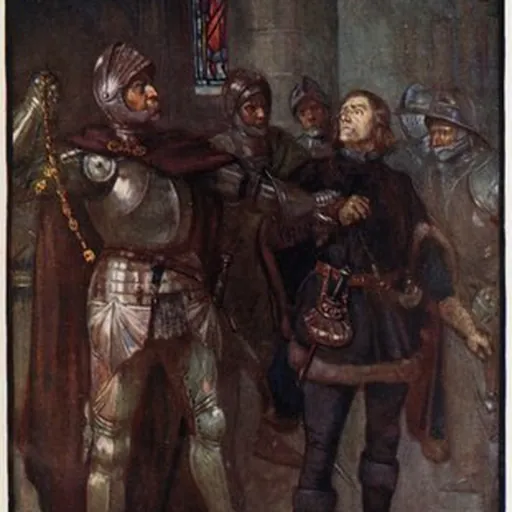
Thomas Cochrane (said to have been executed and forfeited 1482), also referred to as "Robert Cochrane" in sixteenth-century chronicle accounts, was a royal servant and alleged "familiar" or favourite of King James III of Scotland. Chronicle accounts allege that his influence over the king incurred the wrath of the old aristocracy, culminating in a coup at Lauder in which James III was arrested and Cochrane was executed.
There exists uncertainty about even the most basic facts of Cochrane's life. Even his correct first name has been disputed, which is given as both Thomas and Robert by different 16th century chroniclers. Contemporary sources however only mention a Thomas Cochrane as an officer of the king in the late 1470s and early 1480s. Despite his limited presence in the contemporary record, Cochrane's career as a royal favourite and man who encouraged the king's interest in unmanly pursuits not deemed appropriate for a monarch has dominated accounts of James III's reign until the present day.
Life and legend Sixteenth-century accounts such as those provided by Robert Lindsay of Pitscottie, John Lesley and George Buchanan portray James III as a weak king and a dilettante who surrounded himself with a group of talented but low-born "familiars" or favourites. Cochrane was the most important of these favourites. He was alleged by Pitscottie to have been first a stone-mason who became involved in the king's building projects. The later writer William Drummond of Hawthornden in his History of the 5 Jameses increased the status of Cochrane to that of an architect.
The chronicles relate that he advised the king to debase the coinage in order to raise cash. He was opposed by the king's younger brothers, Alexander Stewart, 3rd Duke of Albany and John Stewart, Earl of Mar. The Earl of Mar was arrested and imprisoned, and died soon after. Albany escaped and gathered support in England. including the tailor James Hommyll.
Angus was much later reported to have been given the nickname "Bell the Cat" by David Hume of Godscroft, reflecting an account of him stepping forward to put the execution of the James III's favourites into effect.
Doubts about the story
Many aspects of the chronicle accounts can be questioned in comparison with surviving contemporary records. Some historians have been more sympathetic to James III, seeing him as a cultured man among the Scottish nobility at that time, and defended his kingship against later criticisms. Norman Macdougall published a biography of James III in which he argues that, far from being a weak king, he fully exercised regal power. Macdougall dismissed the story of his court being dominated by "favourites of low birth" as the invention of chroniclers writing in the next century. Macdougall found two records of a Thomas Cochrane; one reference suggests that Cochrane was an usher of the king's chamber door, and the other that a Thomas Cochrane had forfeited the lands of Cousland near Dalkeith. Cochrane of Cousland, Macdougall concludes, may have been the usher and met his end at Lauder Bridge. Macdougall also follows the development of the story in later writers and points particularly to William Drummond of Hawthornden's History of the 5 Jameses for setting the final elaboration of the story. Macdougall argues that Hawthornden increased the status of Cochrane to that of an architect in order to rescue the king's reputation.
Don’t just read it —
keep it.
Full-length biographies made to live with: read them, listen on the way to work, watch them tonight.
- E-book
- Audio
- Video
Instant download · yours to keep · every purchase keeps this site free
Important facts
People in Thomas Cochrane's life
Named in this biography and alive at the same time
Related people
Same field, nearest in time
Contemporaries
People whose lives overlapped Thomas Cochrane's


Frequently asked questions
Who was Thomas Cochrane?
Scottish royal favourite and architect (death 1482)
When was Thomas Cochrane born?
Thomas Cochrane was born in 1450 in Scotland.
When did Thomas Cochrane die?
Thomas Cochrane died in 1482 in Scotland.
What was Thomas Cochrane's occupation?
Thomas Cochrane was a favourite, architect and military personnel.
What was Thomas Cochrane known for?
Thomas Cochrane was known for James III of Scotland.
Sources & further reading
· DBpedia: Thomas (Robert) Cochrane
Cite this page
APA: Biography.guide. (2026). Thomas Cochrane. https://biography.guide/thomas-cochrane/
MLA: "Thomas Cochrane." Biography.guide, https://biography.guide/thomas-cochrane/.
Chicago: "Thomas Cochrane." Biography.guide. https://biography.guide/thomas-cochrane/.
Data last updated: 2026-09-23 · Spot an error? Report a correction.
Portrait: Wikimedia Commons · author & licence
Page generated 2026-09-27 05:07 UTC