
About Thomas Armstrong
Lived 1898 – 1994 (aged 96). Thomas Armstrong was a British composer, conductor, music educator, musician and organist.
Sir Thomas Henry Wait Armstrong (15 June 1898 – 26 June 1994) was an English organist, conductor, composer and educationalist. He was from a musical family and his early career was as a church and cathedral organist. From the 1920s onwards he was a broadcaster for the BBC giving talks as well as playing.
While organist and faculty member of Christ Church, Oxford Armstrong combined academic work with practical musicianship, as player and conductor. From 1955 to 1968, he was principal of the Royal Academy of Music (RAM), London, where he was known for his concern for the well-being of his staff and students and his efforts to strengthen links with overseas music colleges.
Life and career Early years Armstrong was born in Peterborough, the eldest of three children, and only son, of Amos Ebenezer Armstrong (1878–1950) and his wife Elizabeth Annie West, née Handford (1880–1939). His mother was a former headmistress, and his father was a leading figure in Peterborough's musical life, music master at the King's School, organist and choirmaster at St Augustine's church, Woodston, and conductor of the local operatic, orchestral, and choral societies. The young Armstrong was a chorister at the Chapel Royal, St James's Palace from 1907 to 1910, during which time he sang at the funeral of King Edward VII in Westminster Abbey.
Early career In 1915–16, Armstrong was assistant organist in Peterborough for a year before being elected organ scholar of Keble College, Oxford. Armstrong remained in France for some months after the cessation of hostilities, not returning to England until 1919; he rented a room with a piano in Cambrai to get himself back in practice. The following year he was appointed organist of St. Peter's Church, Eaton Square, London. his long association with the BBC included many talks on the radio about topics such as British music. In 1928 he completed the three compositions required for the award of a Dmus: A Passer-By (a rhapsody for baritone, chorus and orchestra), a Fantasy Quintet for pianoforte and strings, and Friends Departed (for soprano, chorus and orchestra).
In 1955 Armstrong was appointed principal of the Royal Academy of Music. The Times later commented on this period: It was entirely typical of Armstrong that at this stage, aged 57, he should take up playing the double bass, receiving lessons from one of his own staff. Supported by his wife Hester, who provided a refuge of comfort and affection for literally thousands of students, he guided the Academy's often shaky fortunes with wisdom, foresight and humanity for the next 13 years.
Armstrong was knighted in 1958 and retired in 1968, when he was 70. He and his wife moved to the village of Newton Blossomville in Buckinghamshire, close to the Bedfordshire border. There he formed and conducted a village choir, which won several prizes in music festivals. After the death of his wife in 1982, he moved to Olney, a few miles away, sharing a cottage with Rosemary Rapaport, his former colleague from the RAM. Robert Armstrong recalled that in Olney, when already ninety years old, Armstrong "was delighted to be sought out, as 'the old man in East Street who plays the organ', to play for Mass at the local Roman Catholic church for six months."
Armstrong died at his home in Olney at the age of 96.
Compositions Armstrong was modest about his music, although he composed all his life, despite the other demands on his time. For his Who's Who entry he confined himself to seven words on the subject: " Compositions: various, the larger ones remain unpublished." He admitted that he had not lived up to Vaughan Williams's advice that "if you write a little bit of music to the best of your ability on every day of your life you will write one good piece before you die." He continued to compose into his nineties: "I still try to write a little music in my antiquated idiom. But I suppose nothing is so antiquated as what was avant-garde five years ago".
Amrstrong composed 25 anthems, carols, services and a large number of songs. The ambitious secular works composed for his doctorate remained unperformed until after his death, when they were recorded on a Chandos CD. His biographer Richard Stoker writes that Armstrong "belonged to the gentle English tradition of Parry, Vaughan Williams, Howells, and Finzi".
Don’t just read it —
keep it.
Full-length biographies made to live with: read them, listen on the way to work, watch them tonight.
- E-book
- Audio
- Video
Instant download · yours to keep · every purchase keeps this site free
Important facts
People in Thomas Armstrong's life
Named in this biography and alive at the same time

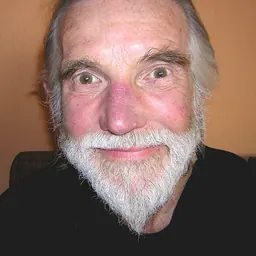
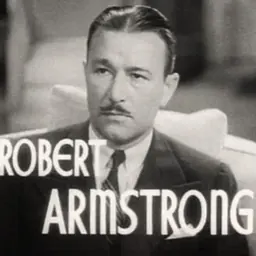


Related people
Same field, nearest in time




Contemporaries
People whose lives overlapped Thomas Armstrong's

Frequently asked questions
Who was Thomas Armstrong?
British musician (1898–1994)
When was Thomas Armstrong born?
Thomas Armstrong was born on 15 June 1898.
When did Thomas Armstrong die?
Thomas Armstrong died on 26 June 1994.
What was Thomas Armstrong's occupation?
Thomas Armstrong was a composer, conductor, music educator, musician and organist.
What nationality was Thomas Armstrong?
Thomas Armstrong was British.
Sources & further reading
· DBpedia: Thomas Armstrong (musician)
Cite this page
APA: Biography.guide. (2026). Thomas Armstrong. https://biography.guide/thomas-armstrong-composer/
MLA: "Thomas Armstrong." Biography.guide, https://biography.guide/thomas-armstrong-composer/.
Chicago: "Thomas Armstrong." Biography.guide. https://biography.guide/thomas-armstrong-composer/.
Data last updated: 2026-09-22 · Spot an error? Report a correction.
Page generated 2026-09-27 04:58 UTC