
About Thérèse Sclafert
Lived 1876 – 1959 (aged 82–83). Thérèse Sclafert was a French geographer and historian.
Thérèse Sclafert, possibly born Jeanne Sclafert (18 May 1876 – 25 April 1959) was a French historian and geographer.
Biography According to an obituary published in the Bulletin de la Société d'études des Hautes-Alpes in 1962, Thérèse Sclafert was born on 18 May 1876 La Bachellerie, in the Dordogne. However, no trace of her birth appears in the municipality's registry of civil status on this date. In the Official Journal, and in the population census of the city of Paris of 1936, she appears under the name of Jeanne Sclafert (or Jeanne-Thérèse Sclafert).
Career Thérèse Sclafert became a school teacher in Bordeaux where she met Anne-Marie Grauvogel, who was headmistress of the Bordeaux upper primary school there. When Grauvogel was transferred to Grenoble, in Isère, before 1914, Sclafert joined her there and was named director of the Associated School of Application. Sclafert earned a Bachelor of Arts at the University of Grenoble She also carried out research in the archives of Isère, specializing in historical geography (some of it written in Low Latin), so she could combine two of her passions: philology and geography. She defended her doctoral thesis in letters, Le Haut Dauphiné au Moyen Age, in 1926, in Paris, after 15 years of research,
Post-doctorate work Despite the publication of her thesis (which she dedicated to her parents ) in 1926, Sclafert continued her job as a grammar and Latin teacher at the École Normale Supérieure in Fontenay. According to historian Natalie Zemon Davis in 2017, obtaining a thesis would ordinarily have been a step towards a promotion for a man with similar qualifications. However, Sclafert continued her work independently and published a few research articles.
Professional female historians were still rare at that time. She and Lucie Varga are the only two women to have each published an article (Sclafert's was "The roads of Dauphiné and Provence under the influence of the stay of the popes in Avignon") in the Revue des Annales between 1929 and 1944. She is also one of the few to have received academic recognition before 1945. However, it seems that the fact that Sclafert was a woman prevented her from truly professionalizing herself as an academic geographer.
In 1935, Anne-Marie Grauvogel was dismissed from the Fontenay-aux-Roses school, at which time Sclafert took early retirement, left Paris and settled in Manosque, where she continued her research on the southern Alps. Her work became slowed by a detached retina which made reading difficult. Still, she persisted as much as her eyesight allowed.
Death Sclafert died on 25 April 1959, aged 82, in Fontenay-aux-Roses, in the department of Hauts-de-Seine. At that time she was completing work on her second major book, Cultures en Haute-Provence, which was published in 1959.
Honors Sclafert was elected to the Société d'études des Hautes-Alpes on 26 November 1938.
Selected publications
Theses The thesis defense for Thérèse Sclafert's doctorate in letters took place in 1926 in Paris. In a reading report that he makes during his edition, Lucien Gallois indicates that it “belongs to geography as much as to history.” The Haut Dauphiné in the Middle Ages, Paris, Société anonyme du Recueil Sirey, 1926, XIX-765 pages (main thesis). The Iron Industry in the Allevard Region in the Middle Ages, Grenoble, Impr. Allier father and son, 1926, 120 pages.
Books Cultures in Haute Provence. Deforestation and pastures in the Middle Ages, Paris, SEVPEN (publications of the Historical Research Center of the Practical School of Advanced Studies ), 1959 (posthumous book). As co-author with Jean-Gérard Lapacherie (scientific editor), Le Queyras in the Middle Ages, Transhumances editions, 2015.
Most recent articles Sclafert published numerous articles in journals such as the Revue de Géographie Alpine, the Annales. Histoire, Sciences Sociale, the Annales de Géographie.
“Agrarian uses in the regions of Provence before the 18th century. Les Rotations," Journal of Alpine Geography, 1941, vol. 29, no. 3, p. 471-492. "Polished stone axes and their accumulation sites in the south-east of France," Annales de Géographie, 1946, vol. 55, no. 298, pp. 130–131. “The Monts de Vaucluse. Exploitation of the woods from the 13th to the end of the 18th century," Revue de Géographie Alpine, 1951, vol. 39, no. 4, p. 673-707.
Don’t just read it —
keep it.
Full-length biographies made to live with: read them, listen on the way to work, watch them tonight.
- E-book
- Audio
- Video
Instant download · yours to keep · every purchase keeps this site free
Important facts
People in Thérèse Sclafert's life
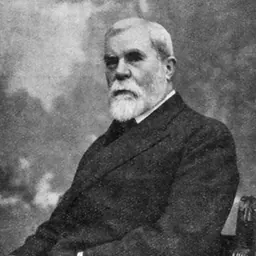
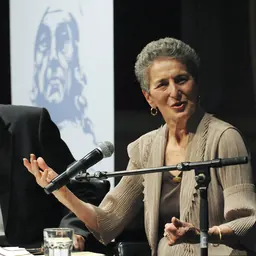
Named in this biography and alive at the same time

Related people
Same field, nearest in time



Contemporaries
People whose lives overlapped Thérèse Sclafert's

Frequently asked questions
Who was Thérèse Sclafert?
French geographer and historian
When was Thérèse Sclafert born?
Thérèse Sclafert was born in 1876 in La Bachellerie.
When did Thérèse Sclafert die?
Thérèse Sclafert died in 1959 in Fontenay-aux-Roses.
What was Thérèse Sclafert's occupation?
Thérèse Sclafert was a geographer and historian.
What nationality was Thérèse Sclafert?
Thérèse Sclafert was French.
Sources & further reading
Cite this page
APA: Biography.guide. (2026). Thérèse Sclafert. https://biography.guide/therese-sclafert/
MLA: "Thérèse Sclafert." Biography.guide, https://biography.guide/therese-sclafert/.
Chicago: "Thérèse Sclafert." Biography.guide. https://biography.guide/therese-sclafert/.
Data last updated: 2026-09-20 · Spot an error? Report a correction.
Page generated 2026-09-27 05:17 UTC