
About Theophilus Painter
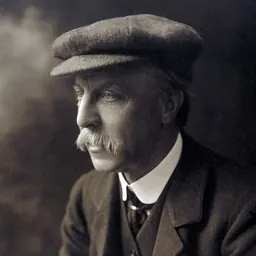
Lived 1889 – 1969 (aged 80). Theophilus Painter was an American geneticist, zoologist and university teacher.
Theophilus Shickel Painter (August 22, 1889 – October 5, 1969) was an American zoologist best known for his work on the structure and function of chromosomes, especially the sex-determination genes X and Y in humans. He was the first to discover that human sex was determined by an X/Y heteromorphic chromosomal pair mechanism. He also carried out work in identifying genes in fruit flies (Drosophila). His work exploited the giant polytene chromosomes in the salivary glands of Drosophila and other Dipteran larvae. Painter was elected to the United States National Academy of Sciences in 1938 and the American Philosophical Society in 1939.
Academic administration Painter joined the faculty at the University of Texas in 1916 and, except for military duty during World War I, stayed there his whole career. He was, in succession, associate professor, professor and distinguished professor of zoology. He served as acting president (1944–1946) and president (1946–1952) of the University of Texas and retired from active teaching in 1966.
Racial segregation Painter was president of the University of Texas when Texas resident Heman Marion Sweatt applied for and was denied admission due to his race. Painter spoke out against integration, and voiced his disapproval of Sweatt's admittance. Sweatt v. Painter, 339 U.S.629 (1950), which proved an integral stepping stone in the landmark case Brown v. Board of Education of Topeka, Kansas that held that "separate is inherently unequal" and led to the integration of America's public schools.
Gender research Painter is also known for his early study of human chromosomes. In a paper published in 1923, he first gave the number 24 for the count of human meiotic chromosomes. He had tried to count the tangled mass of chromosomes he could see under a microscope in spermatocytes in slices of testicle and arrived at the figure of 24. Then in 1955, Joe Hin Tjio and Albert Levan, using more advanced techniques, looked at the chromosomes in human somatic cells and found 46 chromosomes and the human chromosome number was finally revised.
In 1934 Painter was awarded the Daniel Giraud Elliot Medal from the National Academy of Sciences.
Don’t just read it —
keep it.
Full-length biographies made to live with: read them, listen on the way to work, watch them tonight.
- E-book
- Audio
- Video
Instant download · yours to keep · every purchase keeps this site free
Important facts
People in Theophilus Painter's life
Named in this biography and alive at the same time

Related people
Same field, nearest in time




Contemporaries
People whose lives overlapped Theophilus Painter's


Frequently asked questions
Who was Theophilus Painter?
American zoologist (1889-1969)
When was Theophilus Painter born?
Theophilus Painter was born on 22 August 1889 in Salem.
When did Theophilus Painter die?
Theophilus Painter died on 5 October 1969 in Fort Stockton.
What was Theophilus Painter's occupation?
Theophilus Painter was a geneticist, zoologist and university teacher.
What nationality was Theophilus Painter?
Theophilus Painter was American.
Sources & further reading
· Wikipedia: Theophilus Painter
Cite this page
APA: Biography.guide. (2026). Theophilus Painter. https://biography.guide/theophilus-painter/
MLA: "Theophilus Painter." Biography.guide, https://biography.guide/theophilus-painter/.
Chicago: "Theophilus Painter." Biography.guide. https://biography.guide/theophilus-painter/.
Data last updated: 2026-09-20 · Spot an error? Report a correction.
Page generated 2026-09-27 05:15 UTC