
About Theodore O'Hara
Lived 1820 – 1867 (aged 47). Theodore O'Hara was an American poet.
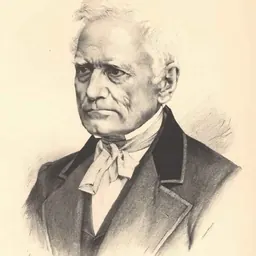
Theodore O'Hara (February 11, 1820 – June 6, 1867) was a poet and an officer for the United States Army in the Mexican–American War, and a Confederate colonel in the American Civil War. He is best known for the poems "Bivouac of the Dead", which is quoted in many cemeteries, and "The Old Pioneer".
Early life Theodore O'Hara was born to educator Kean O'Hara and his wife in Danville, Kentucky on February 11, 1820. Afterwards, the family moved to Frankfort, Kentucky. He returned to Danville to go to Centre College and then continued his education at St. Joseph Academy in Bardstown, Kentucky, where he also served as a Greek professor during his senior year. Theodore's father Kane O'Hara, was an Irish political exile.
He later studied law with future United States Vice President and Confederate Secretary of War John C. Breckinridge, and he was admitted to the bar in 1842. He decided to forgo law and went to journalism in 1845, just before being appointed for a position in the United States Treasury Department in 1845.
Mexican–American War As the Mexican–American War was beginning, O'Hara signed up for the U.S. Army on June 26, 1846. He held the positions of captain and quartermaster of volunteers under General Gideon J. Pillow as they advanced upon Mexico City, Mexico. For excellent conduct in the Battle of Contreras and the Battle of Churubusco, O'Hara was honored with the rank of brevet-major on August 20, 1847. He was honorably discharged on October 15, 1848. After the war ended in 1848, O'Hara returned to Washington, D.C. to continue his law practices until 1851.
Between wars O'Hara was a firm believer in American expansion, in the form of filibustering. He joined others from Kentucky in an expedition to Cuba in 1850, after spending much of 1849 recruiting Kentuckians to the filibuster cause. Under the command of General Narciso López, O'Hara commanded a regiment, with the rank of colonel, in the hopes of removing Spanish rule from Cuba. In the battle of Cárdenas on May 18, 1850, he suffered a severe injury. After Lopez failed and died in his Cuba position in 1851, O'Hara returned to Kentucky, after fellow Kentuckians serving in Cuba took him with them as they escaped, returning to the United States at Key West, Florida.
O'Hara returned to journalism, first working for the Frankfort Yeoman of Frankfort, Kentucky, and then helping to found the original Louisville Times of Louisville, Kentucky in 1852, which became an organ for spreading Democratic Party propaganda. O'Hara left the Louisville Times in 1853 to join General John A. Quitman's filibuster expedition to Cuba. After Quitman's efforts failed, O'Hara attained a commission in the United States Army, was appointed captain of the Second Cavalry on March 3, 1855, and returned to Louisville as a recruiter for the Army. He was reassigned to Indian fighting on the prairies of Texas. On December 1, 1856, he was forced to resign by Robert E. Lee (then Lt. Colonel), as Lee brought up charges of drunkenness against O'Hara, and threatened him with court martial. When John Forsyth Jr., editor-in-chief of the Mobile Register of Mobile, Alabama became minister to Mexico in 1856, O'Hara took his place in the newspaper. He continued to follow government orders, such as his diplomatic mission into the Tehuantepec grant debate.
Civil War At the beginning of the American Civil War in 1861, O'Hara joined the Confederate army and became lieutenant colonel of the Twelfth Alabama Regiment. Then he would serve on the staffs of General Albert Sidney Johnston and General John C. Breckinridge, his fellow law student. He distinguished himself in the Western Theater of the War in Tennessee at the Battle of Shiloh and Battle of Stone's River.
But conflicts with General Braxton Bragg and with President of the Confederate States of America Jefferson Davis hampered his military career and made his efforts to attain a regimental command futile.
Don’t just read it —
keep it.
Full-length biographies made to live with: read them, listen on the way to work, watch them tonight.
- E-book
- Audio
- Video
Instant download · yours to keep · every purchase keeps this site free
Important facts
People in Theodore O'Hara's life
Named in this biography and alive at the same time
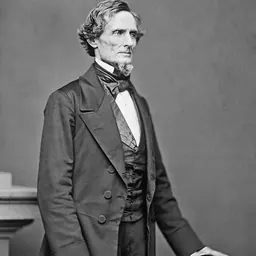


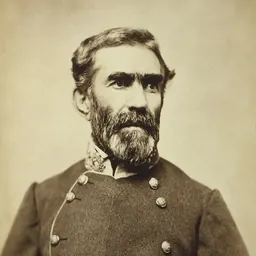
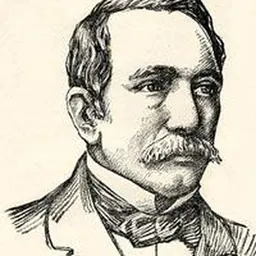
Related people
Same field, nearest in time
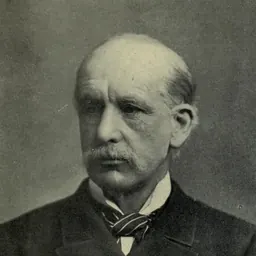
Contemporaries
People whose lives overlapped Theodore O'Hara's



Frequently asked questions
Who was Theodore O'Hara?
Confederate Army officer (1820–1867)
When was Theodore O'Hara born?
Theodore O'Hara was born on 11 February 1820 in Danville.
When did Theodore O'Hara die?
Theodore O'Hara died on 6 June 1867 in Bullock County.
What was Theodore O'Hara's occupation?
Theodore O'Hara was a poet.
What nationality was Theodore O'Hara?
Theodore O'Hara was American.
Sources & further reading
Cite this page
APA: Biography.guide. (2026). Theodore O'Hara. https://biography.guide/theodore-o-hara/
MLA: "Theodore O'Hara." Biography.guide, https://biography.guide/theodore-o-hara/.
Chicago: "Theodore O'Hara." Biography.guide. https://biography.guide/theodore-o-hara/.
Data last updated: 2026-09-20 · Spot an error? Report a correction.
Page generated 2026-09-27 05:26 UTC