
About Theodore Kaghan
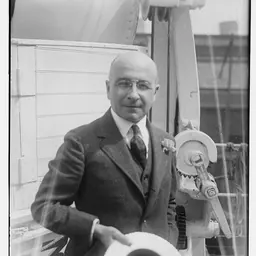
Lived 1912 – 1989 (aged 77). Theodore Kaghan was an American journalist, known for McCarthyism.
Theodore Kaghan (July 24, 1912 – August 9, 1989) was an American civil servant and journalist.
Early years Kaghan was born in Boston on July 24, 1912, and graduated from the University of Michigan.
At the University of Michigan he won several annual prizes given for undergraduate dramatic writing, including the top award in 1935 for a play called Unfinished Picture, later read but not performed by the Group Theatre, named in 1948 as a Communist front organization by the House Un-American Activities Committee. It depicted a multi-ethnic group of Americans in the Lincoln Brigade. They pretend to use their broken field telephone to talk with friends and family back home as well as with Francisco Franco.
Kaghan worked on the foreign news desk of the New York Herald Tribune beginning in 1939 and moved to the Office of War Information in 1942. When Cohn called him a security risk, Kaghan said he would welcome a chance to testify before McCarthy's committee. He also said that when the two "have made half the record I have in the field of psychological warfare against communism, then perhaps the money this trip of theirs is costing the American taxpayer might begin to pay off." And he offered to show McCarthy his record fighting communism "here in Europe, where the threat is an everyday reality rather than an excuse for creating political confusion."
Resignation In April 1953, he was called home to testify before the subcommittee. He admitted that in the 1930s he had held radical views and did not recognize the threat Communism posed to the United States, but said that his views had long since changed. The Senators questioned him about plays he wrote around 1930, a possible Communist he shared an apartment with between 1935 and 1940, and other issues. McCarthy read passages from his plays and Kaghan called some of the passages "long-winded" and "corny." He denied Communist Party membership at any time, but supposed he had attended social gatherings organized by his roommate without realizing the political nature of the events. When McCarthy asked for the names of those who visited the apartment, Kaghan said he thought it "un-American" to provide them based on so little grounds for suspecting them of wrongdoing. Kaghan described his conversion to anti-Communism, beginning with suspicions in 1939 and ending with firm belief in 1945 when he took up his State Department assignment in Vienna. Newspapers described it as a "forced resignation."
Kaghan returned to Bonn and there described the State Department's role in his resignation. He said the department had asked him to resign before he completed his subcommittee testimony and that its security investigator Scott McLeod gave personnel orders to the IIA. Expecting to be dismissed, he resigned in order to be able to return to Bonn to bring his wife and children home. He described his Washington experience as "disillusioning," and explained: "When you cross swords openly with Senator McCarthy, you cannot expect to remain in the State Department, even though you have, as I do, loyalty and security clearance and an anti-Communist record reaching from Vienna to Berlin." A week later Raymond Swing resigned his position as senior analyst for the Voice of America to protest what he called the State Department's "spineless failure ... to stand by its own staff."
Later years In October 1954, Kaghan congratulated Time magazine when it reported that McCarthy's investigations had "hurt his country's chances to rally the peoples of Europe against Communism." He referred to his State Department superiors as "the schizoid psychological warriors of Foggy Bottom."
The State Department later cleared him of the allegations.
He joined the New York Post as United Nations correspondent and then as a foreign affairs columnist. He worked for a Manhattan public relations firm until retiring in 1975.
Kaghan died of heart failure on August 9, 1989, at Memorial Hospital in Brattleboro, Vermont, survived by his wife Nancy, a son Benjamin, and a daughter Susan.
Don’t just read it —
keep it.
Full-length biographies made to live with: read them, listen on the way to work, watch them tonight.
- E-book
- Audio
- Video
Instant download · yours to keep · every purchase keeps this site free
Important facts
People in Theodore Kaghan's life
Named in this biography and alive at the same time

Related people
Same field, nearest in time



Contemporaries
People whose lives overlapped Theodore Kaghan's





Frequently asked questions
Who was Theodore Kaghan?
American politician (1912-1989)
When was Theodore Kaghan born?
Theodore Kaghan was born on 24 July 1912 in New York City.
When did Theodore Kaghan die?
Theodore Kaghan died on 9 August 1989 in Brattleboro.
What was Theodore Kaghan's occupation?
Theodore Kaghan was a journalist.
What was Theodore Kaghan known for?
Theodore Kaghan was known for McCarthyism.
What nationality was Theodore Kaghan?
Theodore Kaghan was American.
Sources & further reading
Cite this page
APA: Biography.guide. (2026). Theodore Kaghan. https://biography.guide/theodore-kaghan/
MLA: "Theodore Kaghan." Biography.guide, https://biography.guide/theodore-kaghan/.
Chicago: "Theodore Kaghan." Biography.guide. https://biography.guide/theodore-kaghan/.
Data last updated: 2026-09-20 · Spot an error? Report a correction.
Page generated 2026-09-27 05:02 UTC