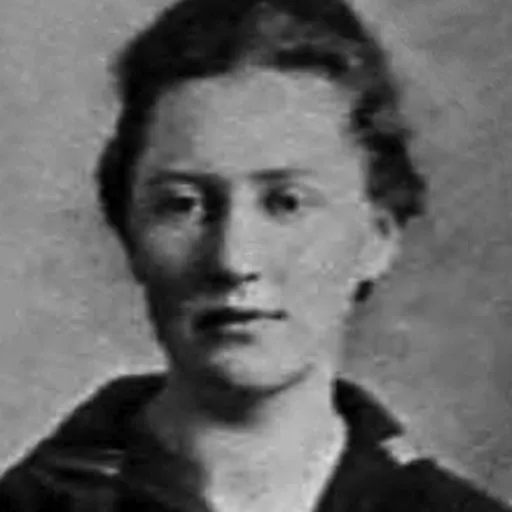
About Theodora Kroeber
Lived 1897 – 1979 (aged 82). Theodora Kroeber was an American writer, anthropologist and psychologist.
Theodora Kroeber ( ; ; (Theodora Kroeber was born Theodora Covel Kracaw.) She published her 1926 paper, written after her marriage to Clifton Brown, as Theodora Kracaw Brown. Her writing after her second marriage was published as Theodora Kroeber, and she was known at the time of her death as Theodora Kroeber-Quinn. Charles's family were recent Polish migrants and Phebe had grown up in Wyoming. Theodora was the youngest of three Kracaw children; she had two brothers, five and ten years older than she was. All the children attended schools in Telluride. Theodora's brothers became physicians. Theodora, who described herself as a shy and introverted person, said her childhood was happy. Her family name "Kracaw" led to her being nicknamed "Krakie" by her friends.
Kracaw graduated in 1915 as the valedictorian of her class at Telluride High School. After graduation, she worked as a volunteer nurse at Hadley Hospital in Colorado. In the same year, the family left Colorado and moved to Orland, California, since the lower altitude there was expected to benefit her father's health, although it failed to do so. (Her father built one of the largest general merchandise businesses in Orland and became president of the local chamber of commerce.) In November 1917, because of failing eyesight, a complication of Bright's disease, he sold his business. He died by suicide the following June. Her master's thesis studied ten families in San Francisco whose children were involved with a juvenile court. She volunteered as a probation officer and was required to meet and report on the families she was studying. She later wrote that she struggled to be objective in writing about these families. Kracaw received her master's degree in clinical psychology in 1920. Brown was contending with the effects of pneumonia he had contracted in France during World War I. They had two children, Clifton II and Theodore. The couple were visiting in Santa Fe when their home was lost in the 1923 Berkeley fire. Clifton left to return to Berkeley, but died en route in Denver in October 1923. Theodora and the children made their way back to Berkeley and the home of Brown's widowed mother, who encouraged her to return to graduate school. Although she had previously taken classes from Alfred's assistant Thomas Waterman, this was the first time Theodora met Alfred. Steward, then also a graduate student at UC Berkeley, wrote that the marriage surprised their colleagues. Alfred, 21 years older than Theodora, had also been previously married; his wife had died of tuberculosis in 1913. Alfred adopted Theodora's two sons, giving them his last name. The couple had two more children together: Karl and Ursula. Karl, Clifton, and Theodore later became professors, of English, history, and psychology, respectively, and Ursula became a well-known author under her married name Ursula K. Le Guin. The redwood house has been described as the cornerstone of the Kroebers' lengthy marriage. Between 1955 and 1956, a year the Kroebers spent at Stanford University, Theodora wrote a novel about Telluride. This work was never published, but helped her establish a habit of writing a little bit every day. In 1959, the year she turned 62, she published The Inland Whale, a retelling of California Native American legends that she had selected in the belief that they exhibited a certain originality. The book collected nine pieces that shared a theme of heroines: a section of authorial commentary was also included. One of these was a Yurok legend narrated to her by the Yurok Robert Spott, who had been among the visitors to Kishamish. The book was well-received, with critics identifying it as a notable work of comparative literature. One reviewer said Kroeber had made the legends accessible to a general audience by "translating freely in her own sensitive, almost lyrical style".
Ishi
Kroeber spent 1960 and 1961 exploring the literature about Ishi, the last known member of the Yahi people, who had been found starving in Oroville, California, in 1911. Ishi had been brought to UC Berkeley, where he was studied and befriended by Alfred Kroeber and his associates. Ishi never shared his Yahi name; Alfred suggested to reporters that he be called "Ishi", which meant "man" in the language of the Yana people, of which the Yahi were a subgroup. Ishi had died of tuberculosis in 1916. Theodora undertook to write an account of his life, believing that Alfred could not bring himself to do so. Ishi in Two Worlds was published in 1961, a year after Alfred's death. Kroeber found the book's challenging subject material to be difficult to write, as it recounted the extermination of the Yahi people as part of the California genocide and Ishi's many years spent largely in solitude.
Ishi in Two Worlds became an immediate success and established Kroeber's reputation for anthropological writing. Described as a "modern classic", it was translated into nine languages and remained in print as of 2015. It sold half a million copies by 1976 and as The Last of His Tribe in 1992.
Retrospective assessments of the book are more mixed. Thomas E. Simmons, a justice of the Rosebud Sioux Tribe, wrote in 2019 that the book's perspective on Ishi was "empathetic yet deeply flawed", saying that it glossed over or did not take issue with the manner in which Ishi was presented as an exhibit. Writing in 1997, scholar Richard Pascal said the book, "to its credit", did not evade the "horrors inflicted upon the Yahi by the invading whites", Clifford wrote that the account of Ishi's life in San Francisco was written with "skill and compassion", and added that "ith a generous appreciation of human complexity and an eye for the telling detail, [Kroeber] created a masterpiece". Ishi in Two Worlds "wrapped up Ishi's story in a humane, angry, lovely, bittersweet package", which remained the most detailed and complete account of Ishi's life.
Later writing Theodora published two papers in 1969, "Shropshire Revisited" and "Life Against Death in English Poetry: A Method of Stylistic Definition", which she had written previously with Alfred. These both examined literary style in English poetry. Grace Buzaljko, editor for the UC Berkeley Department of Anthropology and subsequently author of a short biography of Theodora, described both Kroebers as "superb stylists", Theodora having an inclination towards the "personal and intense", which also made her anthropological writing accessible and enjoyable for a wide audience. Theodora edited Alfred's An Anthropologist Looks at History (1963), wrote the forewords to two collections of Alfred's writings which were unpublished until after his death, Yurok Myths (1976) and Karok Myths (1980), and collaborated with her daughter on Tillai and Tylissos, a poetry collection released in 1979. She also wrote a biography of her husband titled Alfred Kroeber: A Personal Configuration, published in 1970 by the University of California Press. It was widely praised by reviewers: Anthropologist George W. Stocking Jr. wrote that her "gift for [evocative] and moving descriptive writing" was frequently evident, stated that this biography was just as important a work from an anthropologist's perspective as Ishi in Two Worlds. others found it wanting as a scholarly biography.
Kroeber published several other works in the years that followed, including a short story and two novels along with her anthropological writings.
Later life On December 14, 1969, Kroeber married John Quinn, who was working at the time for the Sierra Club. Quinn had been one of the editors for Almost Ancestors. After their marriage, the couple moved into Theodora's home on Arch Street in Berkeley. They also designed and built a home known as Quinnwood in Anchor Bay, California, where they lived part-time until 1978. Quinn encouraged her to complete her biography of Alfred, which she was having trouble with when she had met Quinn.
Kroeber's writing was nonetheless widely influential. Critics wrote of The Inland Whale that Kroeber had broken ground in getting oral traditions recognized for their literary worth. It has also been described as influencing the writing of her daughter Ursula, whose fiction frequently examines cultural contact. Buzaljko's 1989 biography of Kroeber stated that her "great strength was as an interpreter of one culture to another", going on to say that through her writing she demonstrated the connections between the history of California's indigenous people and modern society.
Selected works
The Inland Whale. 1959. Indiana University Press, Bloomington. Ishi in Two Worlds: a biography of the last wild Indian in North America. 1961. Berkley Books. Ishi, Last of His Tribe. Illus. Ruth Robbins. 1964. Parnassus Press, Berkeley, California. Almost Ancestors: The First Californians. Kroeber and Robert F. Heizer. 1968. Sierra Club Books, San Francisco. Alfred Kroeber: A Personal Configuration. 1970. University of California Press, Berkeley. Drawn from Life: California Indians in Pen and Brush. Compiled by Kroeber, Robert F. Heizer and Albert B. Elsasser. 1976. Ballena Press, Socorro, New Mexico. Ishi, the Last Yahi: A Documentary History. Kroeber and Robert F. Heizer. 1979. University of California Press, Berkeley.
Don’t just read it —
keep it.
Full-length biographies made to live with: read them, listen on the way to work, watch them tonight.
- E-book
- Audio
- Video
Instant download · yours to keep · every purchase keeps this site free
Important facts
Family & relationships
People in Theodora Kroeber's life
Named in this biography and alive at the same time




Related people
Same field, nearest in time



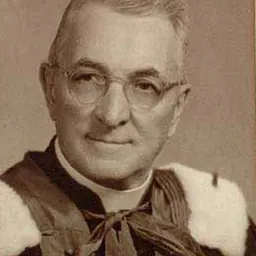
Contemporaries
People whose lives overlapped Theodora Kroeber's

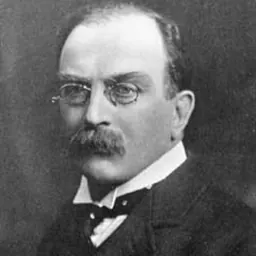

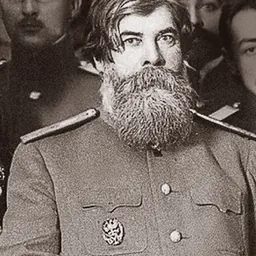
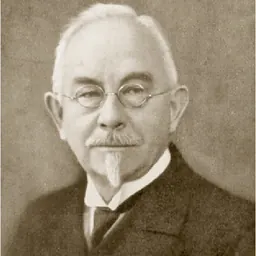
Frequently asked questions
Who was Theodora Kroeber?
American anthropologist (1897–1979)
When was Theodora Kroeber born?
Theodora Kroeber was born on 24 March 1897 in Denver.
When did Theodora Kroeber die?
Theodora Kroeber died on 4 July 1979 in Berkeley.
What was Theodora Kroeber's occupation?
Theodora Kroeber was a writer, anthropologist and psychologist.
What nationality was Theodora Kroeber?
Theodora Kroeber was American.
Sources & further reading
Cite this page
APA: Biography.guide. (2026). Theodora Kroeber. https://biography.guide/theodora-kroeber/
MLA: "Theodora Kroeber." Biography.guide, https://biography.guide/theodora-kroeber/.
Chicago: "Theodora Kroeber." Biography.guide. https://biography.guide/theodora-kroeber/.
Data last updated: 2026-09-23 · Spot an error? Report a correction.
Portrait: Wikimedia Commons · author & licence
Page generated 2026-09-27 05:08 UTC