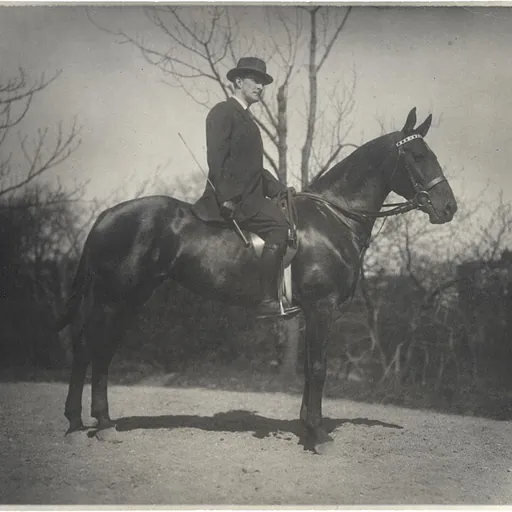
About John Quinn
Lived 1870 – 1924 (aged 54). John Quinn was an American art collector and lawyer.
John Quinn (April 14, 1870 in Tiffin, Ohio – July 28, 1924 in Fostoria, Ohio) was an Irish-American cognoscente of the art world and a lawyer in New York City who fought to overturn censorship laws restricting modern literature and art from entering the United States.
Quinn was an important patron of chief figures in Post-Impressionism and literary Modernism, a major collector of modern art and original manuscripts, and the first to exhibit these works after winning legal battles against censorship and cultural isolation. In the 1920s he owned the largest single collection of modern European paintings in the world. He fought key legal battles that opened American culture to 20th-century art movements, including his Congressional appeals to overturn the Payne–Aldrich Tariff Act.
He was part of the group who staged the Armory Show in 1913, the first great exhibition of European and American modern art in the United States, at the 69th Regiment Armory in New York. Quinn gave practical advice and financial assistance to Ezra Pound and T.S. Eliot. In gratitude, Eliot sent Quinn the original manuscript of his 1922 poem The Waste Land, including Pound's editorial suggestions.
Biography
Quinn was born in Tiffin, Ohio, one of seven children (only two of whom are known to have survived childhood) born to an Irish baker and grocer, James William Quinn, and his wife, Mary ( Quinlan). He grew up in nearby Fostoria, where his parents had relocated in 1871, a year after John's birth. His paternal grandparents, James, a blacksmith, and Mary (née Madigan) Quinn, natives of County Limerick, had settled in Tiffin in 1851.
After graduating from the University of Michigan and Georgetown University Law School, followed by a degree in international relations from Harvard University, Quinn became a successful New York lawyer, getting involved in New York’s Tammany Hall politics, but when his candidate did not get the nomination at the 1912 Democratic National Convention he became disgusted with the whole system and became an art patron, art collector, and collector of manuscripts.
John Quinn is named as buyer of three works sold in 1911 from the collection of newspaper publisher William MacKay Laffan. His taste was conservative and expensive: a painting of the Christ with Joseph and Mary by seventeenth-century Spaniard Alonso Cano; an Italian triptych of the Virgin with St. Sebastian and St. Roch, attributed to the Ferrarese Master of 1514; a Dutch triptych 'Adoration of the Kings' which more recently is attributed to the Master of 1518 but was sold to Quinn as a work by Lucas van Leyden (1494-1533). In time, Quinn’s tastes in art became more worldly. Naturalistic portraits and loosely painted landscapes by English, Welsh and Irish artists were only the foundation of his collection. As the second decade of the 20th century began, his interests shifted across the English Channel to works by Manet, Camille Pissarro, and Pierre Puvis de Chavannes. He was the patron of artist Gwen John, supporting her financially from 1911 until his death. He bought most of the works that she sold. He began to buy traditional paintings, drawings, sculpture, and decorative art from China and Japan. His French adviser for Post-Impressionist art was Henri-Pierre Roche, who later wrote the novel Jules et Jim. Quinn and Roche worked together to develop the famous 1913 Armory Show.
Quinn was a principal supporter and purchaser of manuscripts of novelist Joseph Conrad during his lifetime. He met Irish poet W. B. Yeats in 1902 and became a major supporter, helping him found the Abbey Theatre.
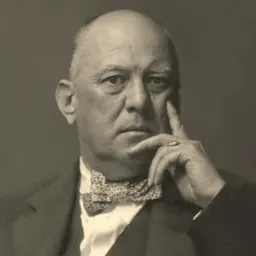
According to author Richard Spence, Quinn was a supporter of the Irish nationalist cause and associated with figures such as John Devoy and Roger Casement, although he had reportedly worked for British Intelligence services before, during, and after World War I. In this role he acted as case officer for, among others, Aleister Crowley, who was an agent provocateur posing as an Irish nationalist in order to infiltrate anti-British groups of Irish and Germans in the United States.
In the early 1920s Quinn represented Margaret Anderson and Jane Heap for their publication in The Little Review of serial portions of James Joyce's Ulysses, which the U.S. Post Office had found "obscene".
Quinn was a friend of American poet Ezra Pound. Quinn gave financial assistance to Pound and T.S. Eliot, and helped Eliot to negotiate contracts with U.S. publishers. In gratitude, Eliot sent Quinn the original manuscript of The Waste Land in 1923, containing editorial suggestions by Pound and Vivienne Eliot written on the drafts.
Estate sale
Quinn died at age 54 of intestinal cancer and was buried by his family in his native Fostoria.
Believing no American museum would appreciate his collection of modern art and wanting to provide for his sister, Julia Quinn Anderson, he wrote a will in 1918 directing that the collection be liquidated upon his death.
Works from Quinn's collection
Don’t just read it —
keep it.
Full-length biographies made to live with: read them, listen on the way to work, watch them tonight.
- E-book
- Audio
- Video
Instant download · yours to keep · every purchase keeps this site free
Important facts
People in John Quinn's life
Named in this biography and alive at the same time




Related people
Same field, nearest in time


Contemporaries
People whose lives overlapped John Quinn's




Frequently asked questions
Who was John Quinn?
American lawyer and art collector (1870-1924)
When was John Quinn born?
John Quinn was born on 14 April 1870 in Tiffin.
When did John Quinn die?
John Quinn died on 28 July 1924 in Fostoria.
What was John Quinn's occupation?
John Quinn was an art collector and lawyer.
What nationality was John Quinn?
John Quinn was American.
Sources & further reading
· DBpedia: John Quinn (collector)
Cite this page
APA: Biography.guide. (2026). John Quinn. https://biography.guide/john-quinn/
MLA: "John Quinn." Biography.guide, https://biography.guide/john-quinn/.
Chicago: "John Quinn." Biography.guide. https://biography.guide/john-quinn/.
Data last updated: 2026-09-22 · Spot an error? Report a correction.
Portrait: Wikimedia Commons · author & licence
Page generated 2026-09-27 05:00 UTC