
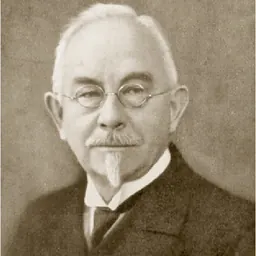
Theodor Busse
German general of infantry in the Second World War
About Theodor Busse
Lived 1897 – 1986 (aged 88). Theodor Busse was a German military personnel, writer, military officer and soldier.
Ernst Hermann August Theodor Busse (15 December 1897 – 21 October 1986) was a German officer during World War I and World War II.
Early life and career Busse, a native of Frankfurt (Oder), joined the Imperial German Army as an officer cadet in 1915 and was commissioned in February 1917. He also was awarded the Knight's Cross with Swords of the Hohenzollern Order. After the armistice, he was accepted as one of 2,000 officers into the new Reichswehr in which he steadily rose in rank.
World War II Busse was a General Staff officer in April 1939 and prepared a training program that was approved by the Chief of the General Staff in August and covered a period from 1 October 1939 to 30 September 1940. Between 1940 and 1942, he served as the Chief of Operations to General (later Field Marshal) Erich von Manstein in the 11th Army on the Eastern Front. He remained serving on von Manstein's staff from 1942 to 1943 as Chief of Operations of Army Group Don and then from 1943 to 1944 he was Chief of Staff of Army Group South, both on the Eastern Front. Serving with Army Group South, he was awarded the Knight's Cross of the Iron Cross on 30 January 1944. He spent a short time in reserve and was then appointed General Officer Commanding German 121st Infantry Division. In July 1944, he commanded I Army Corps.
While Busse took command of the 9th Army on 21 January 1945, his appointment was never confirmed. It would appear that it was customary for commanders of formations of the status of an Army and higher to be on six months probation before their final appointments as Commanders-in-Chief. Germany surrendered unconditionally before Busse's probationary period had expired.
During the last five months of the war, Busse commanded the 9th Army, which had become part of Army Group Vistula. As the Soviets continued to advance into Germany, he fought to protect the German capital. Specifically, Busse commanded the 9th Army during the Battle of Seelow Heights and the Battle of the Oder-Neisse. In April 1945, during the Battle of Berlin, Busse's Ninth Army was cut off from the armies on its flanks and almost encircled by Soviet Forces. General Gotthard Heinrici tried to convince Busse to withdraw several times, but Busse refused even to consider withdrawal unless a specific command arrived from the Führer. Eventually Busse's Ninth Army was driven into a pocket in the Spree Forest south of the Seelow Heights and west of Frankfurt, where it became fully encircled by two prongs of the massive Soviet assault on Berlin. In the ever-shrinking pocket, Busse's forces were all but annihilated in what is known as the Battle of Halbe, but remnants ultimately managed to break through to the west to link up with General Walther Wenck’s 12th Army south of Beelitz and then to withdraw west to the Elbe, cross the partially-destroyed bridge at Tangermünde and surrender to American forces between May 4 and 7.
Postwar Between 1945 and 1947, Busse was a prisoner of war. Knight's Cross of the Iron Cross (N 2611) on 30 January 1944 as Generalleutnant and Chief of the Generalstab of Heeresgruppe Süd Knight Commander's Cross of the Order of Merit of the Federal Republic of Germany (25 January 1966)
Books edited
Kursk: The German View by Steven H. Newton. The first part of the book goes to a new translation of a study of Operation Citadel (the great tank battle of Kursk) edited by General Theodor Busse, which offers the perspectives of key tank, infantry, and air commanders.
Don’t just read it —
keep it.
Full-length biographies made to live with: read them, listen on the way to work, watch them tonight.
- E-book
- Audio
- Video
Instant download · yours to keep · every purchase keeps this site free
Important facts
People in Theodor Busse's life
Named in this biography and alive at the same time

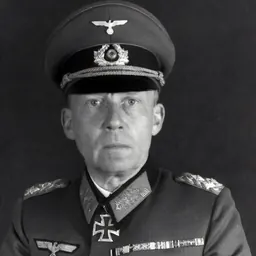

Related people
Same field, nearest in time

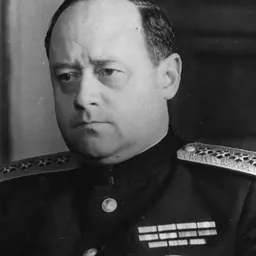



Contemporaries
People whose lives overlapped Theodor Busse's


Frequently asked questions
Who was Theodor Busse?
German general of infantry in the Second World War (1897-1986)
When was Theodor Busse born?
Theodor Busse was born on 15 December 1897 in Frankfurt (Oder).
When did Theodor Busse die?
Theodor Busse died on 21 October 1986 in Wallerstein.
What was Theodor Busse's occupation?
Theodor Busse was a military personnel, writer, military officer and soldier.
What nationality was Theodor Busse?
Theodor Busse was German.
Sources & further reading
Cite this page
APA: Biography.guide. (2026). Theodor Busse. https://biography.guide/theodor-busse/
MLA: "Theodor Busse." Biography.guide, https://biography.guide/theodor-busse/.
Chicago: "Theodor Busse." Biography.guide. https://biography.guide/theodor-busse/.
Data last updated: 2026-09-20 · Spot an error? Report a correction.
Page generated 2026-09-27 05:31 UTC