
Theo Van Gogh
Dutch art dealer (1857-1891), brother of painter Vincent van Gogh
About Theo Van Gogh
Lived 1857 – 1891 (aged 33). Theo Van Gogh was a Dutch art dealer, painter and art collector, known for Vincent van Gogh.
Early life Theo van Gogh in 1873. This photograph was believed to have been of Vincent, but in 2018 was reassigned to Theo.
Theodorus van Gogh was born on 1 May 1857 in the village of Groot-Zundert in the province of North Brabant, Netherlands.
He was the son of Theodorus van Gogh and Anna Cornelia Carbentus. He had two brothers, Vincent and Cor, and three sisters, Wil, Elisabeth and Anna.
Business career
Van Gogh worked for some years at the Dutch office of the Parisian art dealers Goupil & Cie in The Hague. Van Gogh joined the Brussels office on 1 January 1873 as their youngest employee. After he was transferred to the London office, he moved to the office in The Hague, where he became a successful art dealer. By 1884, he was transferred to the Paris main office, which in 1884 took the name of Boussod, Valadon & Cie. Beginning in the winter of 1880–1881, he sent painting materials as well as monthly financial support to his brother Vincent, who was living in Belgium and soon moved to the Netherlands.
Personal life In Paris, Van Gogh met Andries Bonger and his sister Johanna. He was quite taken with her and hoped to marry her. At the time, she was in a relationship that she hoped would lead to marriage. When it did not, she reconsidered Van Gogh's proposal. They married in Amsterdam on 17 April 1889. During their short engagement, they had an extensive correspondence, later published as Brief Happiness, in which they discussed practical matters of setting up married life together, but Van Gogh also conveyed strength and the importance of his bond with Vincent. The couple moved to Paris, where their apartment became a venue for socializing with artists and members of the artistic community. Their son Vincent Willem was born in Paris on 31 January 1890. On 8 June, the family visited Vincent, who was living near Paris in Auvers-sur-Oise.
His brother Vincent died on 29 July 1890 at age 37 after shooting himself with a revolver. Theo suffered from dementia paralytica, now understood as late-stage neurosyphilis, and his health declined rapidly after Vincent's death. Unable to take the loss of his brother, he died six months later at age 33, in Den Dolder.
Van Gogh's great-grandson, also named Theo van Gogh, was a film director, who was murdered on the streets of Amsterdam in 2004 by an Islamic extremist after making a short film critical of the treatment of women in Islamic culture.
Relationship with Vincent Van Gogh admired his elder brother Vincent for his whole life, but communicating with him proved to be difficult, even before Vincent became an artist. The communication between both brothers suffered from diverging definitions of standards, and it was evidently Theo who kept on writing letters. Vincent did not keep all the letters Theo sent, but Theo kept every scrap of correspondence from his brother (651 letters addressed to Theo in total). Most of Vincent's replies survived but only 32 of Theo's remain. It is known that Theo helped Vincent maintain his artist lifestyle by giving him money. He also helped Vincent pursue his life as an artist through his unwavering emotional support and love. The majority of Theo's letters and communications with Vincent are filled with praise and encouragement. Vincent would send Theo sketches and ideas for paintings, along with accounts of his day-to-day experiences, to the delight and eager attention of Theo.
Dealer and artist While Van Gogh is best known for being the brother of Vincent van Gogh and one of his major roles in art was his influence on Vincent's career, Van Gogh himself made many important contributions. Van Gogh played a vital role in the introduction of contemporary Dutch and French art to the public:
Possible portrait of Theo by Vincent van Gogh; it was once considered to be another Self-Portrait of Vincent, but was re-attributed in 2011 as Theo. In 1886, Theo invited Vincent to live with him in Paris, and from March they shared an apartment in Montmartre. Theo introduced Vincent to Paul Gauguin and in 1888 he persuaded Gauguin to join Vincent, who had moved to Arles. Theo not only conspired with Vincent as the liaison between Vincent and Gauguin, but was the deciding factor in his move to Arles, seeing as it was Theo van Gogh who planned and eventually committed to supporting them both financially. Theo paid for their living and professional expenses, as well as for the travel expenses Gauguin accumulated to get from Pont-Aven, Brittany, to Arles. Theo was equally the one with whom Gauguin communicated when his relationship with Vincent turned volatile and unmanageable, notably the severing of the ear fiasco. Theo was the source of stability and the intermediate between the two artists and allowed them to create prolifically for a couple of months (63 days); paintings that would otherwise not have survived.
Competing with Paul Durand-Ruel and Georges Petit, the young dealer was to take over an important stake in this market. In 1888, he exhibited ten paintings by Claude Monet from Antibes.
It is largely thanks to Theo and his wife Johanna, who in 1914 decided to publish the letters between Theo and Vincent that the letters are available. The two-year period in which Vincent and Theo lived together in the neighbourhood of Montmartre in Paris is also the least documented period of Vincent's artistic career because of the lack of letters. These letters witness both the emotional and professional state of Vincent throughout his life as early as 1874 and serve as a diary for his everyday encounters. The letters have been collected and published in the book The Letters of Vincent van Gogh.
Film legacy The Van Gogh brothers' relationship figured in the Vincente Minnelli 1956 movie adaptation of Irving Stone's 1934 biographical novel Lust for Life. In it, Hollywood star Kirk Douglas played Vincent, and British actor James Donald played Theo. The family relationship was a central subject in Robert Altman's movie Vincent & Theo (1990), starring British actors Tim Roth as Vincent and Paul Rhys as Theo. The brothers' relationship is also featured in Maurice Pialat's 1991 film Van Gogh, with Jacques Dutronc playing Vincent and Bernard Le Coq as Theo.
The delivery of Vincent's final letter to Theo after Vincent's death, and the circumstances surrounding his death, was the subject of the 2017 film Loving Vincent, which was animated by oil paintings made with Van Gogh's techniques.
Julian Schnabel's meditation on Vincent's artistic life, At Eternity's Gate (2018), featured Willem Dafoe as Vincent and Rupert Friend as Theo.
Death alt=Two graves and two gravestones side by side; heading behind a bed of green leaves, bearing the remains of Vincent and Theo van Gogh, where they lie in the cemetery of Auvers-sur-Oise. The stone to the left bears the inscription: Ici Repose Vincent van Gogh (1853–1890) and the stone to the right reads: Ici Repose Theodore van Gogh (1857–1891) Van Gogh's health was not robust when he married. In fact, he had been denied a life insurance policy because of it. It deteriorated significantly in the months after the death of his brother. He was admitted to the Willem Arntz Hospital, a psychiatric hospital, in Den Dolder on 18 November 1890. He had been diagnosed in Paris as suffering from a progressive and general paralysis. Initial examination confirmed this diagnosis. By 1 December his medical notes confirmed he presented all the symptoms of dementia paralytica, a disease of the brain caused by syphilis. He died on 25 January 1891. The cause of death was listed as dementia paralytica caused by "heredity, chronic disease, overwork, sadness". By doing that, she also guaranteed that those visiting the grave of the by now well-known artist, would be aware of Theo's closeness to his older brother in life.
Don’t just read it —
keep it.
Full-length biographies made to live with: read them, listen on the way to work, watch them tonight.
- E-book
- Audio
- Video
Instant download · yours to keep · every purchase keeps this site free
Important facts
Family & relationships
People in Theo Van Gogh's life
Named in this biography and alive at the same time
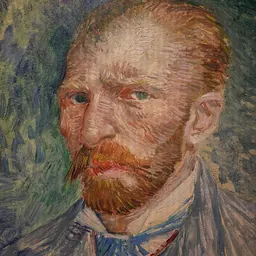

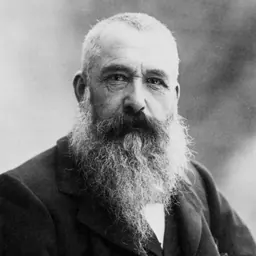

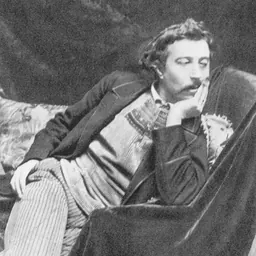

Related people
Same field, nearest in time

Contemporaries
People whose lives overlapped Theo Van Gogh's



Frequently asked questions
Who was Theo Van Gogh?
Dutch art dealer (1857-1891), brother of painter Vincent van Gogh
When was Theo Van Gogh born?
Theo Van Gogh was born on 1 May 1857 in Zundert.
When did Theo Van Gogh die?
Theo Van Gogh died on 25 January 1891 in Utrecht.
What was Theo Van Gogh's occupation?
Theo Van Gogh was an art dealer, painter and art collector.
What was Theo Van Gogh known for?
Theo Van Gogh was known for Vincent van Gogh.
What nationality was Theo Van Gogh?
Theo Van Gogh was Dutch.
Sources & further reading
· DBpedia: Theo van Gogh (art dealer)
Cite this page
APA: Biography.guide. (2026). Theo Van Gogh. https://biography.guide/theo-van-gogh-art-dealer/
MLA: "Theo Van Gogh." Biography.guide, https://biography.guide/theo-van-gogh-art-dealer/.
Chicago: "Theo Van Gogh." Biography.guide. https://biography.guide/theo-van-gogh-art-dealer/.
Data last updated: 2026-09-22 · Spot an error? Report a correction.
Page generated 2026-09-27 05:32 UTC